




RIYADH: Plastic consumption remains a deeply ingrained part of daily life in Saudi Arabia. However, growing public awareness and innovative solutions have brought the country to a crossroads in its sustainability journey.
Each year, 5 billion plastic water bottles are discarded in Saudi Arabia, of which less than 5 percent are recycled.
Despite mounting public concern about the environmental impact of plastic waste, 77 percent of Saudis continue to rely on bottled water as their main source of hydration, according to a study by Wisewell, a UAE-based water technology company.

Sami Khoreibi, founder and CEO of Wisewell, refers to this contradiction as “the plastic paradox” — a term that captures the disconnect between environmental concerns and real-world behavior.
“People know the risks, they’re aware of the damage, but they don’t feel like they have an alternative,” he told Arab News. “And until now, they really haven’t.”
Unlike other materials, plastic does not biodegrade and can take up to 1,000 years to break down, according to the UN Environment Program. As it accumulates, it pollutes ecosystems, harms marine life, degrades soil, contaminates groundwater, and poses serious health risks.
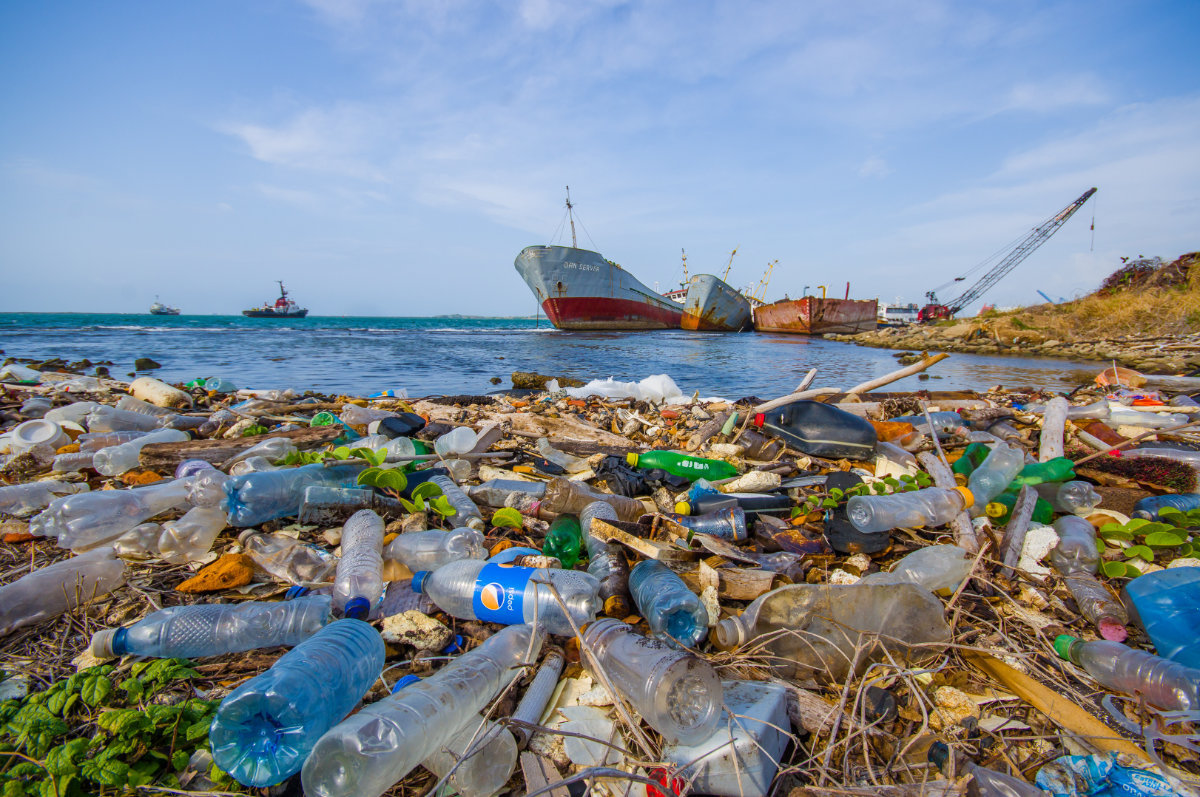
Plastic waste wash ashore in the beach next to the Panama Canal. (Shutterstock file photo)
However, Saudi taste for bottled water is not entirely by choice. Khoreibi says Saudi residents have historically tended to prefer bottled water due to a lack of viable alternatives.
“For decades, tap water hasn’t been widely trusted for drinking,” he said. “And filtration solutions, when available, have either been too complex, lacked transparency, or weren’t positioned as a real replacement for bottled water.”
DID YOU KNOW?
• Producing and transporting 1 kg of bottled water uses 27 kg of water, 0.85 kg of fossil fuel, and emits 562 grams of greenhouse gases.
• Chemicals like BPA in plastic bottles are linked to health issues, including high blood pressure, heart disease, diabetes, and obesity.
• Bottled water’s environmental impact is up to 3,500 times greater than tap water.
Saudi Arabia ensures tap water safety through advanced desalination and strict quality control. Due to its arid climate and absence of permanent rivers, about 60 percent of the country’s potable water comes from desalination, with the rest from non-renewable groundwater.
However, a mix of distrust in tap water, limited filtration options, and the extreme climate driving high hydration needs has led to a system where single-use plastic bottles are the default.
Fortunately, this is not an irreversible trend. “This is a region that has transformed itself time and time again,” said Khoreibi. “If we can shift from an oil-dependent economy to a diversified one, we can absolutely change the way people consume water.”
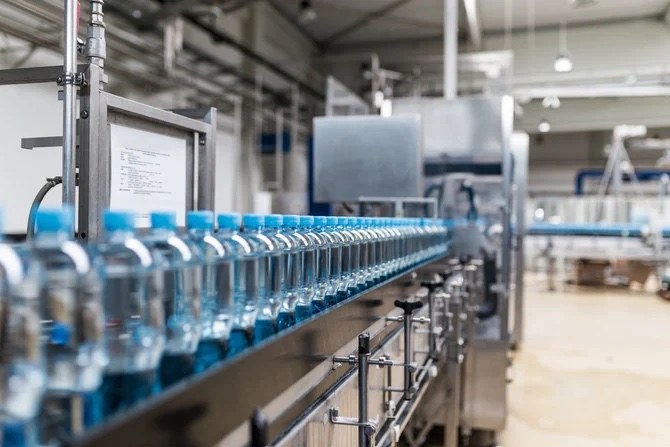
People drinking from plastic bottles everyday are exposing themselves to microplastics daily, say scientists. (Shutterstock photo)
Beyond environmental damage, microplastics and nanoplastics also threaten public health.
Studies show that particles shed from plastic bottles over time have entered human food systems and even the bloodstream. Scientists are now linking microplastic exposure to fertility issues, neurological disorders, and other health concerns.
Khoreibi believes health concerns will be the biggest driver of change. “People care about the planet, but let’s be honest — what really moves people is personal health,” he said.
“If you’re drinking from plastic bottles, you’re exposing yourself to microplastics daily. And what we’re seeing in new research is alarming — these particles are showing up in human organs, even in unborn babies.
“This isn’t just an environmental issue anymore. It’s a human health crisis.”

To cut single-use plastics and triple recycling targets by 2030, the Saudi government has launched numerous initiatives under Vision 2030. (Shutterstock)
A recent survey by Wisewell found that 65 percent of Saudi residents are already concerned about the health implications of plastic consumption. However, many have continued using bottled water because no widely trusted alternative has been available.
To cut single-use plastics and triple recycling targets by 2030, the Saudi government has launched numerous initiatives under Vision 2030, including banning plastic bags and straws as part of its intensified sustainability efforts.
Khoreibi stresses that tackling plastic waste at its source is more effective than relying solely on recycling. “The best way to increase recycling rates is actually to reduce what needs to be recycled in the first place,” he said.
“We don’t need more efficient ways to deal with plastic waste — we need to eliminate single-use plastic bottles entirely.”
Khoreibi drew a direct parallel between the rise of sustainable water solutions and the early development of solar energy in the region. In 2007, he launched Abu Dhabi’s first solar company at a time when the idea of using solar power in an oil-rich country was met with skepticism.
“They thought it was crazy,” he said. “Why would a country with so much oil invest in solar? But fast forward a few years, and now solar is a key part of the energy mix.”
He added: “The same thing will happen with water — the idea that you need bottled water for safety and quality is a myth that’s going to disappear.”
Opinion
This section contains relevant reference points, placed in (Opinion field)
Alternative solutions such as refill stations, biodegradable packaging, and home filtration systems are already transforming how people access clean water. Wisewell, for example, has developed a smart filtration system that provides real-time data on water quality, filter life, and consumption patterns.
Khoreibi believes trust is key to adoption. “Filtration isn’t new, but people need to see and understand that it works,” he said. “That’s why our system gives users real-time data — they can actually monitor their water quality, so there’s no more mystery about what they’re drinking.”
Saudi Arabia offers a prime landscape for shifting from bottled water consumption to sustainable alternatives. With one of the world’s youngest populations, the country is eager for innovation.
Additionally, the government is actively promoting sustainability and technology, while consumer awareness about plastic waste and microplastics is at an all-time high.
Recognizing this shift, Wisewell has recently entered the Saudi market. The expansion aligns with Vision 2030’s environmental goals, offering Saudi households a sustainable alternative to plastic water bottles.
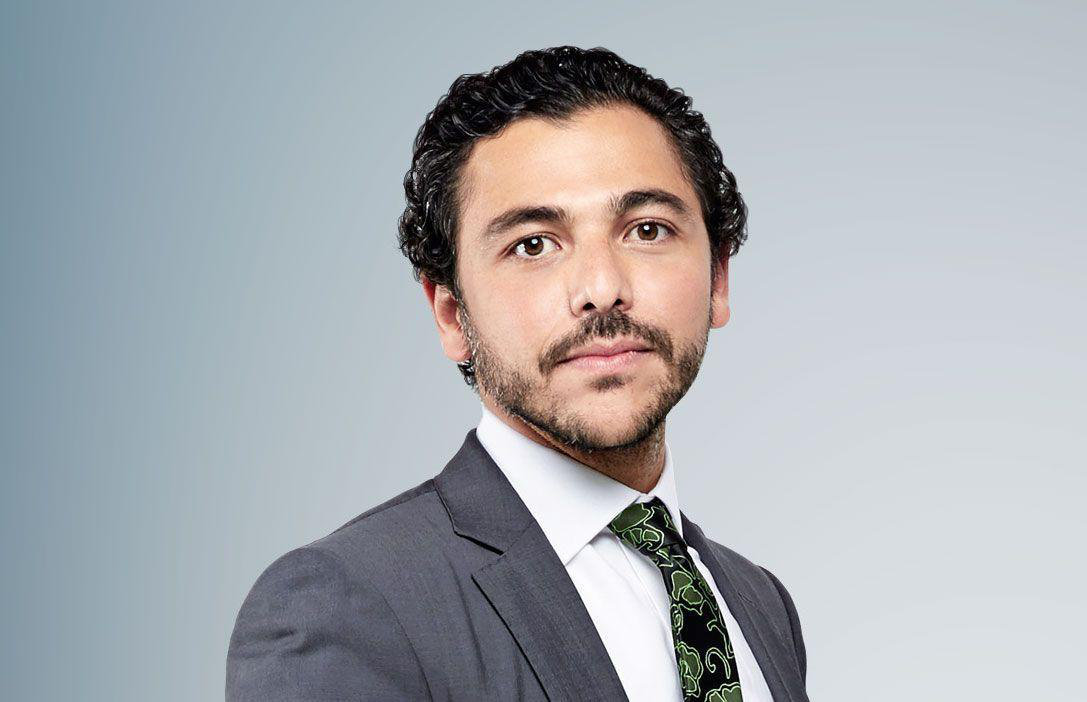
Sami Khoreibi, founder and CEO of Wisewell. (Supplied)
Khoreibi sees this as a crucial step in reducing the Kingdom’s reliance on single-use plastics. “This is one of the most exciting markets in the world right now for sustainability-driven solutions,” he said.
“Saudi Arabia is undergoing massive change, and there’s a real appetite for innovation. We’re not just launching a product — we’re helping drive a movement.”
Nonetheless, consumer education remains a challenge. “It’s not just about giving people an alternative — it’s about making them feel confident in it,” Khoreibi said.
“They need to believe that a filtration-based system is not just an option, but the best option for their health, their convenience, and their wallets.”
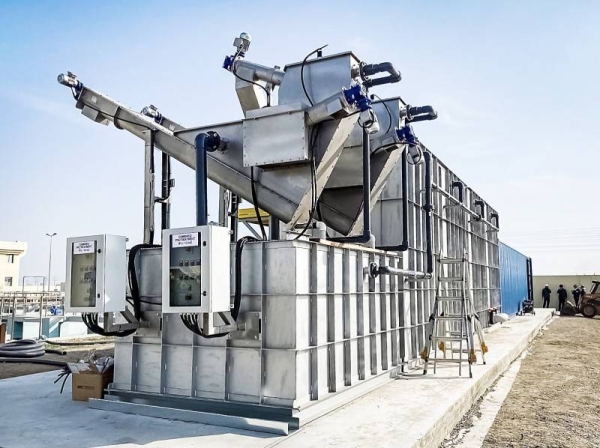
Filtration plant developed by a team from the reuse unit invented at King Abdullah University of Science and Technology. (AN file photo)
Khoreibi views Saudi Arabia’s embrace of sustainable water solutions as part of a broader regional shift, positioning the Gulf not just as an importer of innovation but as a driver of global solutions.
“For so long, we’ve looked to the West for technology,” he said. “Is it German? Is it American? Is it Japanese? But that’s changing. The Gulf is now producing world-class technology — not just for itself, but for export.
“The future of sustainable water solutions doesn’t have to come from Europe or North America. It can come from here.”
Saudi Arabia has the potential to lead the region in eliminating single-use plastics, setting a precedent for neighboring countries. A successful effort would not only address its own plastic crisis but also help shape the global conversation on water consumption and sustainability.
“This isn’t just about stopping plastic waste,” Khoreibi said. “It’s about rethinking the way we consume water entirely. And Saudi Arabia has the power to lead that change.”


