



DUBAI: The BBC’s decision to remove its documentary on Gaza has reignited public debate over the broadcaster’s pro-Israel bias in its coverage of the latest war and sparked concerns over the influence of the pro-Israel lobby on western media’s impartiality.
Last week, the broadcaster faced backlash from pro-Israel advocates, prominent Jewish media figures, and Israeli representatives in the UK government when it emerged that Abdullah Al-Yazouri, the 14-year-old main narrator in the BBC Two documentary, “Gaza: How to Survive a Warzone,” was the son of Ayman Al-Yazouri, a deputy agriculture minister who worked for the Hamas-run government.
After withdrawing the documentary from its iPlayer service, the BBC was once again criticized by academics, public figures and TV personalities who argued that the channel should have maintained its journalistic impartiality and independence.
The channel’s critics said the removal of the documentary, which provides the rare perspective of a child on the devastating consequences of the war on Gaza, reflected the BBC’s pro-Israel biased coverage since the war began, further deepening the dehumanization of Palestinians and marginalizing their voices.
“The BBC should not have succumbed to pressure from pro-Israeli groups and the British government, who should not have intervened,” Chris Doyle, director of the Council for Arab British Understanding, told Arab News.
“What is extraordinary is the vast gap between how this documentary was maliciously depicted as being Hamas propaganda and the reality of the film itself, which is a child’s eye view of life in war-torn Gaza that does not get into politics but is a very human story of how Palestinian children survived day-to-day,” noted Doyle.
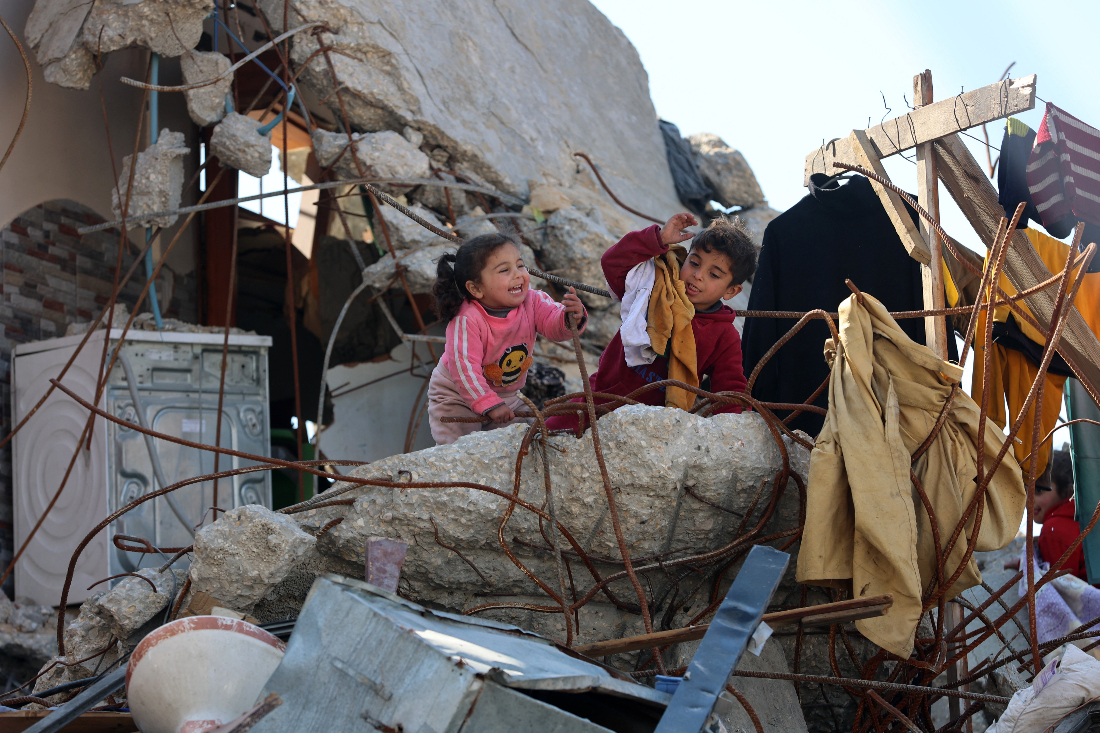
Palestinian children play amidst the rubble in Jabalia in the northern Gaza Strip. (File/AFP)
The documentary, filmed over nine months in the run-up to January’s ceasefire deal, features three children among the main characters navigating their lives amid bombings and vast destruction caused by the war on Gaza.
The boy’s family connection with the Hamas-run government employee drew the interference of UK Secretary of Culture Lisa Nandy, who said she expressed “deep concerns” during a meeting with the BBC’s Director-General Tim Davie and urged the channel to report “what happened and who knew what when.”
After conducting an investigation, the BBC issued an apology on Thursday for “serious flaws” in the making of the documentary.
It said it has “no plans” to broadcast it again in its current form, despite the pleas of 500 media professionals and filmmakers, including Gary Lineker and Juliet Stevenson, for the channel to reinstate the documentary, calling it an “essential piece of journalism” that “amplifies voices so often silenced.”
Warning of “racist assumptions,” they said: “Weaponizing family associations to discredit a child’s testimony is both unethical and dangerous.”
Doyle urged the BBC to review its decision “in a very independent fashion free from external interference.”
He said the broadcaster’s action renders work that “humanizes Palestinians and treats Palestinian children as human beings with rights with aspirations, with hopes, with fears” as “illegitimate.”
It also endorses a dominant narrative that militarizes Palestinians and associates them with armed groups, according to the BBC’s critics.
Loreley Hahn-Herrera, lecturer in global media and digital cultures at SOAS University of London, said condemning the documentary as influenced by Hamas does not consider that anyone who works in the government is not necessarily a member of its armed wing.
Hamas is classified as a terrorist organization in the UK, US and Europe.
“Ayman Al-Yazouri is a mid-level bureaucrat who was educated in the UK. I don’t think it is fair to make children guilty by association, which further feeds into the narrative of linking all Palestinians in Gaza to Hamas and criminalizing Palestinian men and stripping them away from their civilian status,” Hahn-Herrera told Arab News.
The first five minutes of the documentary depict Palestinians condemning Hamas and its late leader Yahya Sinwar as they run away from the bombings.
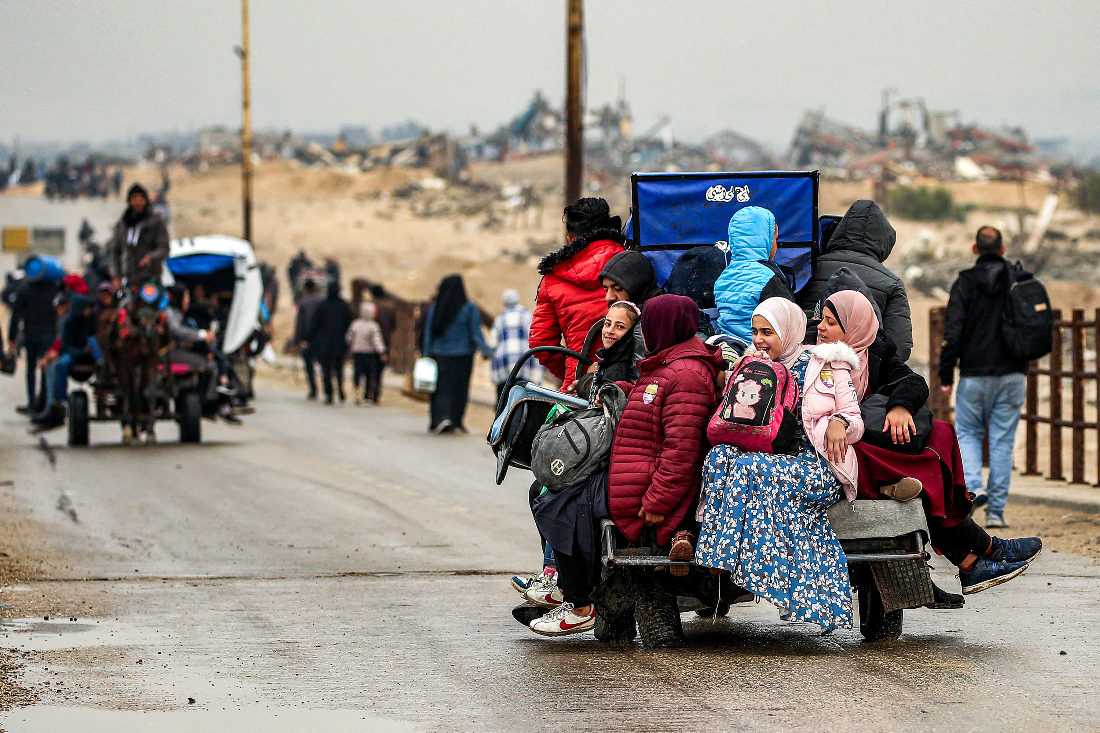
Men and children ride in the back of a tricycle cart along the Wadi Gaza bridge along al-Rashid street across between Gaza City and Nuseirat in the central Gaza Strip. (File/AFP)
“The documentary shows kids traumatized by war and actively denouncing Hamas. This challenges the ongoing discourse coming from within Israel and its supporters in the West that associates everyone in Gaza with Hamas and, therefore, makes them targeted terrorists,” Hahn-Herrera said.
She added: “Of the very few political statements that were made throughout the documentary, they were all against Hamas.”
More seriously, Hahn-Herrera noted, the BBC succumbing to pro-Israeli pressure interferes with its credibility as the independent institution it claims to be and challenges its notion of autonomy from the government, which it wants the public to believe.
When reached out to by Arab News for comment, a BBC spokesperson pointed to the channel’s Friday statement indicating that an investigation is ongoing.
The BBC, among other Western outlets, has been facing growing accusations of predominantly featuring Israeli spokespeople and allies over Palestinian voices in its Gaza war coverage.
But the debate over the dominance of Israeli narratives in Western media during conflicts with the Palestinians is not new.
Ample academic research has analyzed coverage of previous Palestine-Israel wars, the majority of which revealed a disproportionate emphasis on Israeli perspectives while downplaying Palestinian suffering.
A 2011 groundbreaking study by Greg Philo and Mike Berry titled “More Bad News from Israel” showcased how the BBC’s editorial team faced constant pressure and scrutiny when reporting on Israel and Palestine, making it difficult to give a clear account of the Palestinian perspective.
“The pressures of organized public relations, lobbying and systematic criticism together with the privileging of Israeli perspectives by political and public figures, can affect the climate within which journalists operate,” the authors said.
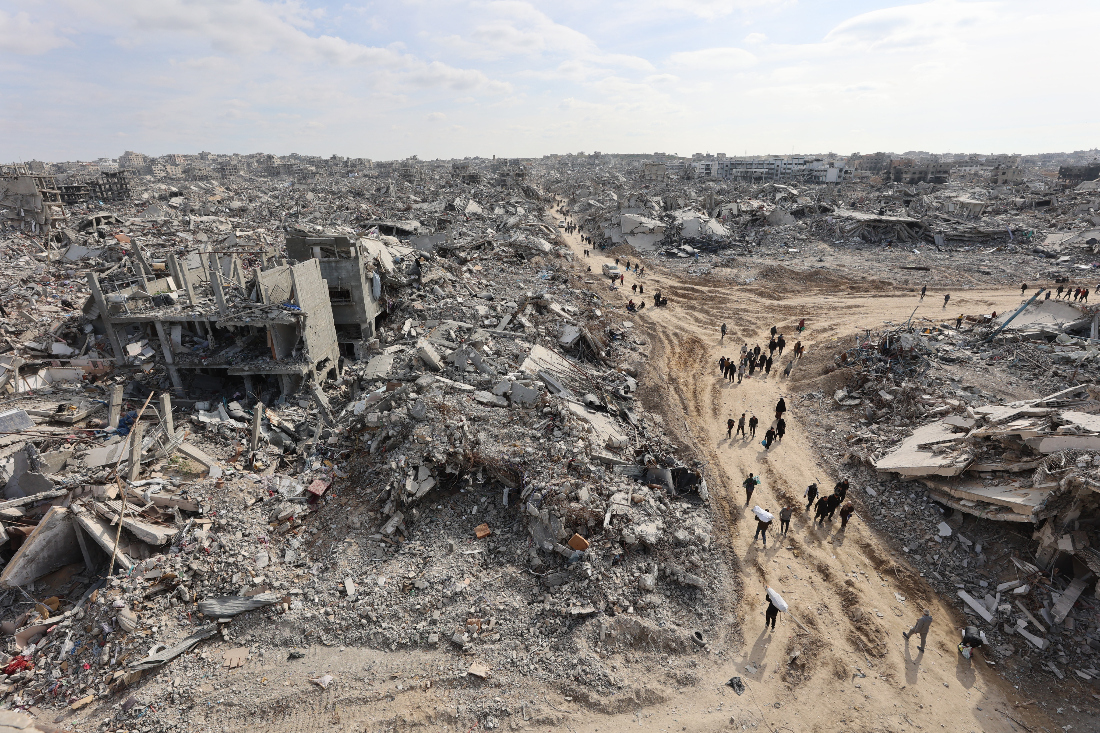
Displaced Palestinians return to war-devastated Jabalia refugee camp in the northern Gaza Strip, shortly before ceasefire deal between Israel and Hamas was implemented. (File/AFP)
In November, The Independent reported that more than 100 BBC employees, in a letter to Davie and CEO Deborah Turness, accused the channel of reproducing and failing to challenge the narratives of Israeli officials that have “systematically dehumanized Palestinians,” while sidelining the Palestinian perspective and failing to contextualize the war within the broader history of 76-year occupation and a tight 18-year Gaza blockade.
Among the concerns noted by staff were “dehumanizing and misleading headlines” that erased Israel’s responsibility, such as “Hind Rajab, 6, found dead in Gaza days after phone calls for help,” given to an article about a 6-year-old girl who was shot by the Israeli military in Gaza in January 2024.
Other concerns included omissions of coverage, such as the failure to live broadcast South Africa’s genocide case against Israel at the International Court of Justice on Jan. 11 but choosing to live broadcast Israel’s defense the following day.
The Independent’s report was followed a month later by an article titled, “The BBC’s Civil War on Gaza,” published on Drop Site, an investigative news platform, featuring 13 BBC journalists who claimed that their objections over the biased coverage were brushed aside.
The 9,000-word article cited an analysis that revealed a “profound imbalance” in the channel’s way of reporting Palestinian and Israeli deaths, arguing that Israeli victims were more humanized.
It also detailed accounts of bias including the use of stronger terms like “massacre,” “slaughter” or “atrocities” when describing Hamas’ crimes while failing to use the same terms to describe Israel’s crackdown on Gaza that killed over 46,000 people, the majority of whom were women and children.
The BBC, at the time, denied allegations of bias and defended its coverage, insisting it “strives to live up to our responsibility to deliver the most trusted and impartial news.”
A BBC spokesperson said at the time: “We are very clear with our audiences on the limitations put on our reporting — including the lack of access into Gaza and restricted access to parts of Lebanon, and our continued efforts to get reporters into those areas.”
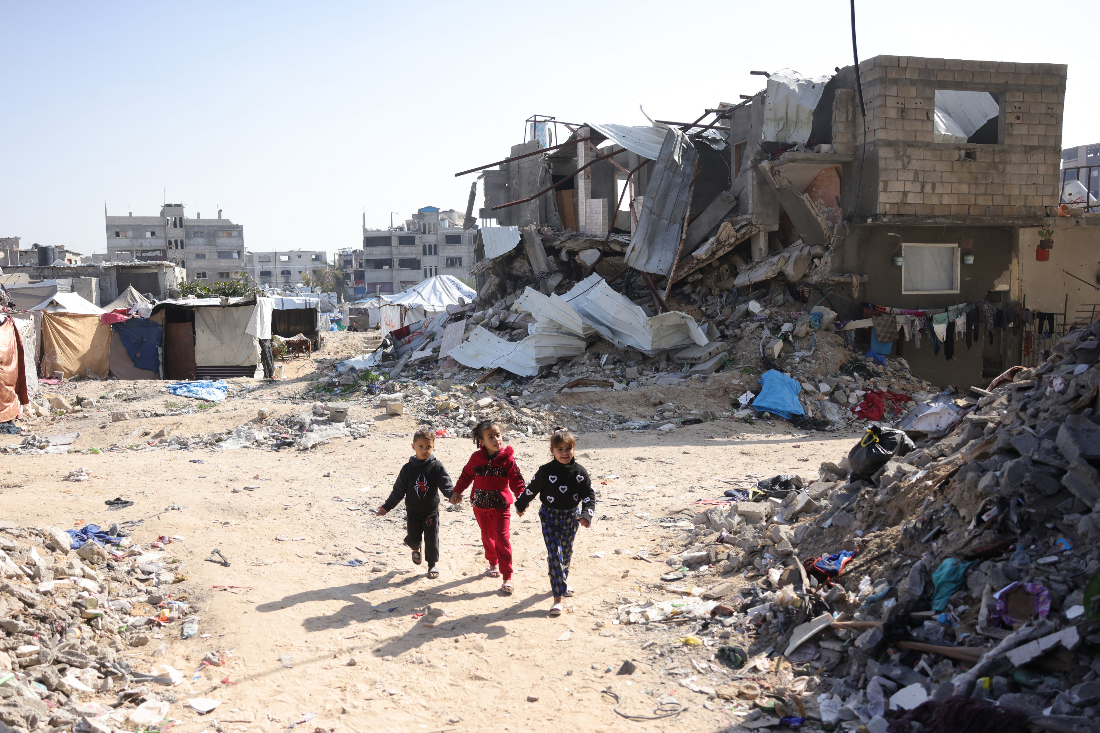
Children play in the rubble of a destroyed building in Jabalia in the northern Gaza Strip amid the ongoing truce between Israel and Hamas. (File/AFP)
If anything, Hahn-Herrera said, the BBC’s recent documentary shared a rare perspective with Western audiences that humanized the suffering of Palestinian children.
“It shows that Palestinians even under occupation, even under constant military attacks, want to have a normal life. It demonstrated that despite all the difficulties and the challenges that Palestinians are facing, they are a resourceful population, and they continue to try to live in normalcy as much as possible,” she said.


