

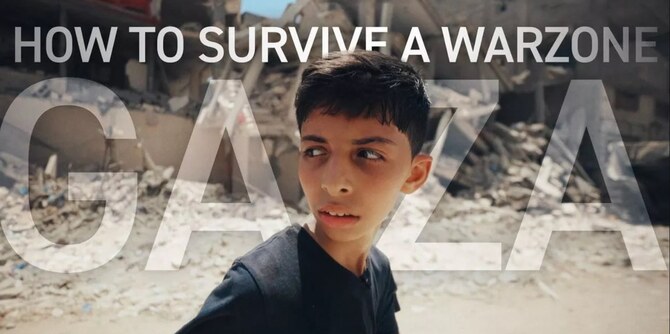

LONDON: The BBC apologized on Thursday for “serious flaws” in the making of a Gaza documentary after it emerged that the child narrator was the son of Hamas’s former deputy minister of agriculture.
The BBC removed its documentary, “Gaza: How To Survive A Warzone,” from its platform after a backlash and launched an immediate review into the “mistakes,” which it called “significant and damaging.”
The BBC said in a press release published Thursday that the review had identified “serious flaws in the making of this program,” which was produced by UK company Hoyo Films.
The broadcaster said that it shared the blame for the “unacceptable” flaws with the production company.
“BBC News takes full responsibility for these and the impact that these have had on the Corporation’s reputation. We apologize,” it added.
The independent production company was asked in writing “a number of times” during the making of the documentary about any potential connections the narrator might have with Hamas.
“Since transmission, they have acknowledged that they knew that the boy’s father was a deputy agriculture minister in the Hamas government; they have also acknowledged that they never told the BBC this fact,” said the press release.
“It was then the BBC’s own failing that we did not uncover that fact and the documentary was aired.”
The production company also revealed that they paid the boy’s mother “a limited sum of money” for the narration.
The BBC is seeking additional assurance that no money was paid directly or indirectly to Hamas.
UK culture minister Lisa Nandy told parliament earlier Thursday that she had demanded “cast-iron” guarantees that Hamas did not receive any money for the documentary after the opposition Conservative party brought an urgent question and called for a public inquiry.
“I also held discussions with the BBC director general earlier this week, at my request, in order to seek urgent answers about the checks and due diligence that should have been carried out,” she added.
The revelations sparked an angry response and led to protests outside the BBC’s London headquarters.
A spokesperson for Campaign Against Antisemitism (CAA) said: “The BBC’s bias and lack of accountability have led it to a new low, where it is a mouthpiece for terrorists and their supporters.”
The Telegraph also reported Tuesday that the Arabic words for Jew or Jews were changed to Israel or Israeli forces or removed from the documentary.
The broadcaster is now working to determine whether any disciplinary action is warranted “in relation to shortcomings in the making of this program.”
“This will include issues around the use of language, translation and continuity that have also been raised with the BBC,” it said.
The decision to remove the documentary from its catch-up service also led to criticism, with more than 500 TV and film workers — including former England footballer Gary Lineker — sending an open letter calling the move “politically-motivated censorship.”
“This film is an essential piece of journalism, offering an all-too-rare perspective on the lived experiences of Palestinian children living in unimaginable circumstances, which amplifies voices so often silenced,” said the letter.
The documentary was initially broadcast on February 17.


