
ISTANBUL: Russian and US diplomats met in Turkiye on Thursday for talks to resolve disputes over the work of their respective embassies in Washington and Moscow, a first test of their ability to reset wider relations and work toward ending the war in Ukraine.
The Kremlin last year described relations as “below zero” under the administration of Joe Biden, who backed Ukraine with aid and weapons and imposed waves of sanctions on Russia to punish it for its 2022 invasion.
But his successor, President Donald Trump, has upended that policy and moved swiftly since taking office last month to open talks with Moscow, pledging to fulfil his repeated promise to bring a quick end to the war.
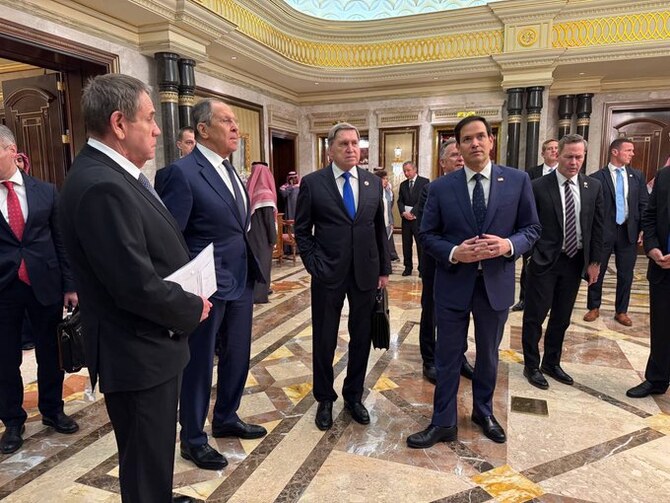
The talks in Istanbul follow a phone call between Trump and President Vladimir Putin on February 12, and a high-level diplomatic meeting in Saudi Arabia six days later.
The Russian team arrived in a black Mercedes van for the start of the meeting at the gated residence of the US consul general in Istanbul. Russian state TV said the talks were expected to last five to six hours.
Ukraine and its European allies are worried that Trump’s rapid rapprochement with Moscow could lead to a deal on ending the war that sidelines them and undermines their security. Trump says he wants to end the bloodshed with an early ceasefire.
Putin this week tempered expectations of a quick deal, saying it was essential to rebuild trust between Russia and the United States before anything could be achieved.
The two countries have expelled diplomats and limited the appointment of new staff at each other’s missions in a series of tit-for-tat measures over the past decade, leaving their embassies thinly staffed.
Narrow focus
The US State Department said Thursday’s talks would cover issues such as staffing levels, visas and diplomatic banking.
“To be clear, there are no political or security issues on the agenda. Ukraine is not on the agenda,” a State Department spokesperson said on the eve of the meeting.
“The constructiveness of these talks will become apparent very quickly; either issues will get resolved or they won’t. We will know soon if Russia is really willing to engage in good faith.”
Russian Foreign Minister Sergei Lavrov said the outcome of the meeting “will show how quickly and effectively we can move.”
He acknowledged that Russia had “created uncomfortable conditions” for USdiplomats in Moscow, in what he said was retaliation for Washington’s treatment of their Russian counterparts.
The talks, despite their narrow focus, are an initial step in a process that could have profound implications for the whole Russia-US relationship in areas such as nuclear disarmament and economic cooperation.
Both sides have said they see potential for lucrative business ventures. Putin said this week that Moscow would be ready to invite the US to enter joint projects to tap rare earth deposits in Russia and in the parts of Ukraine that it has claimed as its own territory.
The US delegation in Istanbul was led by Deputy Assistant Secretary of State Sonata Coulter, and the Russian team by Alexander Darchiyev, head of the foreign ministry’s North America department.
Darchiyev is seen as front-runner to be Russia’s next ambassador to the US, a post that is currently vacant.