

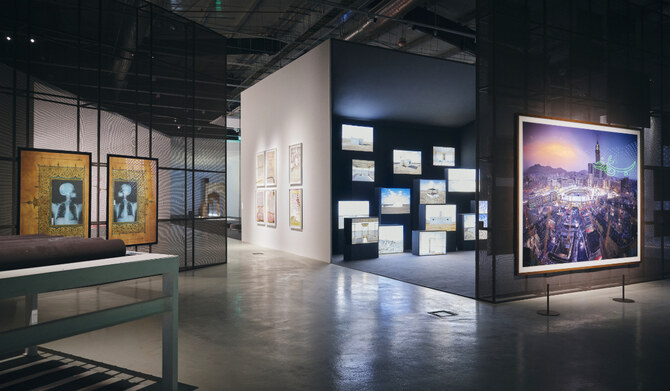


RIYADH: A Saudi traveling exhibition, titled “Art of the Kingdom: Poetic Illuminations,” opened on Monday in Riyadh at the Saudi Arabian Museum of Contemporary Art following its inauguration in Rio de Janeiro, Brazil last year.
Nestled in the capital’s Jax art district, the show brings together works by 17 prominent Saudi contemporary artists from different generations, regions, and artistic practices that demonstrate the country’s burgeoning art scene.
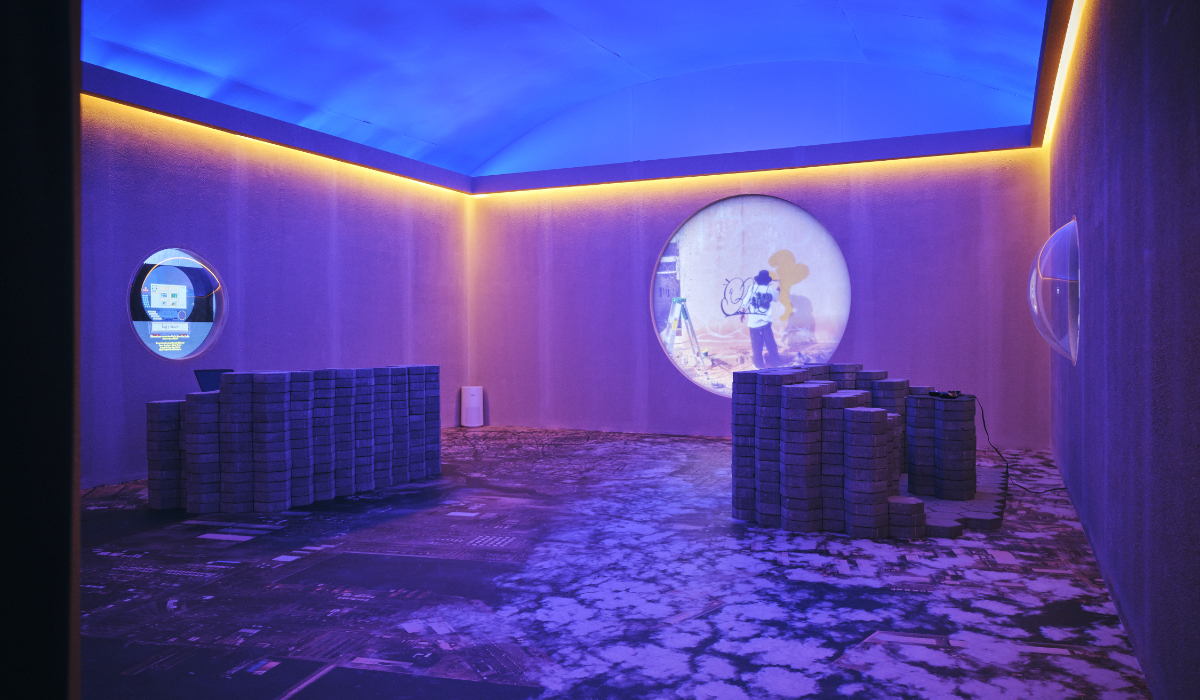
Basmah Felemban's "Brink of the Sea" (2025). (Supplied)
Mona Khazindar, adviser to the Ministry of Culture, said: “The Museums Commission is proud to present ‘Art of the Kingdom’ at SAMoCA at Jax, an exhibition showcasing Saudi Arabia’s dynamic artistic landscape, where tradition meets innovation.
“We are thrilled to celebrate Saudi creative practices in this way and invite audiences, both locally and internationally, to explore our history and culture through contemporary art.”
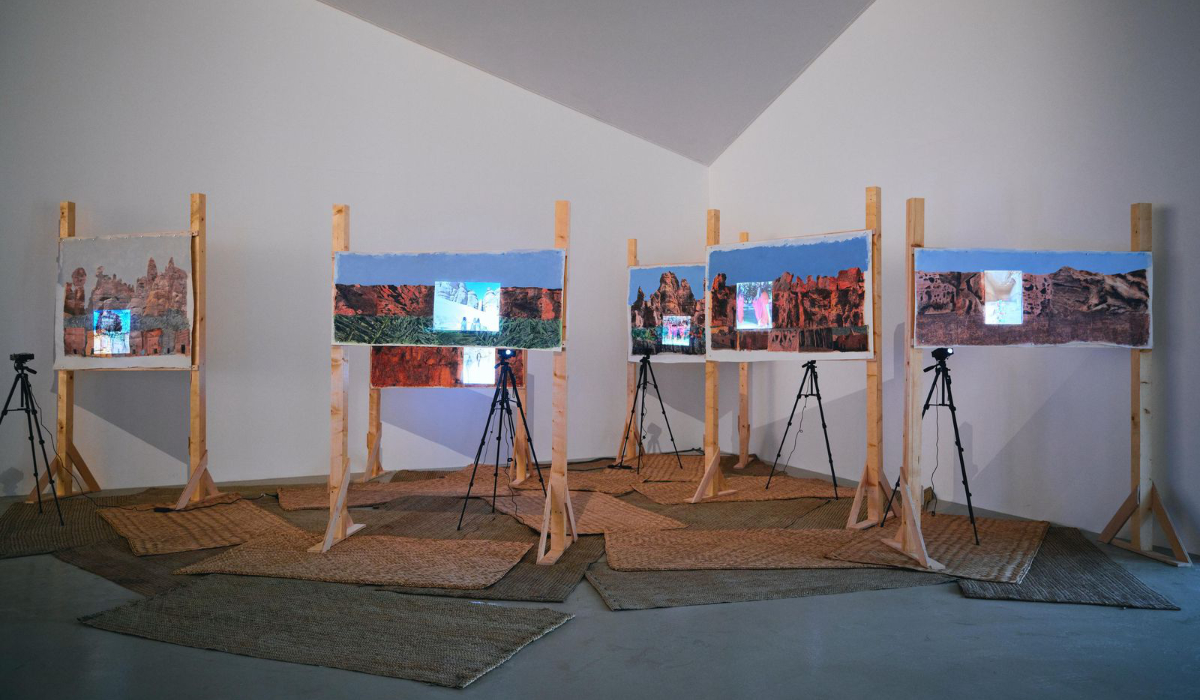
Daniah AlSaleh's "Hinat" (2022). (Supplied)
From paintings to installations and video works, the exhibition showcases the diversity and ambition of contemporary Saudi artists under two themes: the desert and cultural traditions.
Fatma Abdulhadi’s “It Will Heal” explores the evolving dialogue between humans and nature, where traditional practices become ongoing processes.
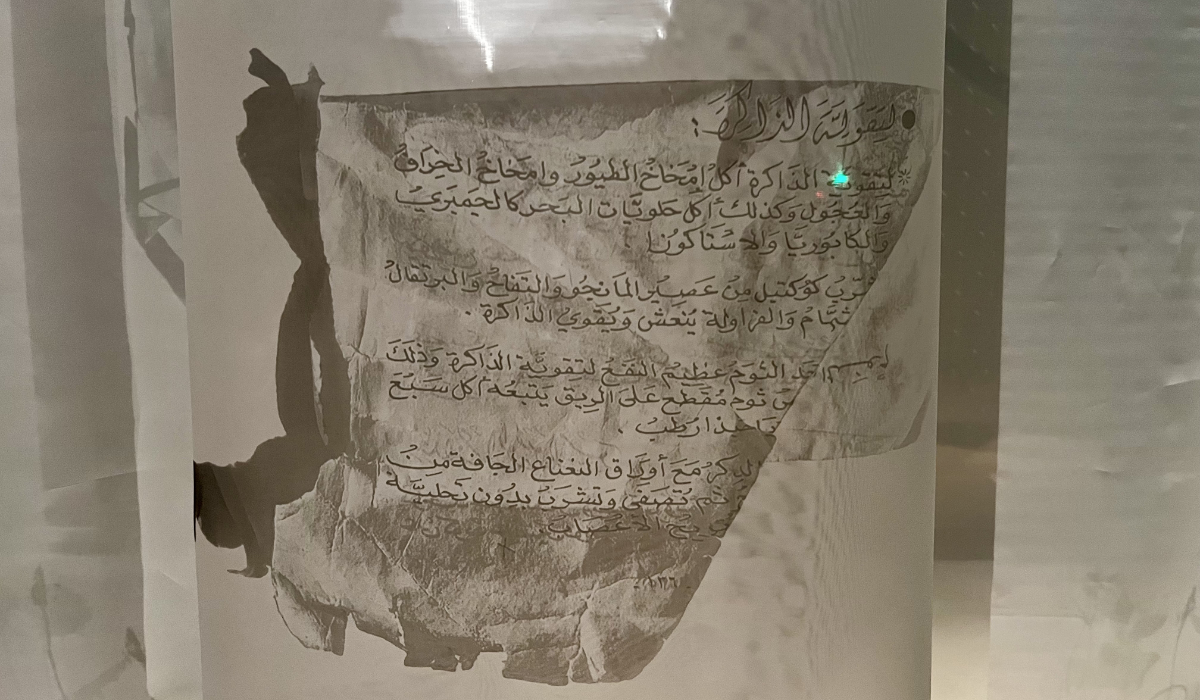
Fatma Abdulhadi’s "It Will Heal" (2025). (AN photo)
Inspired by an old handwritten remedy book passed down to her by her mother, it transforms layered silkscreen prints and charcoal drawings on suspended mesh. Just as plants communicate and adapt, the phrase “it will heal you, inshallah” reflects a belief in continuous connection and renewal.
“It’s a dialogue between humans and nature and everything in between, the recipe that humans do to feel safe, to feel healthy, to feel better,” Abdulhadi said.
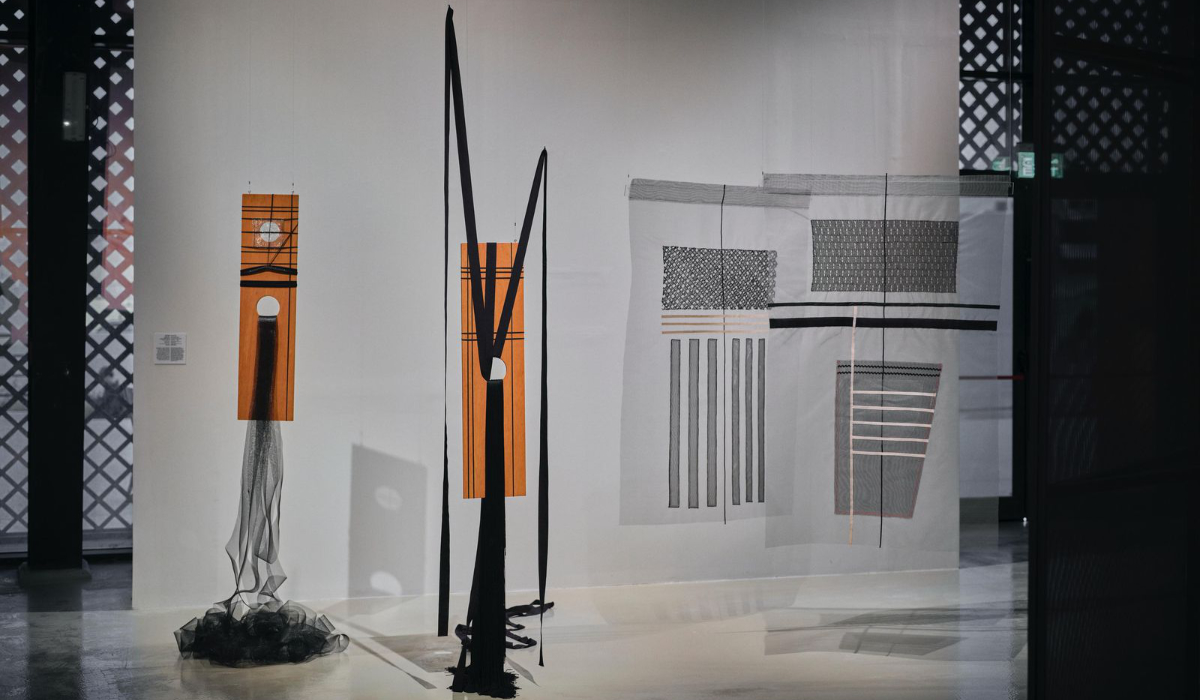
Filwa Nazer’s “The Hands Want to See, The Eyes Want to Caress” (2021). (Supplied)
The sheets feature prints of the plants mentioned in the book as well as recipes in Arabic. The recipes are meant to help heal both physical and emotional troubles. One of the recipes for happiness recommends drinking camel milk with a drop of amber.
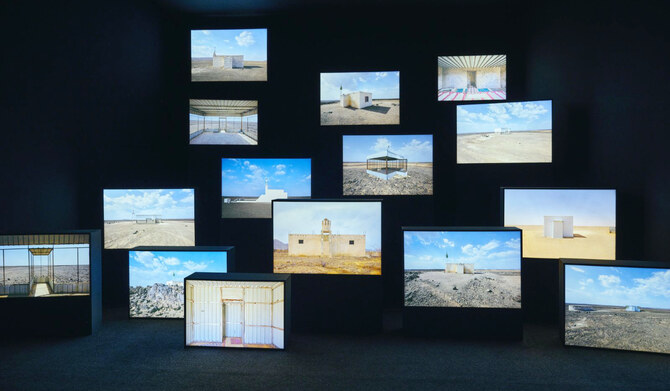
Moath Alofi has two works on display: “People of Pangea” and “The Last Tashahhud.” The former is a series of photos that provide an unconventional view of various locations in Saudi, while the latter is an ongoing photo series that captures small and modest mosques on the deserted roads leading to Madinah.
“These prayer rooms aren’t the usual ones, and this is what makes them really stand out. The raw architecture, the invention that the locals, tribals, Bedouins, or even philanthropists sometimes are trying to achieve by providing travelers a place for rest and worship and prayers—it’s interesting to see the material used, the architecture.
“I think international audiences will be surprised to see something that’s not usually shown,” Alofi told Arab News.
The work is shown in contrast with the anthropological sites captured in “People of Pangea” on the opposing wall of the exhibition.
“It’s not only about the locals or the people who built the mosques but also the ancient humans that actually lived on the land of Saudi Arabia 7,000 years ago. There has always been something happening in this Kingdom.
“You can see that Saudi artists are top notch — they’re up to the challenge, and I’m honored to be part of this as well,” Alofi said about local artists making it to international frontiers.
Filwa Nazer’s “The Hands Want to See, The Eyes Want to Caress” series incorporates sewing and embroidery on mixed media. The four pieces on display, each in dialogue with the other, explore the interplay of fragility and strength.
She told Arab News: “The focus was to document and research Jeddah modernist architecture between the late 30s and early 60s. My works were inspired by one house called Beit Ba Junaid — the owner of the house and its history and how it changed and evolved, and later on deteriorated over time and abandoned.
“I love being part of these exhibitions, organized by (the Ministry of Culture) and such, because I feel they are quite accessible to everyone, first of all. Second, they’re a place to connect with Saudi youth, and I want to have that communication with them, so I’m proud to be part of it and with my peers who are all great artists and friends.”
Other featured artists include Muhannad Shono, Lina Gazzaz, Manal Al-Dowayan, Ayman Zedani, Ahmed Mater, Ahaad Al-Amoudi, Shadia Alem, Faisal Samra, Ayman Yossri Daydban, Daniah Al-Saleh, Sarah Brahim, Ahmad Angawi, Nasser Al-Salem, and Basmah Felemban.


