
DUBAI: Fresh off a group exhibition in Dubai, titled “The Sublime Nature of Being,” Arab News spoke to Lebanese artist and architect Nadim Karam about his inspirations, the power of mentorship and the “beating clock in the upper pocket of (his) shirt.”
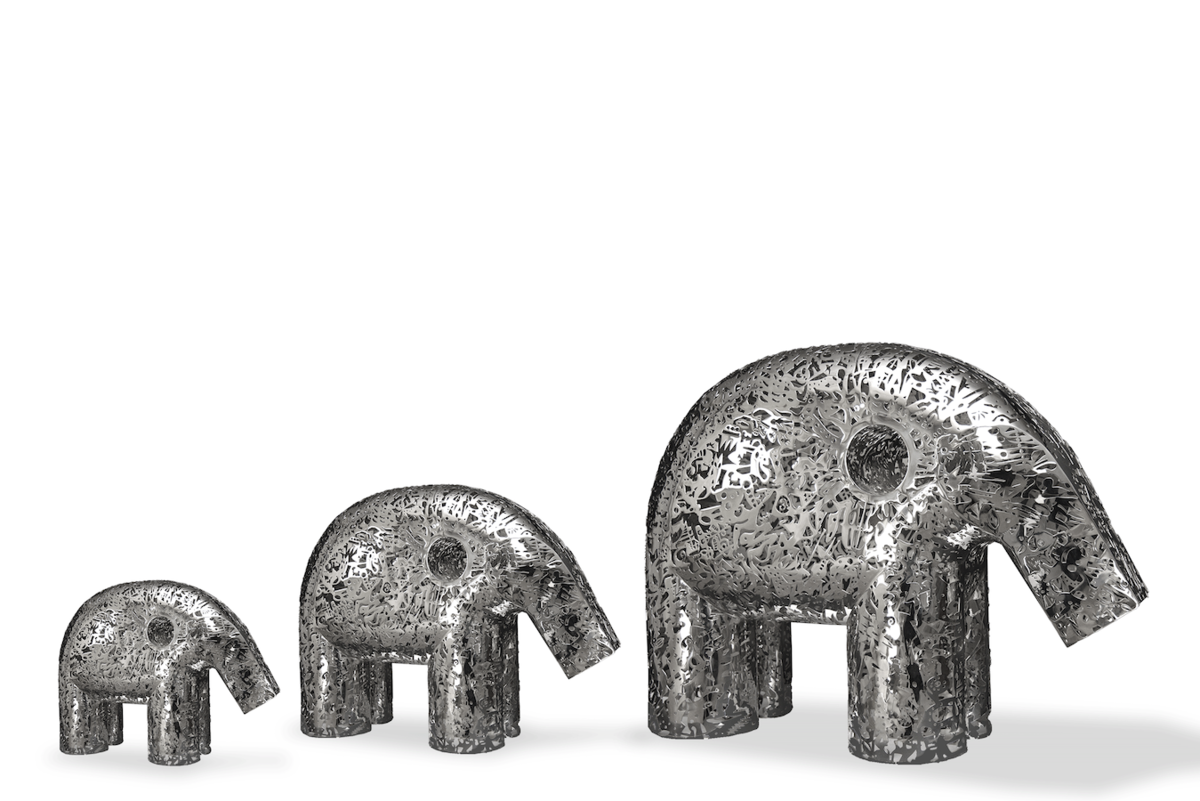
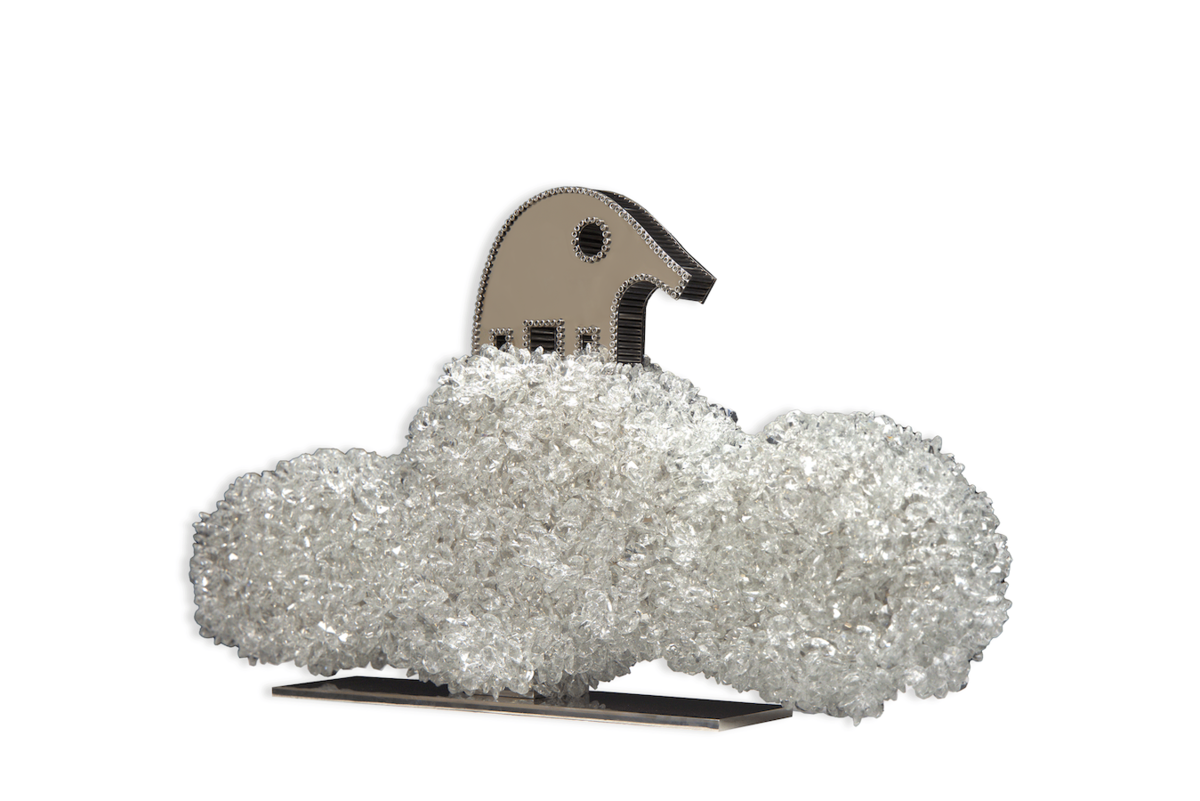
The multi-disciplinary creative focuses on sculptures in varying scales, as well as works on paper and site-specific public art projects.

The multi-disciplinary creative focuses on sculptures in varying scales. (Supplied)
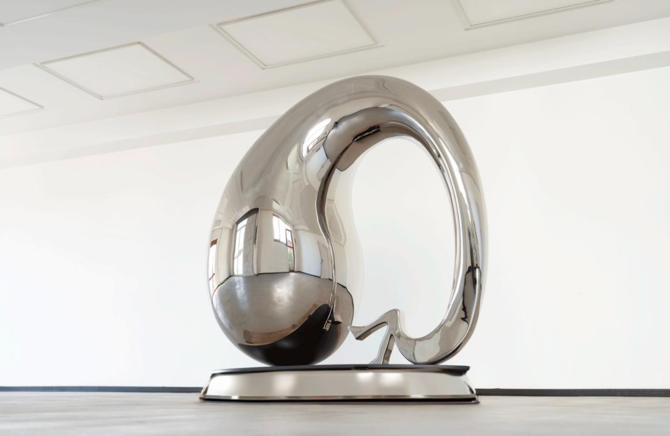
He most recently took part Dubai-based exhibition “The Sublime Nature of Being” - a collaboration with ICD Brookfield Arts program that was curated by artist Ambika Hinduja Macker, founder and creative director of the art and design firm Impeccable Imagination - where he showcased his polished stainless steel “Silent Thinker.”
“‘Silent Thinker’ is about total silence, or the inner void that strives to reach the sublime… the clarity found in inward silence is both oppositional and complementary to the stimulus and inspiration that can be found in the thriving, multi-cultural scene of Dubai,” he explained.
Karam’s formative years in Lebanon and his doctoral studies in Japan continue to be defining influences in his work. He studied under Japanese architects Fumihiko Maki, Tadao Ando, and Hiroshi Hara, who died in January.
“Professor Hara… profoundly influenced my thinking process. The most critical thing I learned from him is the discipline of applying a philosophical concept to a creative process and coming up with a product, which could be an architectural building, a sculpture or a designed object,” Karam said.
“Through his diverse studies — Buddhist philosophies and the double negation of Arazu-Arazu, his research on villages worldwide, and his deep interest in mathematics, music and cosmology — he taught me to widen my vision of the world and continuously ‘move on the edge of loose boundaries’ for a better understanding and acceptance of the complex world around me.”
(Supplied)
Hara, the architect known for designing Kyoto Station Building and Osaka’s Umeda Sky Building, is the mind behind award-winning buildings including the Tasaki Museum of Art in Nagano Prefecture and Yamato International Inc.’s Tokyo office in Ota Ward in Japan.
Karam’s paintings and sculptures have been exhibited worldwide and in 2002, he co-chaired the UN/New York University conference in London for the reconstruction of Kabul, Afghanistan.
When donning his curator’s hat — Karam was Lebanon’s curator at the 2003 Rotterdam Biennale, among other showcases — he believes his role is to facilitate the artist’s vision.
(Supplied)
“I would give priority to the artist, being one myself! When the artist has given their fullest, the work should touch the visitor. In the process of the development of a work, the most important thing is to be true to oneself, irrelevant of any other consideration. Then the curator’s role is to put the works in the context of the where, how, and what,” he explained.
With such a diverse schedule, it is a wonder the artist has time to himself to work — the ticking clock is something Karam says he is mindful of.
“The beating clock in the upper pocket of my shirt is always pushing me forward, sending me warnings and scheduling my work; especially in the case of the production of sculptures and public art projects which necessitates a complex structured mechanism which can involve hundreds of people, depending on the scale and nature of the work,” he said, noting that writing and painting are creative outlets that offer him the chance to slow down.
“During these times when I am alone, even the notion of the clock disappears, and only the painting remains.”