KARACHI: Health authorities have confirmed third case of wild poliovirus type 1 (WPV1) of this year in the southern province of Sindh, the country’s polio program said on Saturday.
The polio program said the latest polio case was confirmed in Larkana district, the second case reported in Sindh this year. Authorities earlier confirmed a polio case in the northwestern Khyber Pakhtunkhwa province.
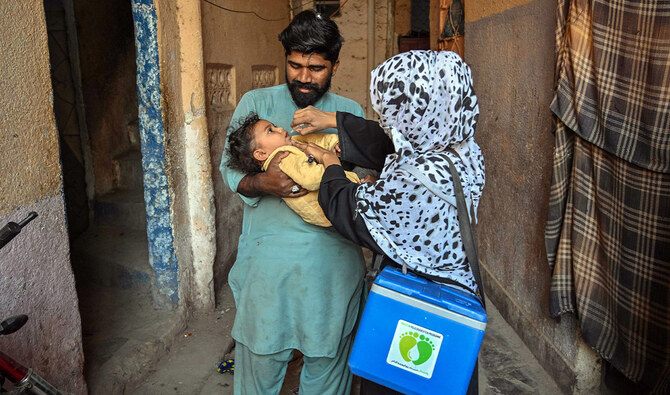
Polio is a paralyzing disease that has no cure. Multiple doses of the oral polio vaccine and completion of the routine vaccination schedule for all children under the age of 5 is essential to provide children high immunity against the disease.
Pakistan this month concluded its first nationwide anti-polio campaign of 2025, with 99 percent of the targets achieved, according to the polio program. The campaign, conducted on Feb. 3-9, vaccinated more than 45 million children.
“We urge parents and caregivers to actively participate in these campaigns and ensure that children receive polio vaccine,” the polio program said in a statement.
Pakistan witnessed an intense resurgence of polio virus last year, with a total of 74 cases reported nationwide. Of these, 27 were from Balochistan, 22 from Khyber Pakhtunkhwa, 23 from Sindh, and one each from Punjab and Islamabad.
Pakistan and Afghanistan are the last two countries in the world where polio remains an endemic.
Immunization campaigns have succeeded in most countries and have come close in Pakistan, but persistent problems remain. In the early 1990s, Pakistan reported around 20,000 cases annually but in 2018 the number dropped to eight cases. Six cases were reported in 2023 and only one in 2021.
Pakistan’s polio program began in 1994 but efforts to eradicate the virus have since been undermined by vaccine misinformation and opposition from some religious hard-liners who say immunization is a foreign ploy to sterilize Muslim children or a cover for Western spies. Militant groups also frequently attack and kill members of polio vaccine teams.


![]()

Pakistan reports third polio case of this year in southern Sindh province
Short Url
https://arab.news/w2y5b
Pakistan reports third polio case of this year in southern Sindh province
- The latest polio case was reported in Larkana district, which is the second case in Sindh this year
- Pakistan and Afghanistan are the only two countries in the world where polio remains an endemic
Latest updates



Recommended


© 2026 SAUDI RESEARCH & PUBLISHING COMPANY, All Rights Reserved And subject to Terms of Use Agreement.