ISLAMABAD: Representatives of Shia and Sunni tribes from Kurram, a district in Pakistan’s northwestern Khyber Pakhtunkhwa (KP) province that has seen sectarian and tribal clashes over the last three months, have assured their support to the government’s efforts to restore peace in the region, the KP information department said on Saturday.
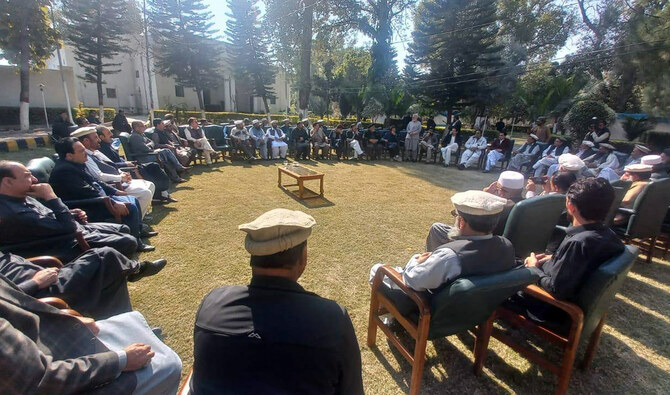
The statement came after separate meetings of delegations of Shia and Sunni tribes, based in Kurram, with KP government spokesman Muhammad Ali Saif at his office in Peshawar, according to the information department. The delegates held a detailed exchange of views with Saif, who is also part of provincial bodies tasked with resolution of the issue, on law-and-order situation in Kurram.
Kurram, a tribal district of around 600,000 where Pakistani federal and provincial authorities have traditionally exerted limited control, has frequently witnessed violence between its Sunni and Shiite communities over land and power. Travelers to and from the area often ride in convoys escorted by security officials.
Fresh feuding began on Nov. 21 when gunmen ambushed a convoy and killed 52 people, mostly Shiites. The assault triggered road closures and other measures that have disrupted people’s access to medicine, food, fuel, education and work and created a humanitarian crisis in the area, where authorities say over 150 people have been killed in nearly three months of clashes.
“Both delegations informed Barrister Dr. Saif of their respective concerns and requested strict action against the miscreants,” the KP information department said in a statement after the meetings.
“The two sides reiterated their commitment to ensure full implementation of the peace agreement and assured full cooperation with the security forces and the government to establish peace.”
The development came days after Pakistani security forces raided several villages in Kurram and arrested at least 30 suspects accused of deadly attacks on aid trucks and security forces convoy, which killed five soldiers and a truck driver this week.
Monday’s ambush was the third such assault in Kurram since January, in which unidentified men attacked vehicles carrying relief goods near Charkhel Ochat, Bagan and Mindori areas when they were en route to Parachinar, the main town of the district, according to Kurram police official Yaqoob Khan.
Shiite Muslims dominate parts of Kurram, although they are a minority in the rest of Pakistan, which is majority Sunni. The warring tribes had reached a peace agreement on Jan. 1, but sporadic violence has continued in Kurram and both sides have occasionally engaged in battles with machine guns and heavy weapons that have isolated the remote, mountainous region from the rest of the country.
The two sides had agreed on the demolition of bunkers, handover of heavy weapons to authorities, and denying space to extremists as part of the peace agreement. The government has so far razed over 150 bunkers in the region and has announced March 23 as the deadline to demolish all such structures.
Authorities have also been airlifting the injured and ailing from Kurram to Peshawar, and airdropping essential supplies in the region via helicopters since last month.
Saif said the provincial government was taking all possible steps to establish permanent peace in the region, according to the KP information department.
“The miscreants are trying to incite sectarian tensions through their nefarious acts,” he said. “We will not allow the miscreants to succeed in their ulterior motives.”


![]()

Representatives of warring sects back efforts to restore peace in troubled Pakistani district, government says
Short Url
https://arab.news/pm739
Representatives of warring sects back efforts to restore peace in troubled Pakistani district, government says
- The delegations held separate meetings with spokesman of Khyber Pakhtunkhwa provincial government and shared their concerns about situation in Kurram district
- The northwestern district has witnessed sectarian clashes as well as attacks on aid convoys and security forces that have killed over 150 people in three months
Latest updates


© 2026 SAUDI RESEARCH & PUBLISHING COMPANY, All Rights Reserved And subject to Terms of Use Agreement.