ISLAMABAD: The Afghan embassy in Pakistan announced on Friday the envoy met with the top official of the United Nations refugee agency in the country to deliberate on the required mechanism for refugee deportation, including their tripartite meeting with Pakistani authorities.
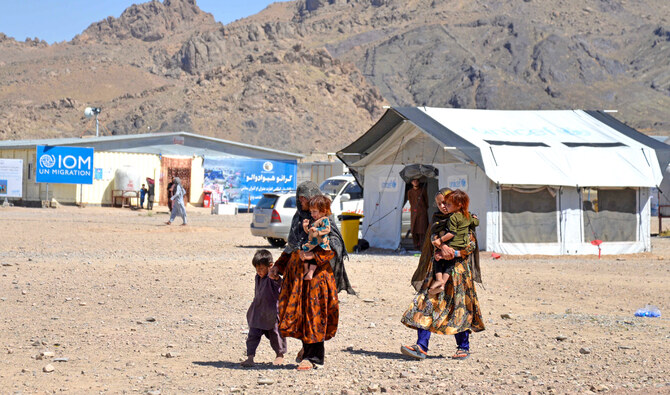
The development comes as Pakistan has expelled over 800,000 Afghan nationals since 2023. The government launched a deportation drive against “illegal immigrants,” primarily targeting Afghans, amid a spike in suicide bombings, most of which it attributed to Afghan nationals without providing evidence.
Earlier this week, the embassy issued a strongly worded statement, saying Afghan citizens in Islamabad and the nearby garrison city of Rawalpindi had been subjected to arrests, searches and orders from the police to leave the twin cities and relocate to other parts of Pakistan.
However, the foreign office in Islamabad swiftly responded, saying any allegations related to the mistreatment of Afghan refugees in the country were “misplaced” while calling on Kabul to ensure its nationals’ smooth repatriation.
“H.E. Sardar Ahmad Shakeeb, the Acting Ambassador of Afghanistan to Pakistan, met with Ms. Philippa Candler, the Head of the United Nations High Commissioner for Refugees (UNHCR) in Pakistan,” the Afghan embassy said in a social media post on X.
“Their discussions focused on Pakistan’s recent decision to expel Afghan refugees from Islamabad and Rawalpindi, along with their broader deportation across the country after June this year,” it continued. “They also deliberated on the necessary mechanisms and facilities required for this process, the importance of a tripartite meeting involving Afghanistan, Pakistan and UNHCR, and other relevant matters.”
Until the government initiated the expulsion drive in 2023, Pakistan was home to over four million Afghan migrants and refugees, of which around 1.7 million were undocumented, according to government figures.
Afghans constitute the largest portion of migrants in the country, many of whom arrived after the Taliban took over Kabul in 2021, but a significant number have been present since the 1979 Soviet invasion of Afghanistan.
Islamabad insists the deportation drive is not aimed specifically at Afghans but at all those living illegally in Pakistan.
Last year, however, Pakistan’s Interior Minister Mohsin Naqvi announced that Afghans would need permission to stay in the federal capital, Islamabad, after December, alleging their involvement in an opposition protest of former Prime Minister Imran Khan’s party that led to clashes with police.
UNHCR and the International Organization for Migration (IOM) also voiced concern over the situation of Afghan nationals in Islamabad and Rawalpindi in a joint statement earlier this month, informing Pakistan had arrested over 800 Afghan nationals from Islamabad and Rawalpindi since the beginning of the year.
Last month, Amnesty International expressed concern over reports of arbitrary detention and harassment of Afghan refugees and asylum-seekers by law enforcement agencies in Islamabad.
However, the foreign office maintained this week that Pakistan had done what it could for these refugees.
“We expect interim Afghan authorities to create conducive conditions in Afghanistan so that these returnees are fully integrated into Afghan society,” the foreign office said.


![]()

Afghan envoy, UN official discuss refugee deportation mechanism amid expulsions from Pakistan
Short Url
https://arab.news/5qfyg
Afghan envoy, UN official discuss refugee deportation mechanism amid expulsions from Pakistan
- Afghanistan’s embassy has said its nationals are subjected to searches and arrests in Islamabad, Rawalpindi
- Foreign office denies any mistreatment of refugees, asks Kabul to create conducive conditions for returnees
Latest updates



© 2026 SAUDI RESEARCH & PUBLISHING COMPANY, All Rights Reserved And subject to Terms of Use Agreement.