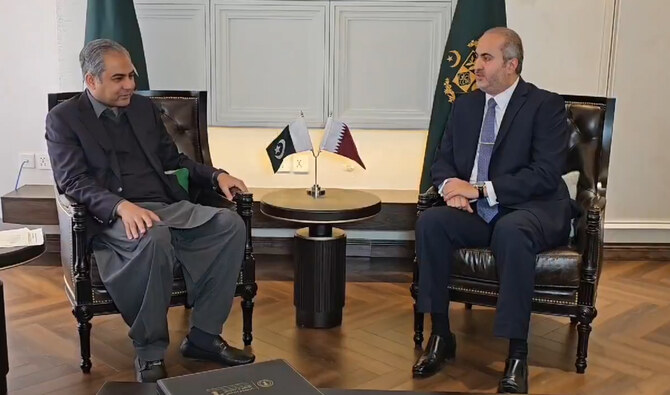
ISLAMABAD: Interior Minister Mohsin Naqvi on Thursday met Qatari ambassador Ali Mubarak Ali Essa Al-Khater in Islamabad and discussed the release of Pakistani prisoners from Qatari jails as well as increased cooperation in combating narcotics.
In a report presented last year before the Senate Standing Committee on Human Rights, the foreign ministry said 23,456 Pakistanis were being held in jails abroad including 12,156 in Saudi Arabia, 5,292 in the United Arab Emirates, 338 in Qatar, 519 in Iraq, 450 in Bahrain, 59 in Kuwait, 308 in Turkiye, 255 in Malaysia, 88 in Afghanistan, 100 in Iran and 400 in China.
“During the meeting, matters of mutual interest, bilateral relations, and enhancing cooperation in various fields were discussed in detail,” a statement from the interior ministry said after Naqvi met Al-Khater. “Both sides also discussed the release of Pakistani citizens imprisoned in Qatar. Both sides also agreed to increase cooperation in combating narcotics.”
“Naqvi highlighted that a conference of Gulf countries on Narcotics control is being held in Islamabad in April, and the head of Qatar’s drug control department has been invited to participate in this conference. He emphasized the importance of close cooperation with friendly countries in combating narcotics.”
Qatar is an important trade partner of Pakistan in the GCC region and a major supplier of LNG to the South Asian country. Around 300,000 Pakistanis live in Qatar, working in a variety of sectors, including construction, transportation, health, education, engineering, finance, and public service.
Prime Minister Shehbaz Sharif visited Doha last year and announced that Qatar would invest $3 billion across various sectors in Pakistan, including trade, investment, and culture.


Pakistan and Qatar discuss release of prisoners, combating narcotics
https://arab.news/zkgur
Pakistan and Qatar discuss release of prisoners, combating narcotics

- Around 23,456 Pakistanis are held in jails abroad, including 338 in Qatar
- Qatar is an important trade partner of Pakistan in the GCC region

Pakistan urges pilgrims to complete Saudi biometrics as Hajj preparations gain pace
- Government warns pilgrims biometric verification is required for Hajj visas
- Step follows tighter oversight after last year’s Hajj travel disruptions
ISLAMABAD: Pakistan’s government on Friday urged aspiring pilgrims to complete mandatory Saudi biometric verification for Hajj visas, as preparations for the 2026 pilgrimage gather pace following stricter oversight of the Hajj process.
The announcement comes only a day after Pakistan’s Religious Affairs Minister Sardar Muhammad Yousuf said regulations for private Hajj operators had been tightened, reducing their quota following widespread complaints last year, when tens of thousands of pilgrims were unable to travel under the private Hajj scheme.
“Saudi biometric verification is mandatory for the issuance of Hajj visas,” the Ministry of Religious Affairs said in a statement, urging pilgrims to complete the process promptly to avoid delays.
“Hajj pilgrims should complete their biometric verification at home using the ‘Saudi Visa Bio’ app as soon as possible,” it added.
The statement said the pilgrims who were unable to complete biometric verification through the mobile application should visit designated Saudi Tasheer centers before Feb. 8, adding that details of the centers were available on Pakistan’s official Hajj mobile application.
Pakistan has been steadily implementing digital and procedural requirements for pilgrims ahead of Hajj 2026, including mandatory training sessions, biometric checks and greater use of mobile applications, as part of efforts to reduce mismanagement.
Saudi Arabia has allocated Pakistan a quota of 179,210 pilgrims for Hajj 2026, with the majority of seats reserved under the government scheme and the remainder allocated to private tour operators.


