Digital Cooperation Organization signs multiple memorandums of understanding as fourth general assembly ends

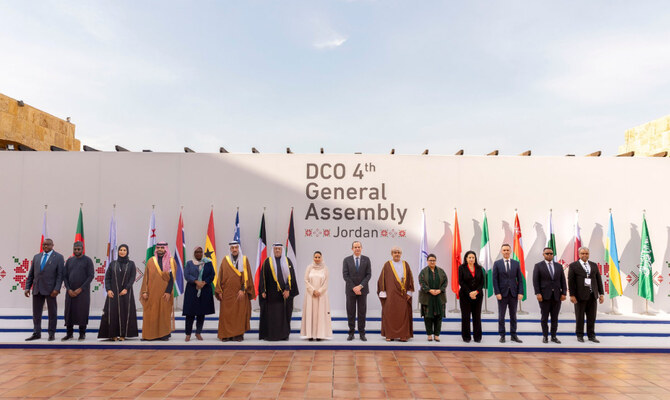
Representatives of member states of the DCO are pictured at its 4th General Assembly in Amman, Jordan. (Supplied)
Short Url
Updated 20 February 2025
Follow

Digital Cooperation Organization signs multiple memorandums of understanding as fourth general assembly ends

  • Secretary-general says event marked 4 years of progress

AMMAN: The Digital Cooperation Organization signed numerous memorandums of understanding during its fourth general assembly in Amman, which concluded on Wednesday.

The memorandums were signed between the DCO and the Prince Mohammed bin Salman Foundation, Hewlett-Packard, the Agency for Economic Cooperation and Development, the Sultanate of Oman and 500 Global.

A statement of intent was also signed between the DCO and the UN Office for South-South Cooperation.

The signings came after a delegation from the DCO visited Jordan’s Prime Minister Jaafar Abdel Fattah Hassan.

Sami Smeirat, the Jordanian minister of digital economy and entrepreneurship, and the chairman of the DCO Council, said that Jordan’s presidency of the organization in 2024 had demonstrated the country’s ability to lead global efforts toward building an inclusive digital economy.

He said: “Throughout this year we have launched ambitious initiatives, strengthened public-private partnerships, and laid solid foundations to empower youth and women in the technology sector.”

Smeirat spoke of the 2025 presidency, which was handed to Kuwait.

He said: “We hand over the presidency to our brothers in the State of Kuwait. We reaffirm Jordan’s commitment to remaining an active partner in achieving the organization’s goals. We look forward to continuing our joint efforts to realize our shared vision: a digital world marked by prosperity and fairness for all.”

Deemah Al-Yahya, the secretary-general of the DCO, said that the general assembly marked four years of progress for the organization.

The secretary-general highlighted DCO’s upcoming ambitions, adding: “While we have achieved much over the past four years, there is still important work ahead to drive digital economic growth for all.”

Wednesday’s event featured panels and discussions with leading experts from across the world.

The DCO was founded in November 2020 and currently has 16 nations as members, including Saudi Arabia, Jordan, Pakistan, Bahrain, Bangladesh and Oman. It also has 39 observer and partner organizations.


Saudi Food and Drug Authority pioneering digital health safety

Updated 15 December 2025
Follow

Saudi Food and Drug Authority pioneering digital health safety

  • Digital foundation enabled the development of centralized dashboards that provide real-time analysis of adverse events
  • Major improvement has been the use of Robotic Process Automation (RPA) to ensure medication safety works smoothly

TOKYO: Saudi Arabia is establishing itself as a regional leader in digital health regulation by integrating advanced technologies into the Saudi Food and Drug Authority’s (SFDA) pharmacovigilance and cosmetic safety oversight.

In line with Vision 2030’s digital goals, these projects are creating new standards for using data to protect public health, according to the SFDA.

A report by the Oxford Business Group says the transformation began with modernising the National Pharmacovigilance Centre’s adverse reaction reporting system. Moving from paper-based submissions to the fully digital “Saudi Vigilance” platform marked a significant step forward.

The introduction of smart reporting forms with structured data fields and behavioural nudges grounded in psychological principles significantly improved reporting quality and completion rates.

This digital foundation enabled the development of centralised dashboards that provide real-time analysis of adverse events, enabling early identification of safety signals and under-reporting trends.

A major improvement has been the use of Robotic Process Automation (RPA) to ensure medication safety works smoothly. By letting computers handle repetitive tasks like sorting reports and checking data, the SFDA has become more efficient.

The new RPA system for identifying safety signals has also sped things up. These technology solutions have made work easier and happier employees by eliminating boring manual tasks.

The SFDA’s digital changes also help prevent risks by using new online learning tools. The aRMMs e-learning system, with training videos about high-risk medicines, has changed how health care workers learn. Adding digital safety steps directly into hospital computer systems has also made a big difference. This new approach puts safety alerts and learning materials directly into doctors’ daily work, ensuring important information reaches them when they need it.

Digital innovation has also helped prevent medication errors. Moving from the old Phonetic and Orthographic Computer Analysis system to the new Saudi Name Registration (SNR) platform has made it easier to spot potentially confusing drug names. With better computer programs that check both Arabic and English names, plus real-time alerts and automatic updates, the SNR system is a big step forward in ensuring the safety of medicines before they reach the market.

Looking ahead, the SFDA plans to use these digital changes to make cosmetic products safer as well.

Planned projects using artificial intelligence include computer systems that spot rule-breaking, automated ingredient checks, and tools that read customer feedback to identify early warning signs.

This digital strategy puts Saudi Arabia ahead in new ways of making rules. By using artificial intelligence, automation, and data analysis in its work, the SFDA is improving how it tracks medicine safety and preparing for further progress in keeping products safe for consumers.

All these efforts support Vision 2030’s goal of building a knowledge-based economy and keeping Saudi citizens as safe as possible.