

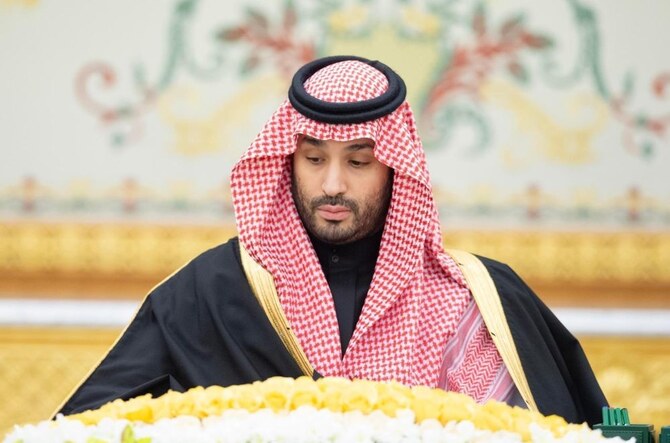
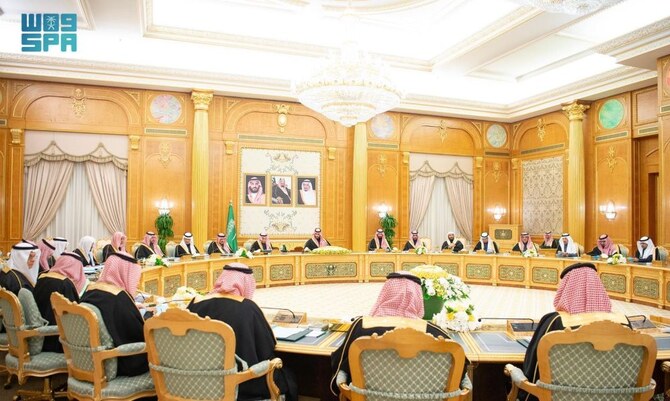

RIYADH: Saudi Crown Prince Mohammed bin Salman chaired a Cabinet session in Riyadh on Tuesday and briefed ministers on his recent talks with French President Emmanuel Macron and US Secretary of State Marco Rubio.
During the talks, he discussed relations with both countries, ways to strengthen ties across various sectors, as well as regional and international developments.
The Cabinet reiterated the Kingdom’s support for the talks between Russia and the US in Riyadh, highlighting the Saudi commitment to global peace and security.
The Council of Ministers reviewed the government’s recent activities, particularly those aimed at strengthening bilateral relations. It also discussed the outcomes of the Kingdom’s participation in regional and international meetings, highlighting its commitment to collective efforts and expanding cooperation to achieve its aspirations and objectives.
The Cabinet reiterated the Kingdom’s call, expressed during the 42nd Arab Interior Ministers Council, to enhance security cooperation, coordinate efforts to combat crime and develop a comprehensive security strategy to address shared challenges.
The council said that the Kingdom’s presidency of the GlobE Network reflects the international community’s confidence in Saudi Arabia’s ability to drive a major shift in consolidating cooperation among member states, enhancing policies and developing tools to effectively combat corruption.
The Cabinet welcomed the Jeddah Declaration issued by the 13th Conference of Ministers of Culture in the Islamic World. The declaration outlines a shared vision for leveraging culture to drive social and economic progress, safeguard Islamic heritage and foster collaboration to address global challenges.
For the occasion of Founding Day, observed on Feb. 22, the Cabinet expressed pride in the history of the Saudi state, its deep-rooted heritage and its three-century-long civilization. It commended the nation’s achievements in fostering unity, justice and continuous progress.
The Cabinet highlighted the Kingdom’s prominent position among the top 10 global markets for battery energy storage, marked by the start of operations at the 2,000-megawatt-hour-capacity Bisha project. This reflects the transformation of the energy sector and the Kingdom’s leadership in energy production as well as export.
The Cabinet commended the opening of regional headquarters for 600 international companies within the Kingdom, highlighting global recognition of Saudi Arabia’s economic stability, promising growth trajectory and strategic geographic location, supported by exceptional talent and expertise.


