


DIYARBAKIR, Turkiye: A mother weeping for a teenaged daughter shot dead by a Turkish sniper and a father mourning a son killed by PKK militants are among countless families hoping that a new peace drive can end Turkiye’s four-decade-old Kurdish conflict.
Both live in the Kurdish-majority southeast, where tens of thousands of lives have been lost in violence between the Turkish state and the outlawed Kurdistan Workers’ Party (PKK).
The new peace efforts are backed by President Recep Tayyip Erdogan’s government, and families on both sides of the divide want it to succeed.
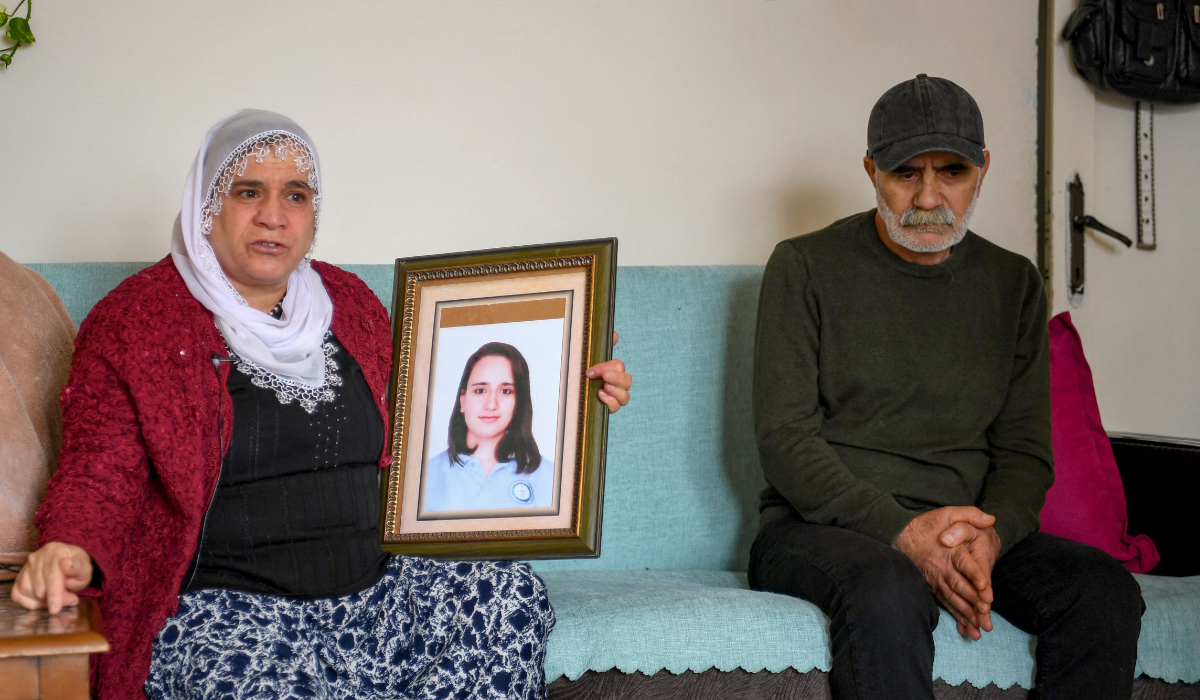
Fahriye Cukur (L) and Mustafa Cukur hold a portrait of their daughter Rozerin, who was killed in 2016 during fierce clashes between militants and security forces in January 2016, during an interview in Diyarbakir, southeastern Turkey, on February 14, 2025. (AFP)
At her home in the city of Diyarbakir, Fahriye Cukur, 63, cannot take her eyes off a picture on the wall of her daughter Rozerin in school uniform. She was killed during clashes between militants and security forces in January 2016.
The collapse of a truce in 2015 sparked a new round of the conflict when many government curfews were imposed, including in the city’s Sur district.
Cukur said her daughter — who was passionate about photography — had gone to Sur during a break in a curfew to collect exam papers from friends. But the authorities suddenly reduced the break from five hours to three and the fighting reignited.
“People were stuck there, including my daughter. She took refuge at the home of an elderly couple, but when she tried to leave, she was shot by a sniper,” her mother told AFP.
The family found out about the death through a news bulletin.
It took five months, several protests and a hunger strike for the grieving parents to get her body back.
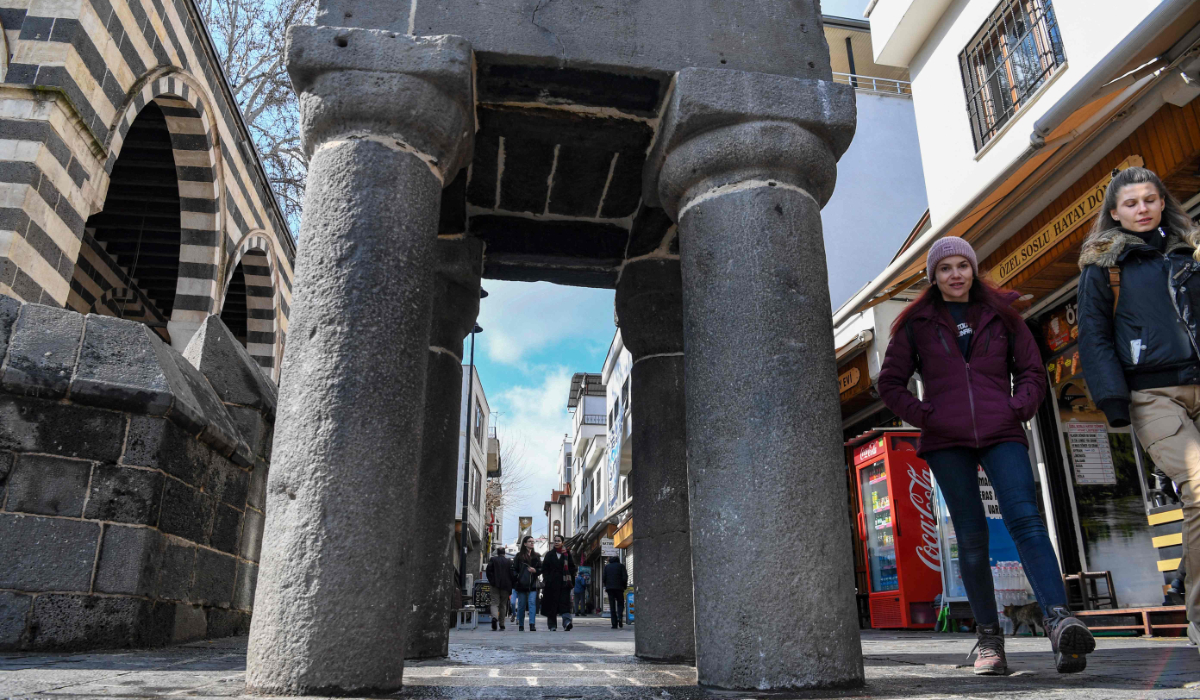
A women walks next to the Four-Legged Minaret Mosque where Kurdish lawyer Tahir Elci was shot dead at the historical Sur district in Diyarbakir, southeastern Turkey, on February 14, 2025. (AFP)
Cukur said the authorities had mixed up their teenage daughter with a female PKK fighter, codenamed Roza, who had been hiding in the same district.
They claimed she had been trained in the mountains, but her mother told AFP: “My daughter was never engaged in political activism.
“She loved school, she wanted to become a psychiatrist and help her people,” she added, indicating the “TC” insignia — meaning “republic of Turkiye” — on her school uniform.
The PKK’s jailed founder Abdullah Ocalan is widely expected to urge followers to lay down their arms in the coming weeks.
Many families hope this will end the conflict and spare other families from the pain they live with.
“We can’t forget what happened but we have to hope. I have two more kids: how do I know the same thing won’t happen to them tomorrow?” she said.
Last month, the International Crisis Group said clashes between the militants and Turkish troops were largely confined to northern parts of Iraq and Syria, with violence on Turkish soil at its lowest level since 2015.
“At least we can breathe a bit now,” she said.
“I want the bloodshed to stop. I want a ceasefire. And I am not alone.”
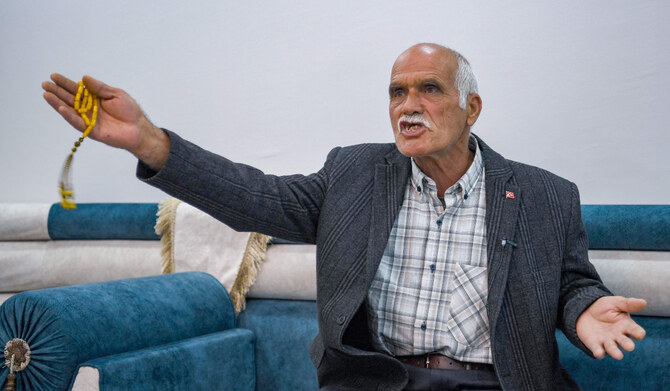
In the nearby province of Mardin, Sehmuz Kaya, a 67-year-old Kurd, recalled how his son Vedat, a police officer, was kidnapped by PKK militants in eastern Turkiye in July 2015.
Vedat Kaya, wearing civilian clothes, was in a car with his brother and four others when militants blocked the road.
“They only kidnapped Vedat,” he told AFP, saying it was months before the family saw a PKK video of him in the Kandil mountains of northern Iraq.
The family tried every possible channel, through the state and the main pro-Kurdish party, to secure his release.
But after six years, they received a devastating call from the authorities, who said he was one of the 13 “Gara martyrs.” The 13, all but one of whom were soldiers or police, had been killed by the PKK in the Gara region of northern Iraq.
“I was devastated,” he said, struggling for words, saying his son had been tortured before his death.
“They have no faith nor conscience. My son was just doing his job,” he said.
Pinned on the ceiling is a huge Turkish flag, and on the walls are photos of Vedat, whose name has been given to a nearby park.
Although he wants peace more than anything, he admitted he has little faith.
“They are not honest,” he snapped, referring to DEM, the main pro-Kurdish party that is relaying messages from Ocalan to the government. He suspects they have ties to the PKK.
“The families of the martyrs are heartbroken. Enough is enough,” he said. “We support the process but we want something real.”


