


RIYADH: Saudi Arabia’s mining sector is poised for a major boost with nearly SR29 billion ($7.7 billion) in investments being directed toward the city of Wa’ad Al-Shamal.
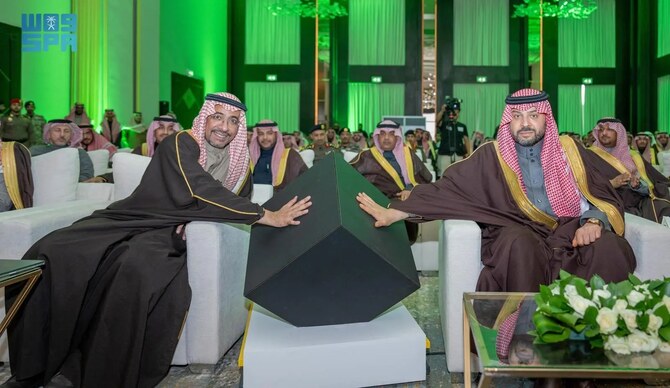
Prince Faisal bin Abdulaziz, governor of the Northern Borders region, inaugurated a series of industrial, developmental, and hospitality projects aimed at solidifying the city’s role as a major hub for the Kingdom’s mining industry.
A major highlight of the announcement was the launch of Ma’aden’s Phosphate 3 project, backed by the Shareek program and an investment of SR28 billion.
This initiative is set to increase Saudi Arabia’s phosphate production capacity to 9 million tonnes annually, building upon the existing Phosphate 1 and Phosphate 2 projects, each producing 3 million tonnes. This expansion is expected to bolster the country’s industrial supply chain, generate new investment opportunities, and create employment within the sector.
The governor emphasized that these projects align with Saudi Vision 2030, which aims to expand the mining sector’s contribution to the national economy.
He highlighted that Wa’ad Al-Shamal has transformed into a model for integrated industrial cities, combining major industries, logistics services, and modern residential communities, which enhance its appeal to both local and international investors.
The event was attended by Minister of Industry and Mineral Resources Bandar Alkhorayef, Deputy Minister for Mining Affairs Khalid Al-Mudaifer, and other key officials from both the public and private sectors.
Additionally, the Saudi Authority for Industrial Cities and Technology Zones launched several new industrial, logistical, and service projects, with investments exceeding SR550 million. These projects include infrastructure development in the industrial zone, which spans 4.3 million sq. meters. As part of this initiative, 32 ready-built units have been established, consisting of 20 pre-built factories and 12 support units covering a combined area of 45,000 sq. meters.
Further key developments include a 132 kilovolt, 200 megavolt-amperes power substation, overhead transmission lines, and a 7-km bridge connecting the industrial zone to the international highway. These projects aim to improve logistics and energy reliability, creating an attractive environment for investments, particularly in the phosphate industry.
In addition, the governor inaugurated the expansion of Ma’aden’s residential city in Wa’ad Al-Shamal, adding 96 new residential units. This brings the total number of housing units to 579, supporting industrial and mining sector employees and their families.
To complement the region's infrastructure improvements, the Movenpick Wa’ad Al-Shamal Hotel, developed with an investment exceeding SR500 million, was officially opened. The five-star hotel is designed to cater to the growing accommodation demand from workers, investors, and visitors to the industrial city and Northern Borders region, further enhancing Wa’ad Al-Shamal’s position as an integrated industrial and investment hub.
As part of broader efforts to advance the mining sector, Alkhorayef, along with the deputy minister for mining affairs and other officials, visited several industrial and developmental projects in Wa’ad Al-Shamal and the Northern Borders region.
The tour included a visit to the Scientific Excellence School in Arar, where the minister reviewed modern training laboratories and met with students and faculty. Established through a partnership between Ma’aden and the Ministry of Education with an investment of approximately SR180 million, the initiative seeks to promote scientific education and develop expertise in STEM fields.
The minister also toured the Saudi Technical Institute for Mining in Arar, which has trained over 1,081 students, including 52 female graduates, in a range of specializations such as underground and surface mining, mining operations, and mechanical and electrical maintenance. Equipped with advanced mining simulation and training facilities, the institute plays a pivotal role in workforce localization and preparing Saudi talent for the mining industry.
The tour also included a visit to the Hazm Al-Jalamid mine, one of the Kingdom’s key phosphate mining sites, producing more than 11 million tonnes of phosphate ore annually.
The Northern Borders region is home to extensive mineral resources valued at approximately SR4.669 trillion.
It is a major source of phosphate, a critical element in global food security due to its role in agricultural fertilizer production. The region also contains high-quality deposits of coal, dolomite, limestone, and silica sand. It currently holds five phosphate ore reserve sites and 29 active mining licenses, including 15 for building materials and 14 for mineral extraction.


