

Egypt’s official reserve assets soar 36% annually to reach $45bn

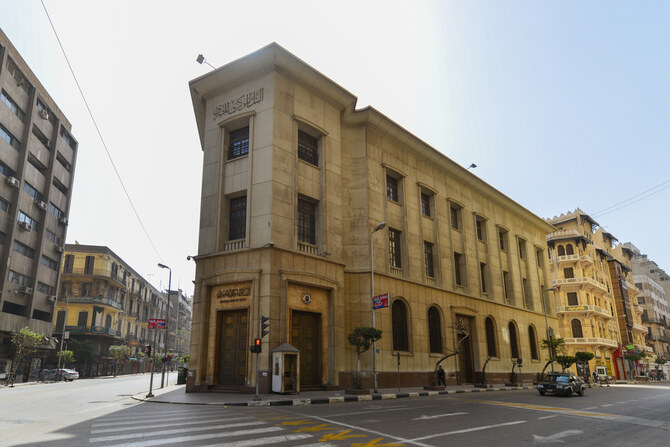
The Central Bank of Egypt in Cairo. Shutterstock
Short Url
Updated 17 February 2025
Follow

Egypt’s official reserve assets soar 36% annually to reach $45bn

RIYADH: Egypt’s official reserve assets surged by nearly 36 percent year on year, reaching $45.05 billion in January, according to recent data. 

Figures from the Central Bank of Egypt show that the increase was primarily driven by a sharp rise in the value of gold reserves, which grew by 37 percent over the year, reaching $11.42 billion. 

Gold now represents around 25 percent of Egypt’s total reserves, reinforcing its role as a key hedge against global economic volatility and a valuable buffer for the country’s foreign exchange position. 

The growth in Egypt’s reserves was not limited to gold. A significant 70 percent rise in other reserve assets also contributed to the overall increase, representing approximately 49 percent of the total reserves. 

Data also showed that foreign currency reserves in convertible currencies remained relatively stable, edging up by just 1.05 percent to $11.2 billion in January. 

Special Drawing Rights, a form of international reserve asset issued by the International Monetary Fund, witnessed a dramatic decline of 91.55 percent, falling to just $31 million. 

This sharp drop suggests that Egypt has likely tapped into its SDR holdings to meet urgent liquidity needs, further highlighting the strain on the country’s foreign exchange resources. 

Meanwhile, other foreign currency assets, which include securities and deposits not classified as part of the Central Bank’s official reserve holdings, increased by 18.65 percent, reaching $14.06 billion.  

The rise was primarily driven by a surge in foreign deposits outside the official reserves, which rose by 53 percent to $10.17 billion. 

The need for enhanced liquidity in Egypt became especially pronounced throughout 2024. The country faced severe foreign exchange shortages, a sharp devaluation of the Egyptian pound, and mounting structural economic pressures. 

The Egyptian pound’s decline to a record low on the parallel market exacerbated trade disruptions and investor uncertainty, prompting urgent economic reforms. 

In response to these challenges, Egypt secured a landmark $35 billion agreement with Abu Dhabi’s ADQ in February, injecting critical reserves. 

In March, the country also received an $8 billion package from the International Monetary Fund, which provided essential support for fiscal and structural adjustments. 

The central bank’s decision to float the currency and implement interest rate hikes further helped restore stability. 

These policy measures not only helped attract foreign inflows but also boosted remittances, which contributed to the recovery of Egypt’s reserve levels. 


Kuwait to boost Islamic finance with sukuk regulation

Updated 05 February 2026
Follow

Kuwait to boost Islamic finance with sukuk regulation

  • The move supports sustainable financing and is part of Kuwait’s efforts to diversify its oil-dependent economy

RIYADH: Kuwait is planning to introduce legislation to regulate the issuance of sukuk, or Islamic bonds, both domestically and internationally, as part of efforts to support more sustainable financing for the oil-rich Gulf nation, Prime Minister Sheikh Ahmad Abdullah Al-Ahmad Al-Sabah said on Wednesday.

Speaking at the World Governments Summit in Dubai, Al-Sabah highlighted that Kuwait is exploring a variety of debt instruments to diversify its economy. The country has been implementing fiscal reforms aimed at stimulating growth and controlling its budget deficit amid persistently low oil prices. Hydrocarbons continue to dominate Kuwait’s revenue stream, accounting for nearly 90 percent of government income in 2024.

The Gulf Cooperation Council’s debt capital market is projected to exceed $1.25 trillion by 2026, driven by project funding and government initiatives, representing a 13.6 percent expansion, according to Fitch Ratings.

The region is expected to remain one of the largest sources of US dollar-denominated debt and sukuk issuance among emerging markets. Fitch also noted that cross-sector economic diversification, refinancing needs, and deficit funding are key factors behind this growth.

“We are about to approve the first legislation regulating issuance of government sukuk locally and internationally, in accordance with Islamic laws,” Al-Sabah said.

“This enables us to deal with financial challenges flexibly and responsibly, and to plan for medium and long-term finances.”

Kuwait returned to global debt markets last year with strong results, raising $11.25 billion through a three-part bond sale — the country’s first US dollar issuance since 2017 — drawing substantial investor demand. In March, a new public debt law raised the borrowing ceiling to 30 billion dinars ($98 billion) from 10 billion dinars, enabling longer-term borrowing.

The Gulf’s debt capital markets, which totaled $1.1 trillion at the end of the third quarter of 2025, have evolved from primarily sovereign funding tools into increasingly sophisticated instruments serving governments, banks, and corporates alike. As diversification efforts accelerate and refinancing cycles intensify, regional issuers have become regular participants in global debt markets, reinforcing the GCC’s role in emerging-market capital flows.

In 2025, GCC countries accounted for 35 percent of all emerging-market US dollar debt issuance, excluding China, with growth in US dollar sukuk issuance notably outpacing conventional bonds. The region’s total outstanding debt capital markets grew more than 14 percent year on year, reaching $1.1 trillion.