

Islamabad slams Israeli PM for attempting to undermine Saudi Arabia’s ‘unwavering’ position on Palestine

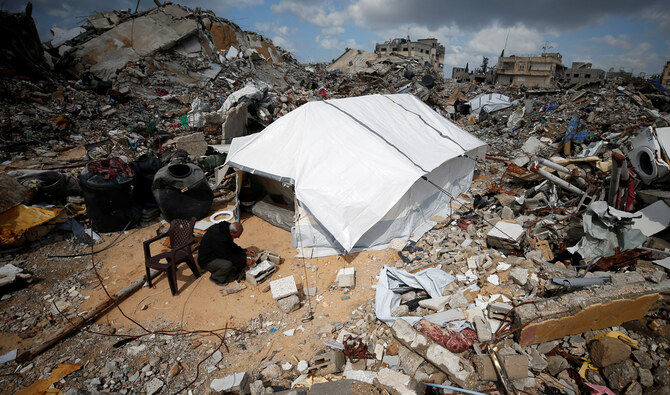
A Palestinian man works to light a fire outside his tent, set up near the rubble of his house, amid a ceasefire between Israel and Hamas, in Jabalia refugee camp in the northern Gaza Strip on February 13, 2025. (REUTERS)
Short Url
Updated 14 February 2025
Follow

Islamabad slams Israeli PM for attempting to undermine Saudi Arabia’s ‘unwavering’ position on Palestine

  • Netanyahu’s remarks about the establishment of a Palestinian state on the Saudi territory drew widespread backlash this month
  • Pakistan has reiterated its call to summon an extraordinary meeting of the Organization of Islamic Cooperation on the issue

ISLAMABAD: Pakistan on Friday slammed Israeli Prime Minister Benjamin Netanyahu for attempting to undermine Saudi Arabia’s “unwavering” position on Palestine by calling for the relocation of millions of Palestinians and establishing a Palestinian state in the Kingdom.
Israeli officials have proposed establishing a Palestinian state on the Saudi territory after Netanyahu seemingly joked about the idea during an interview on Israel’s Channel 14 on Feb. 16, according to Reuters.
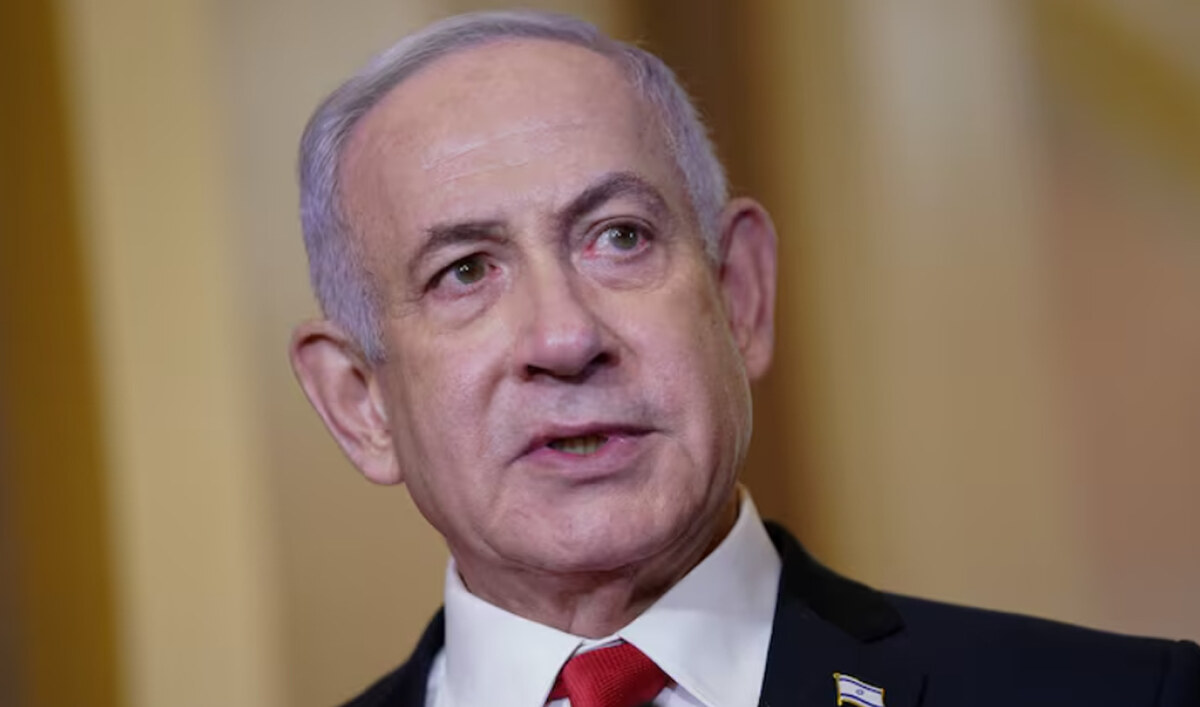


Israeli Prime Minister Benjamin Netanyahu speaks to reporters next to the US house speaker at the US Capitol in Washington on February 7, 2025. (REUTERS)

Netanyahu’s comments came amid a six-week truce announced on Jan. 19 between Hamas and Israel that ended 15 months of war, involving the gradual withdrawal of Israeli forces from central Gaza and the return of displaced Palestinians to the north.
Shafqat Ali Khan, a spokesperson for the Pakistani foreign office, said Islamabad “condemns in unequivocal terms” the recent statement by the Israeli prime minister, suggesting the Palestinian people should establish their state in Saudi Arabia.
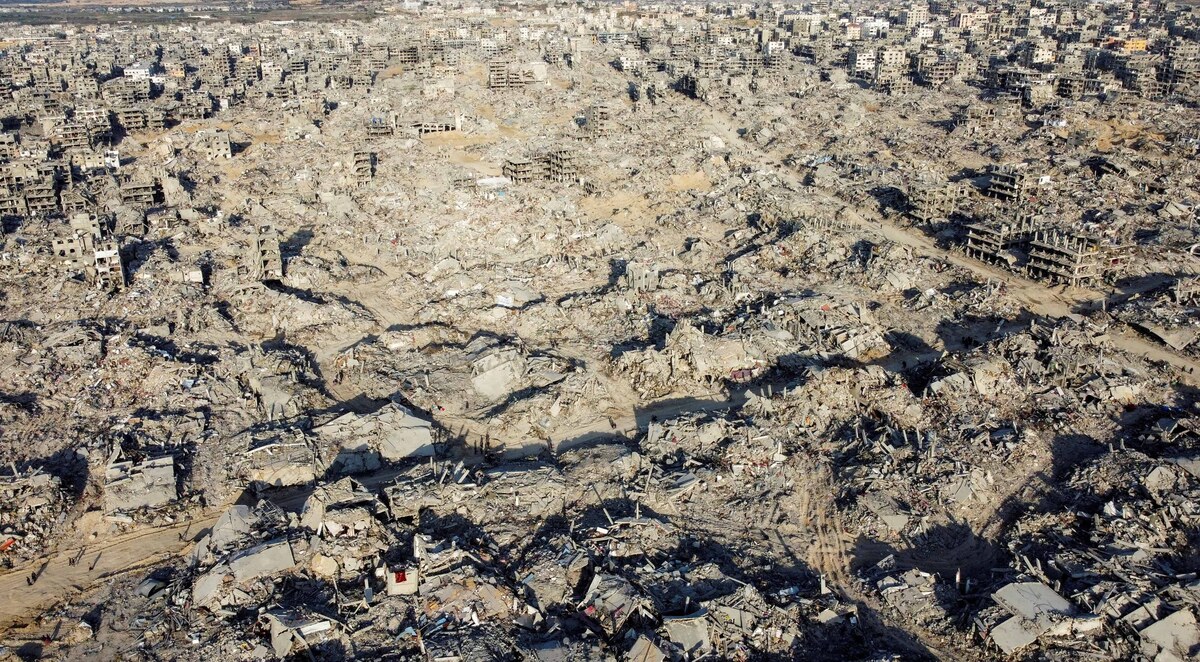


A drone view, taken on January 19, 2025, shows houses and buildings lying in ruins, following a ceasefire between Israel and Hamas, in Jabalia in the northern Gaza Strip. (REUTERS)

“The remarks by Israel are irresponsible, provocative and thoughtless, and are offending, undermining and disregarding the legitimate rights of the Palestinian people to self-determination, and an independent state on their own, historical and legitimate territory,” he said at a weekly press briefing.
“Pakistan stands in solidarity with the Kingdom of Saudi Arabia, and any attempt to undermine Saudi Arabia’s unwavering position and misrepresentation of its commitment to the Palestinian cause is deeply regrettable.”
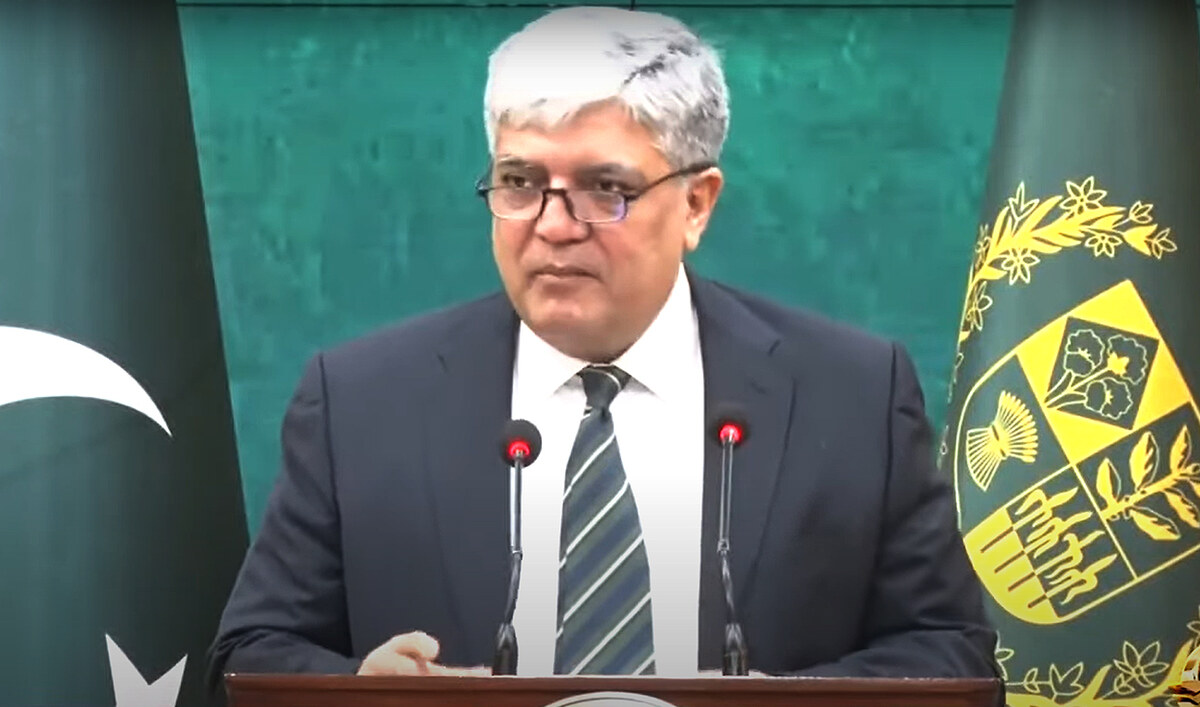


Shafqat Ali Khan, spokesperson for the Pakistani foreign office, speaks during a weekly press briefing at the Ministry of Foreign Affairs in Islamabad on February 14, 2025. (Screengrab/PTV)

Pakistan has strong economic, defense and cultural ties with the Kingdom, while Islamabad does not recognize nor have diplomatic relations with Israel and calls for an independent Palestinian state based on “internationally agreed parameters.”
The remarks by the Israeli PM followed a suggestion last month by US President Donald Trump that Palestinians in Gaza should be resettled in Egypt, Jordan, or other countries — a proposal rejected by Egypt, Jordan, Pakistan, and other nations apart from being condemned by international rights groups.
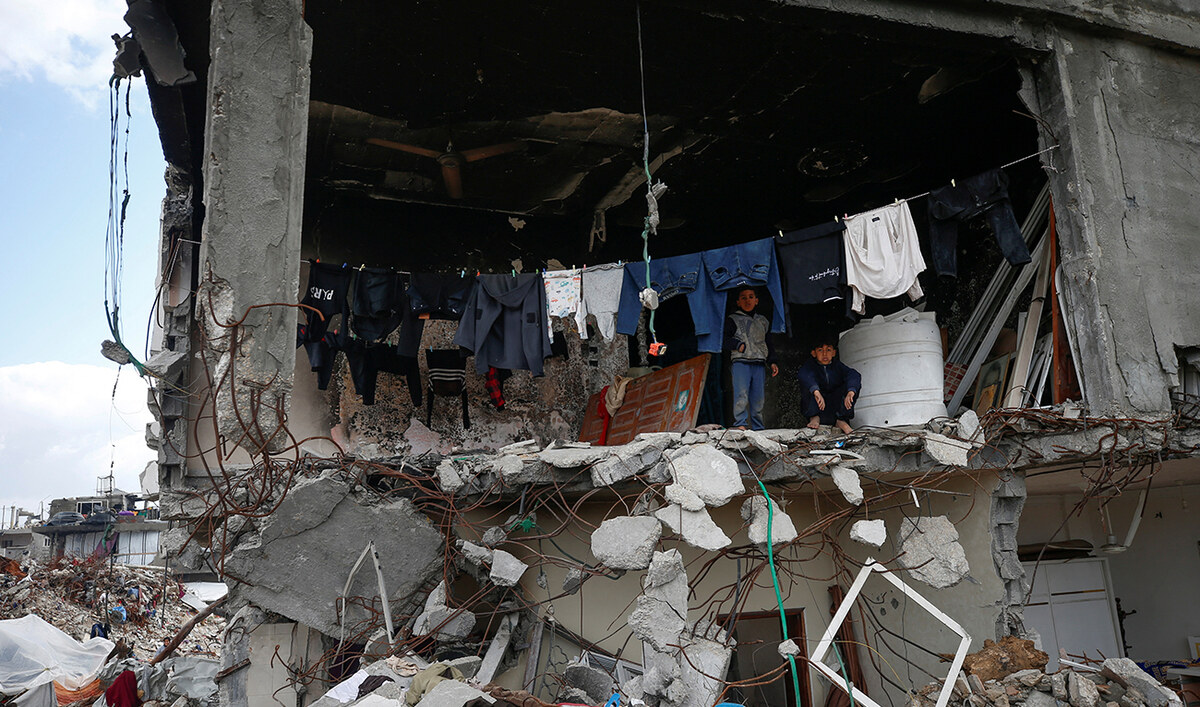


Palestinian children look out from the ruins of their house, amid a ceasefire between Israel and Hamas, in Jabalia refugee camp in the northern Gaza Strip on February 13, 2025. (REUTERS)

Saudi Arabia’s foreign ministry responded sharply to Netanyahu’s remarks on Sunday, saying it rejected “such statements that aim to divert attention from the continuous crimes committed by the Israeli occupation against the Palestinian brothers in Gaza.”
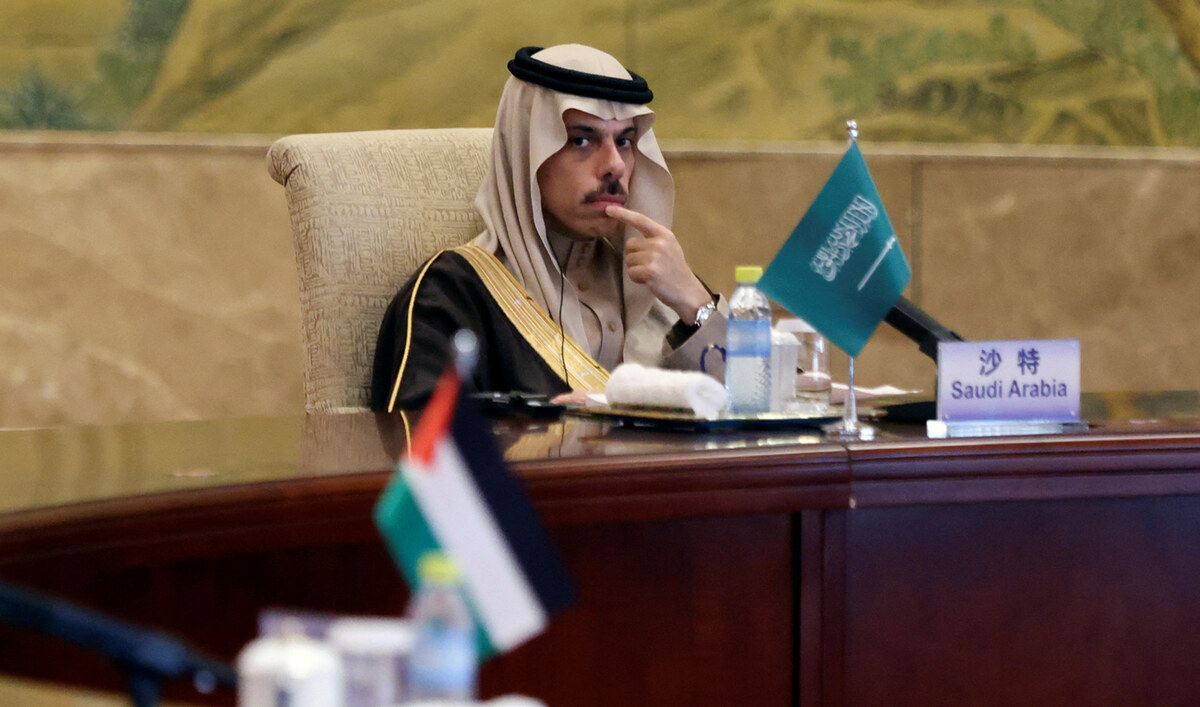


This file photo, taken on November 20, 2023, shows Saudi Foreign Minister Prince Faisal bin Farhan Al Saud attending a meeting related to international efforts for Gaza amid Israel-Hamas war, at the Diaoyutai State Guesthouse in Beijing, China. (REUTERS/File)

Speaking further at the briefing, Khan shared Pakistan’s Deputy Prime Minister Ishaq Dar had spoken with foreign ministers of Saudi Arabia, United Arab Emirates, Egypt, Türkiye, Malaysia and Iran about summoning an extraordinary session of the Organization of Islamic Cooperation (OIC) on the issue.
“During these calls, the deputy prime minister [and] foreign minister termed the proposal to displace the people of Gaza deeply troubling and unjust,” the foreign office spokesman said.
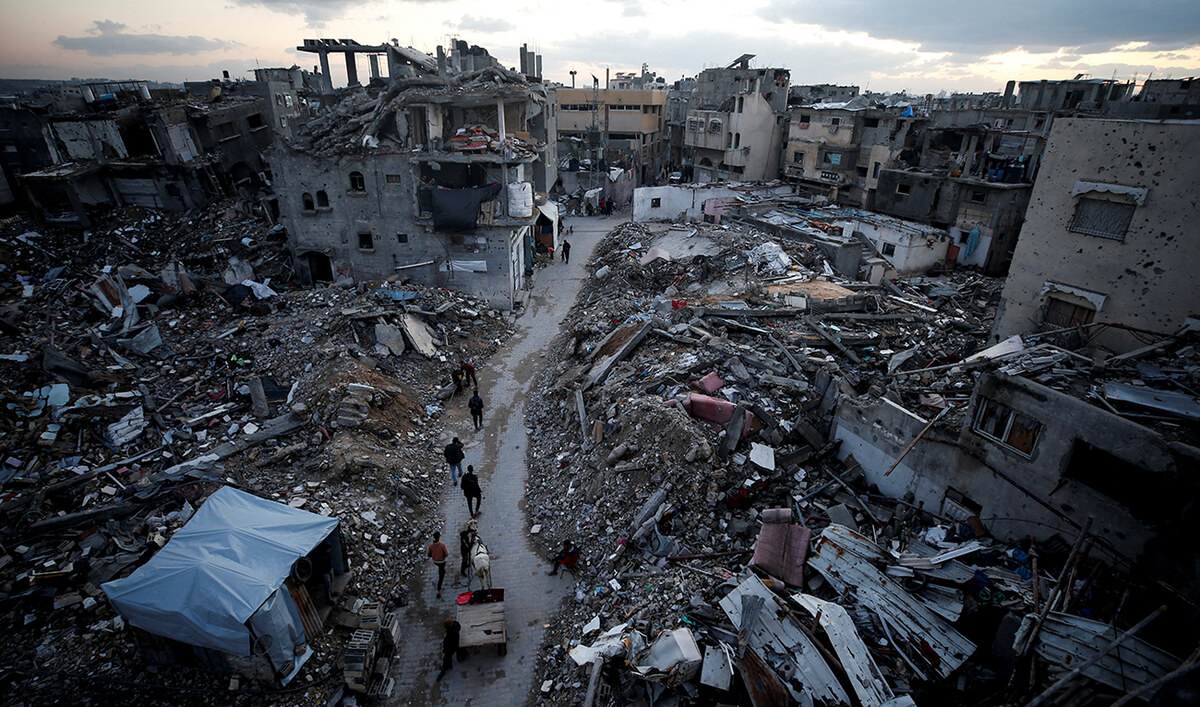


Palestinians walk next to the rubble of destroyed buildings, amid a ceasefire between Israel and Hamas, at Jabalia refugee camp, northern Gaza Strip on February 13, 2025. (REUTERS)

“He also conveyed Pakistan’s support for convening of an extraordinary OIC meeting of the foreign ministers to deliberate upon this issue.”
Israel’s war on Gaza has killed more than 45,000 people, including children and women, according to the Palestinian health ministry, with at least more than 100,000 others wounded. The war began after Oct. 7, 2023 attacks by Hamas on Israel.


Nearly 25% of Pakistan’s primary schools enrolling girls operate as single-teacher ones— report

Updated 13 sec ago
Follow

Nearly 25% of Pakistan’s primary schools enrolling girls operate as single-teacher ones— report

  • Pakistan needs over 115,000 more teachers in primary schools enrolling girls to meet global benchmark of one teacher per 30 students, says report
  • Sixty percent of Pakistani primary schools enrolling girls are overcrowded, while 32% lack clean drinking water or toilets, says Tabadlab report

ISLAMABAD: Nearly 25% of Pakistan’s primary schools that enrolls girls operate as single-teacher ones, a report by a leading think tank said this week, calling on the government to devolve teacher recruitment powers, upskill underutilized teachers and introduce reforms to hire and promote faculty members. 

Pakistan faces an acute education crisis which is reflected in the fact that it has the world’s second-highest number of out-of-school children, an estimated 22.8 million aged 5-16 who are not in educational institutions, according to UNICEF. 

While poverty remains the biggest factor keeping children out of classrooms, Pakistan’s education crisis is exacerbated by inadequate infrastructure and underqualified teachers, cultural barriers and the impacts of frequently occurring natural disasters. 

According to “The Missing Ustaani,” a report published by Islamabad-based think tank Tabadlab and supported by Malala Fund and the Pakistan Institute of Education (PIE), Pakistan needs over 115,000 more teachers in primary schools with girls’ enrolment to meet the basic international benchmark of ensuring one teacher per 30 children. Currently, the average Student-to-Teacher Ratio (STR) across Pakistan’s primary schools with girls’ enrolment is 39:1, it said. 

“Approximately 60% of these schools are overcrowded, necessitating the recruitment of over 115,000 additional teachers nationwide,” the report said on Monday. “Compounding this, nearly 25% of primary schools with girls’ enrolment operate as single-teacher schools, placing immense pressure on the quality of education.”

It said the situation is more dire in Pakistan’s poverty-stricken southwestern Balochistan province, where nearly 52% of the schools are single-teacher only ones while the percentage decreases slightly in the southern Sindh province to 51 percent. 

The report said while the STR improves to 25:1 at the middle school level, acute shortages of subject specialists emerge as the top-priority concern for quality education in these schools.

“Furthermore, around 32% of primary schools with girls’ enrolment and 18% of middle schools face ‘critical infrastructural shortages’— lacking clean drinking water or toilets in addition to high STRs— which significantly affects girls’ attendance and learning, particularly during adolescence,” the report said. 

The report cited a set of priority recommendations to address Pakistan’s systemic teacher deployment challenges and improve educational equity for girls. 

It urged the government to devolve recruitment authority to school or cluster levels to enable timely, context-specific hiring. It also called upon authorities to reform teacher transfer and promotion policies to introduce school-specific postings with minimum service terms. 

This, it said, would reduce arbitrary transfers and improving continuity in classrooms. The report advised authorities to upskill surplus or underutilized primary teachers to support instruction at the middle school level, helping address subject-specialist shortages.

“Together, these reforms offer a pathway toward a more equitable, efficient, and responsive teaching workforce— one capable of improving learning outcomes and ensuring that every girl in Pakistan has access to a qualified teacher,” the report said. 

To tackle Pakistan’s education crisis, Prime Minister Shehbaz Sharif declared an ‘education emeregency’ in September 2024, stressing the importance of education for all.