BOSTON: A federal judge in Boston on Thursday blocked President Donald Trump’s executive order that would end birthright citizenship for the children of parents who are in the US illegally, becoming the fourth judge to do so.
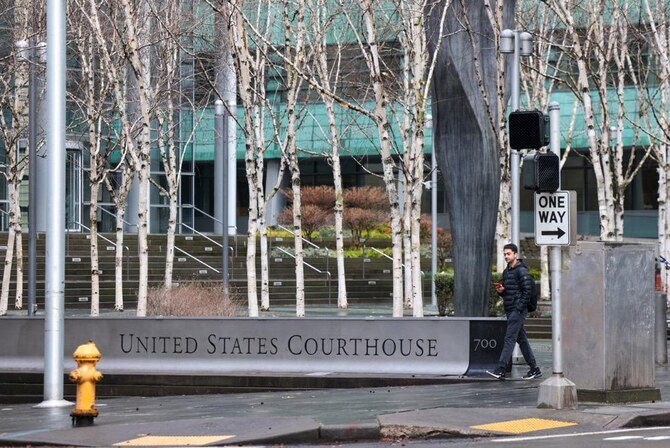
The ruling from US District Judge Leo Sorokin came three days after US District Judge Joseph Laplante in New Hampshire blocked the executive order and follows similar rulings in Seattle and Maryland.
Sorokin said in a 31-page ruling that the “Constitution confers birthright citizenship broadly, including to persons within the categories described” in the president’s executive order.
The Boston case was filed by the Democratic attorneys general of 18 states and is one of at least nine lawsuits challenging the birthright citizenship order.
“President Trump may believe that he is above the law, but today’s preliminary injunction sends a clear message: He is not a king, and he cannot rewrite the Constitution with the stroke of a pen,” the attorneys general said in a statement.
In the case filed by four states in Seattle, US District Judge John C. Coughenour said the Trump administration was attempting to ignore the Constitution, with the president trying to change it with an executive order.
A federal judge in Maryland issued a nationwide pause on the order in a separate but similar case involving immigrants rights groups and pregnant women whose soon-to-be-born children could be affected. The Trump administration said Tuesday that it would appeal that ruling to the 4th Circuit Court of Appeals.
In the Boston case, the attorneys general from 18 states, along with the cities of San Francisco and Washington, D.C., asked Sorokin to issue a preliminary injunction. That means the injunction will likely remain in place while the lawsuit plays out.
They argue that the principle of birthright citizenship is “enshrined in the Constitution,” and that Trump does not have the authority to issue the order, which they called a “flagrantly unlawful attempt to strip hundreds of thousands of American-born children of their citizenship based on their parentage.”
They also argue that Trump’s order would cost states funding they rely on to “provide essential services” — from foster care to health care for low-income children, to “early interventions for infants, toddlers, and students with disabilities.”
At the heart of the lawsuits is the 14th Amendment to the Constitution, which was ratified in 1868 after the Civil War and the Dred Scott Supreme Court decision. That decision found that Scott, an enslaved man, wasn’t a citizen despite having lived in a state where slavery was outlawed.
The Trump administration has asserted that children of noncitizens are not “subject to the jurisdiction” of the United States and therefore not entitled to citizenship.
Attorneys for the states argue that it does and that it has been recognized since the amendment’s adoption, notably in an 1898 US Supreme Court decision. That decision, United States v. Wong Kim Ark, held that the only children who did not automatically receive US citizenship upon being born on US soil were the children of diplomats, who have allegiance to another government; enemies present in the US during hostile occupation; those born on foreign ships; and those born to members of sovereign Native American tribes.
The US is among about 30 countries where birthright citizenship — the principle of jus soli or “right of the soil” — is applied. Most are in the Americas, and Canada and Mexico are among them.


![]()

Fourth federal judge blocks Trump’s birthright citizenship order
Short Url
https://arab.news/4y2vu
Fourth federal judge blocks Trump’s birthright citizenship order


Latest updates


Recommended


© 2026 SAUDI RESEARCH & PUBLISHING COMPANY, All Rights Reserved And subject to Terms of Use Agreement.