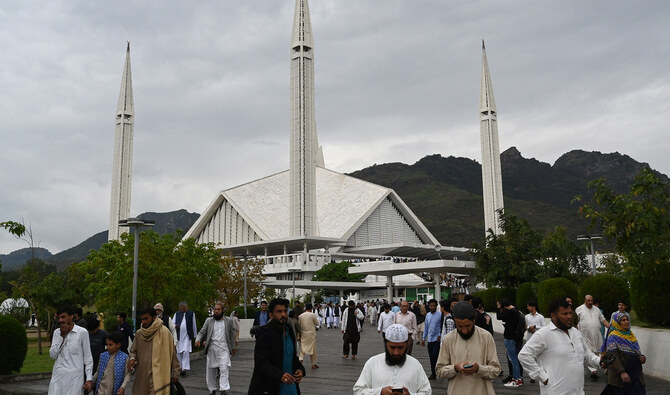
ISLAMABAD: The US Mission in Pakistan on Wednesday cautioned its citizens to avoid traveling to Islamabad’s iconic Faisal Mosque citing threats from the outlawed Tehreek-e-Taliban Pakistan (TTP) group, urging its nationals to keep a low profile and monitor local media for updates.
The statement from the American mission comes days after a cryptic video was widely shared on social media, showing a person holding up a piece of paper in front of the Faisal Mosque with the TTP’s flag drawn on it.
The TTP has carried out some of the deadliest attacks against Pakistani security forces and civilians since 2007. After a fragile truce between the banned outfit and the state broke down in November 2022, Pakistan has witnessed a surge in militant attacks in its northwestern Khyber Pakhtunkhwa (KP) province.
“Tehreek-e-Taliban Pakistan (TTP) militants have issued threats against Faisal Mosque, in Islamabad,” the US Mission in Pakistan wrote on its website. “The US Embassy Regional Security Office has prohibited US employee travel to the Faisal Mosque area until further notice.”
The iconic Faisal Mosque is spread over 54,000 square feet and has the capacity to accommodate over 250,000 people at a time. It houses hundreds of worshippers during prominent religious events and Friday congregational prayers. It is also a popular tourist resort for foreigners.
The mission urged American nationals to avoid traveling to the area around the mosque, exercise caution and leave it if they find themselves unexpectedly in the vicinity of a large gathering or demonstration. It advised citizens to review their personal security plan, monitor local media for updates and “keep a low profile and be aware of your surroundings.”
It also urged US citizens to cooperation with Pakistani authorities and review the country security report for Pakistan.
In September last year, the US embassy advised its nationals to reconsider traveling to Pakistan “due to terrorism” and “increased risks” of violence in some parts of the country amid a resurgence in militant violence.
The embassy had advised citizens against traveling to the southwestern Balochistan province and KP, including the former Federally Administered Tribal Areas (FATA) due to “terrorism.”
The TTP has carried out attacks in Pakistan as it seeks to impose their strict brand of Islam in the country. Pakistan has repeatedly urged Afghanistan to take action against the banned outfit in its territory, accusing the militants of using Afghan soil to launch attacks against it. The Taliban-led government in Afghanistan deny Pakistan’s accusations.
Ties between the two countries deteriorated after Pakistan carried out cross-border strikes against alleged TTP targets in Afghanistan last year.


![]()

US cautions citizens against traveling to Faisal Mosque citing threats from Pakistani Taliban
Short Url
https://arab.news/pmx8d
US cautions citizens against traveling to Faisal Mosque citing threats from Pakistani Taliban
- Video shared widely on social media days earlier shows person holding up a drawing of TTP flag in front of iconic mosque
- Outlawed TTP outfit have carried out some of the deadliest attacks against Pakistan’s civilians, security forces since 2007
Latest updates



Recommended


© 2026 SAUDI RESEARCH & PUBLISHING COMPANY, All Rights Reserved And subject to Terms of Use Agreement.