

RIYADH: Three artists have brought an exhibition of bronze sculptures showcasing the history and culture of Iraq to Riyadh.
From Feb. 3 to 12, the Mahd Alfnon Gallery, located in the Al-Mousa Center in Riyadh and owned by the visual artist and sculptor Mahdia Al-Taleb, hosted the exhibition, titled “7x3 Experiences in Iraqi Sculpture.”
It featured the sculptures of three prominent Iraqi artists — Redha Farhan, Haythem Hassan and Najm Al-Qaysi — who each presented seven bronze sculptures.
The exhibition showcased the innovative and expressive aspects of contemporary Iraqi sculpture, uncovering the cultural narratives that influence their art.
Each artist brought a distinctive perspective to their work, reflecting both personal and shared experiences.
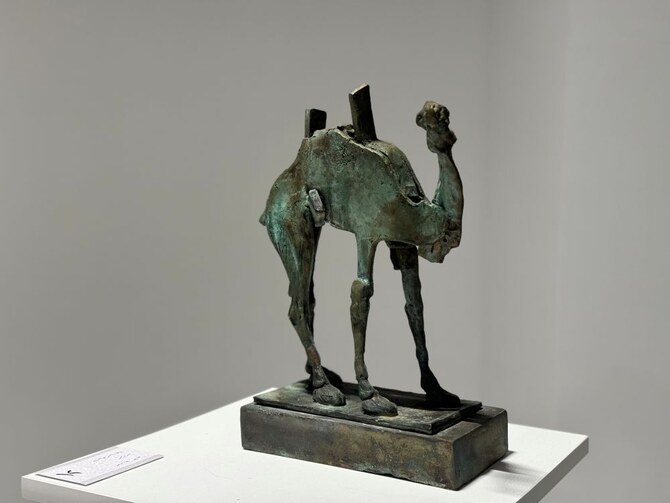
Redha Farhan, from Baghdad, combines animal forms with human figures in his striking sculptures.
His sculptures depict ducks, giraffes and camels, intricately woven into narratives that highlight his meticulous attention to detail.
“My work is deeply rooted in Iraq’s rich history, inspired by ancient artifacts and the stories they tell,” Farhan told Arab News.
The textured bronze pieces evoke authenticity and emotional depth, inviting viewers to connect with his homeland.
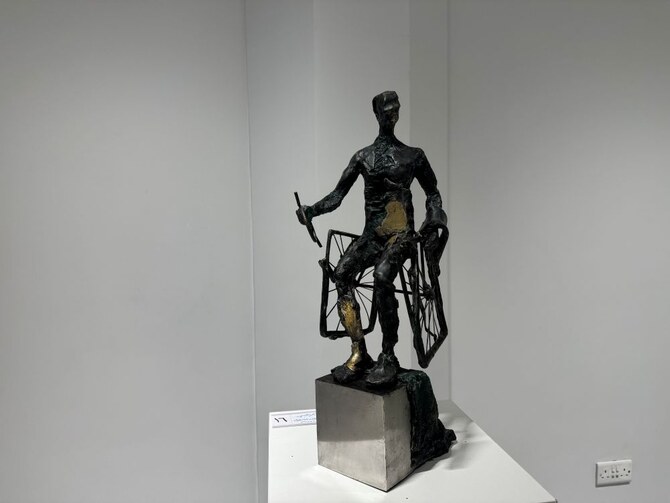
The second artist, Haythem Hassan, adds another layer of depth to the exhibition with his playful yet meaningful sculptures.
Graduating with a diploma in sculpture from the Institute of Fine Arts in Baghdad, Hassan’s work includes elements such as flowers, birds and imaginative figures that highlight a blend of imagination and reality.
“Art should reflect the myriad experiences of life; it’s a dialogue between the work and the viewer,” he said. “Through my sculptures, I aim to provoke emotions and encourage viewers to reflect on their own journeys.”
This focus on connection and interpretation is key to Hassan’s artistic philosophy, aimed at sparking conversations about the human experience.
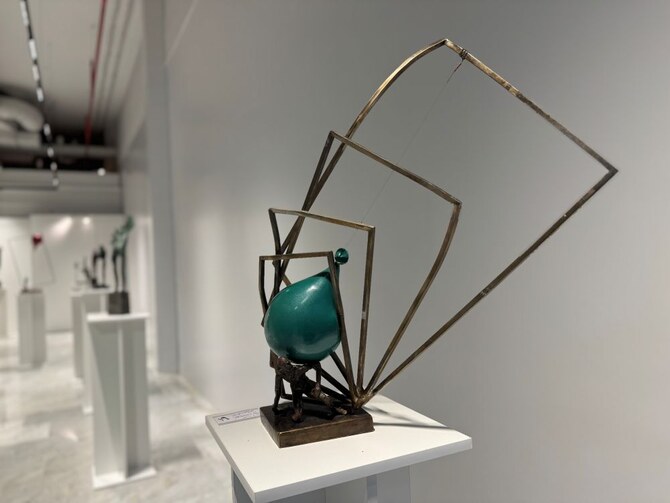
Najm Al-Qaysi, known for his creative use of both bronze and stainless steel, displayed lively sculptures that incorporate balloon-like shapes.
This playful quality, combined with bronze’s heaviness, results in pieces that feel both solid and light.
“I want my work to challenge perceptions of reality,” Al-Qaysi said. “By blending playful colors and forms, I invite viewers to experience a sense of wonder and introspection.”
He believes that sculpture should evoke strong feelings, encouraging audiences to engage emotionally with each piece.
Al-Taleb, inspired by the connections among artists in the digital age, said: “The idea emerged through social media channels.
“Since artists around the world have had constant communication through these mediums, it feels as if the world has become a small village.”
She emphasized the importance of showcasing Iraqi art in creating new links between cultures.
“This exhibition is about connection,” she said. “It honors the strength of our cultural heritage while fostering dialogue about the challenges and triumphs we navigate as artists.”
Al-Taleb saw the event as a chance to improve the appreciation of sculpture as a prominent art form in Saudi Arabia and beyond.
The exhibition offered a chance for artists to interact with their audience, improving the understanding of their work.
“Art should not exist in a vacuum; it is part of a larger narrative,” Farhan added, emphasizing the exhibition’s goal of community engagement.
Through their creative expressions in bronze, the artists told stories of resilience, creativity and discovery. As the exhibition concluded, it inspired a deeper appreciation of Iraqi sculpture.