GAZIANTEP: As excitement swept through the Syrian community after Bashar Assad’s overthrow, businesses in Turkiye that rely on them for labor began quickly crunching the numbers.
“The Syrians have made a big contribution to the textile sector here. If they leave, there will be a serious labor problem,” said Ali Gozcu, reflecting the widespread anxiety gripping Turkiye’s textile industry.
Gozcu runs ALG Teksil, a clothing firm in Gaziantep, a southeastern Turkish city that is home to half a million Syrians.
“We don’t expect a sudden departure, but if it happens, we will suffer a serious loss of labor,” he told AFP, adding that 70 percent of his workers were Syrian.
And he is not alone.
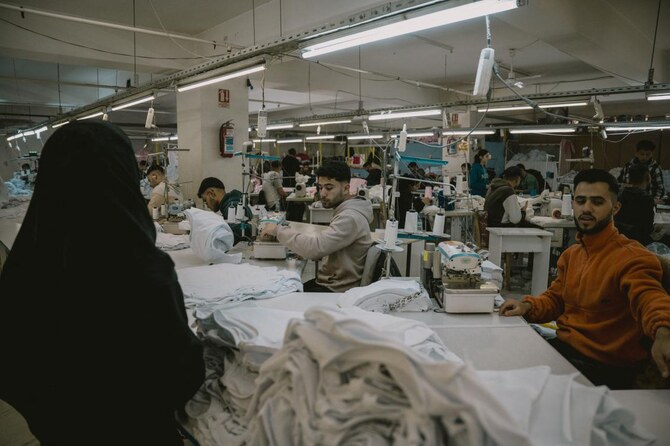
“All of the workers here are Syrian,” agreed Yusuf Samil Kandil, a quality controller at Beni Giy clothing, referring to the Unal district where textile firms line the run-down streets and old-fashioned mannequins stand in dusty shopfronts alongside racks of garments.
“If the Syrians leave, our labor costs will increase significantly, as well as our production costs,” he told AFP.
Turkiye is the world’s sixth-largest textile manufacturer and its industry is based in the southern regions that host most of its around 2.9 million Syrian migrants.
Government figures show that around 100,000 Syrians have work permits, but experts believe about a million Syrians are active in the Turkish economy, mostly in informal, labor-intensive jobs in construction, manufacturing and textiles.
Their departure could put a serious dent in the workforce of an industry that is struggling with inflationary pressures and rising costs.
So far, just over 81,000 people have returned, interior ministry figures show, although observers expect a surge in June over the Eid Al-Adha holiday.
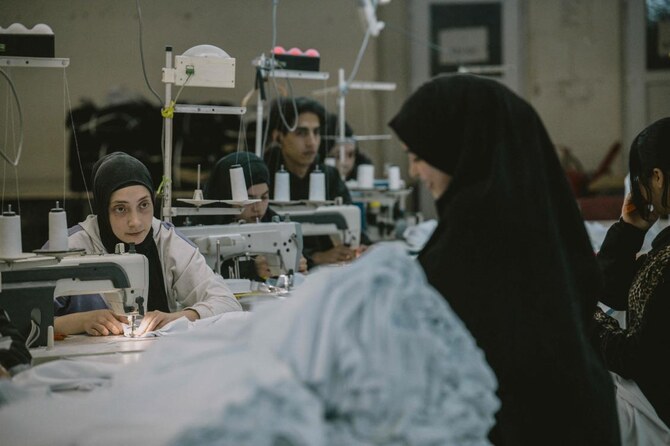
On ALG’s factory floor, dozens of young men and women sit hunched over industrial sewing machines or overlockers, churning out thousands of t-shirts.
A new Syrian flag hangs on the wall and there is an Arabic notice on the toilet door.
Zekeriya Bozo, a 55-year-old worker who wants to return to Syria and “create a new business there” said: “If Syrians leave, there won’t be anyone left to work” at ALG.
But experts say it is a complicated picture for Syrians, suggesting fears of a mass departure are unfounded due to the uncertainty hanging over a country ravaged by 13 years of war.
“Although they’re very happy that Assad is gone, that was only one barrier to them going back,” said Professor Murat Erdogan, whose Syrians Barometer survey has consistently flagged their concerns about safety, the potential for conflict and Syria’s ruined infrastructure.
Most have established a life in Turkiye, with more than 970,000 babies born over the past 12 years.
Despite tough working conditions, they know they are unlikely to find something better back home, he told AFP.
“They told us they have a lot of problems in Turkiye and work very hard for very little money. But if they go back, even if they did find jobs, they said they’ll only get $14 a month,” he said.
They earn far more than that in Turkiye.
“Going back is a huge decision. Because of that, I think a maximum of 20 percent of them will return and that will take a lot of time.”
Despite the uncertainty, Gozcu is looking into new ways of working that could accommodate the return of some Syrians, nearly half of whom hail from the Aleppo region just across the border from Gaziantep.
“We’ve become very close with our Syrian workers,” he told AFP.
If need be, “we will open workshops in Syria for them and will continue our production there,” he said.
Although much of Syria was in ruins, Kemal Kirisci, a migration expert at the Washington-based Brookings Institution, said there was potential for developing business links in the future.
“Syria is a very promising place in the long run. Ideally, we could have a very porous economic border so people could move back-and-forth,” he told AFP.
“It would be a win for Turkish industry, for the economy, a win for Syria and for the new regime.”
There could eventually be a revival of the so-called ‘ShamGen’ area of free trade and visa-free movement between Syria, Jordan, Lebanon and Turkiye that was inspired by the EU’s Schengen zone but collapsed at the start of the war in 2011.
“These things could be revived very easily — but the key lies with this new regime,” he said.


![]()
![]()
![]()

Nerves fray in Turkiye textile sector as Syrian refugees mull return

Short Url
https://arab.news/bezzf
Nerves fray in Turkiye textile sector as Syrian refugees mull return


Latest updates


Recommended


© 2026 SAUDI RESEARCH & PUBLISHING COMPANY, All Rights Reserved And subject to Terms of Use Agreement.