KARACHI: The International Monetary Fund (IMF) gave a “positive feedback” on Pakistan’s structural reforms program that helped the country achieve macroeconomic stability, Finance Minister Muhammad Aurangzeb said on Wednesday while addressing an insurance conference in Karachi via video link.
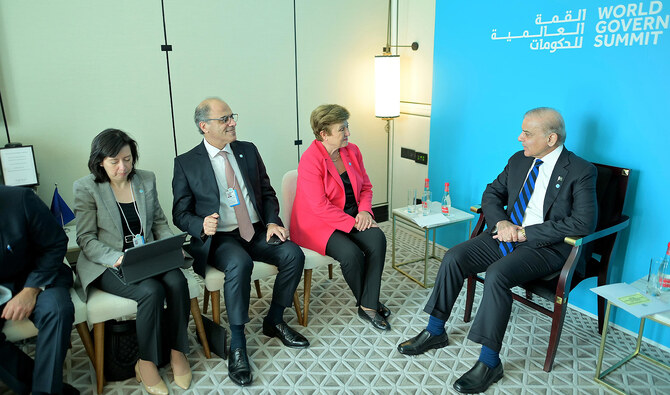
Aurangzeb’s statement comes only a day after Prime Minister Shehbaz Sharif met with IMF Managing Director Kristalina Georgieva on the sidelines of the World Government Summit in Dubai and reaffirmed his administration’s commitment to structural reforms.
The meeting between the two officials came right ahead of the IMF’s upcoming review of Pakistan’s $7 billion loan program, secured in September last year.
A successful review in the coming weeks would release a $1 billion tranche, helping cash-strapped Pakistan boost its foreign exchange reserves and meet the lender’s import cover benchmark.
“We got some a very positive feedback in terms of macroeconomic stability which has been achieved over the last 12 months,” the finance minister said while sharing the details of the meeting between the prime minister and the IMF managing director.
Calling the meeting “constructive and very positive,” he said the top IMF official was appreciative of Pakistan’s commitment to the reform program.
“We are well underway in that program,” Aurangzeb continued.
According to a statement released by the Prime Minister’s Office earlier in the day, Sharif recognized the progress made under the IMF’s Extended Fund Facility (EFF), which put the country on the path of long-term recovery.
“He reaffirmed the government’s resolve to sustaining the reform momentum, particularly in critical areas such as tax reform, energy sector efficiency and private sector development,” the statement added.
“The Prime Minister assured Ms. Georgieva of Pakistan’s commitment to economic prudence, efficiency and sustainability as essential pillars for achieving inclusive and sustained growth.”
Following the meeting, Georgieva posted on X, formerly Twitter, expressing confidence in Pakistan’s reform trajectory.
“Wonderful to meet [Pakistan’s] Prime Minister @CMShehbaz and his team. I am encouraged by their strong commitment to Pakistan’s IMF-supported reforms and support their decisive actions to pave the way to higher growth and more jobs for Pakistan’s youthful population,” she said.
The meeting between the two officials took place as an IMF mission is currently in Pakistan conducting a governance and corruption diagnostic assessment, part of the broader reform agenda under the EFF.
The IMF’s next review is expected in March, with Pakistan’s government and central bank confident of meeting reform targets required for the loan disbursement.


![]()

Pakistan gets ‘positive feedback’ on economic reforms ahead of IMF review — fin min
Short Url
https://arab.news/g8ehv
Pakistan gets ‘positive feedback’ on economic reforms ahead of IMF review — fin min
- Muhammad Aurangzeb says structural reforms are ‘well underway,’ driving economic stability
- IMF chief says ‘encouraged’ by Pakistan’s commitment to reforms after meeting the premier
Latest updates


Recommended


© 2026 SAUDI RESEARCH & PUBLISHING COMPANY, All Rights Reserved And subject to Terms of Use Agreement.