Egypt’s inflation eases slightly in January, driven by lower vegetable prices

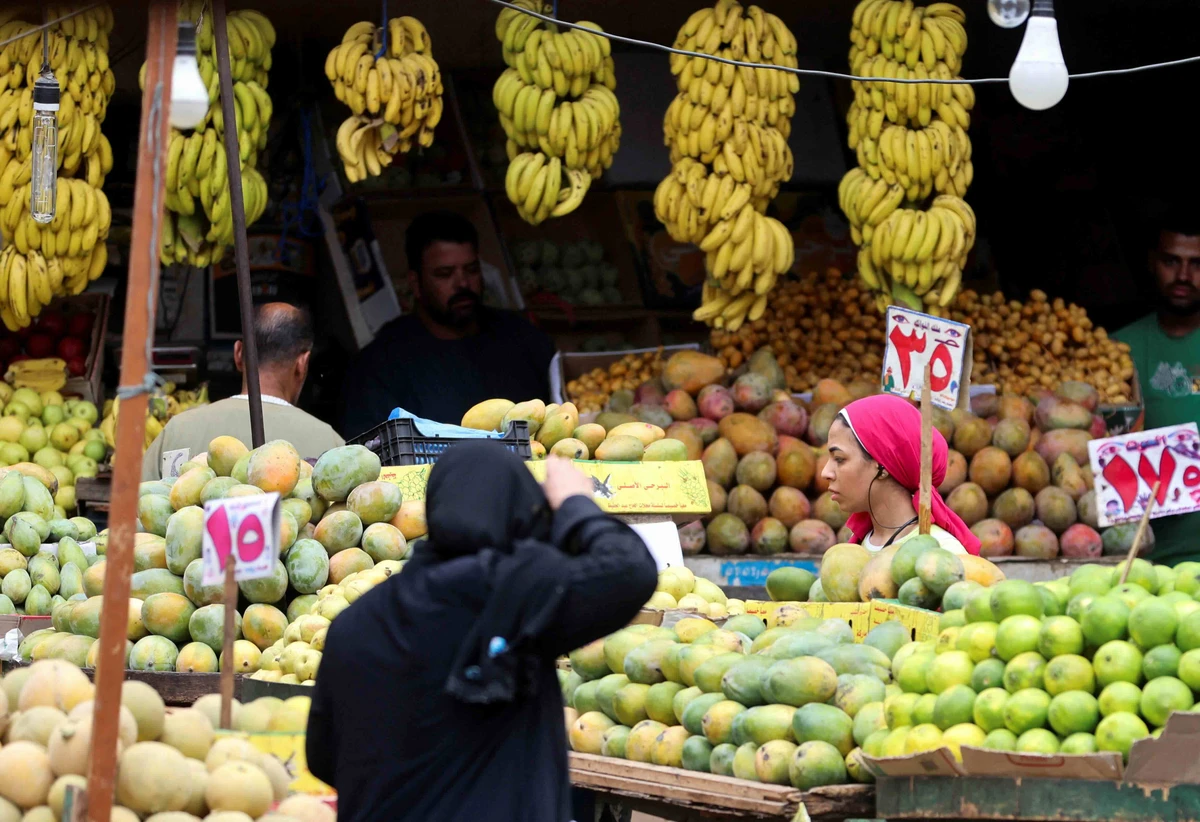
The sharpest price spike was in fruits, which jumped by 9.8 percent. These price increases were key contributors to the 1.6 percent monthly inflation in January, compared to a flat reading in December. Reuters
Short Url
Updated 11 February 2025
Follow

Egypt’s inflation eases slightly in January, driven by lower vegetable prices

RIYADH: Egypt’s headline consumer price index recorded 243.5 points in January, reflecting an annual inflation rate of 23.2 percent, down slightly from 23.4 percent in December, according to official data.

Figures from the nation’s Central Agency for Public Mobilization and Statistics show that Egypt’s inflation slowdown was primarily driven by a 2.6 percent decline in vegetable prices from December to January, alongside a 0.3 percent decrease in fish and seafood prices.

Meanwhile, costs remained stable across key sectors such as education, health services, and telecommunications.

However, according to the report, some essential commodities saw notable price hikes. Bread and cereal prices rose 1.3 percent, while meat and poultry prices surged 5.0 percent.

Dairy, cheese, and eggs recorded a modest increase of 0.3 percent, and oils and fats edged up by 0.7 percent. 

The sharpest price spike was in fruits, which jumped by 9.8 percent. These price increases were key contributors to the 1.6 percent monthly inflation in January, compared to a flat reading in December.

Other sectors also experienced price increases. Personal care products rose by 1.5 percent, hospital services by 1.4 percent and furnishings and household appliances by 0.6 percent, as well as electricity, gas, and fuel by 0.1 percent, and hotel services by 3.3 percent.

Compared to January, several categories recorded substantial annual increases, the report showed.

Food and beverages rose by 20.2 percent, tobacco and alcoholic drinks by 29.5 percent, housing, utilities, and fuel by 18.7 percent, healthcare services by 40.5 percent, and transport by 33.6 percent, while education costs remained unchanged.

The steepest annual jumps were seen in postal services, which were up 94.3 percent, cultural and recreational services by 48 percent, and transport services by 39 percent.

Despite a slight moderation in annual inflation, elevated food and transport costs remain a key challenge for Egyptian households and businesses.

The rising prices of essential goods, including staples such as wheat and cooking oil, continue to strain consumer purchasing power.

Analysts expect inflationary pressures to persist in the near term, driven by a combination of currency fluctuations, global commodity price trends, and domestic supply chain constraints.

The Egyptian pound has witnessed notable depreciation, contributing to the higher cost of imports, particularly for food and energy.

In response, the Egyptian government has introduced measures such as subsidies and price controls on essential goods to contain inflation and support vulnerable segments of the population.

Efforts include increasing government-backed distribution of basic commodities and negotiating import deals to secure food supplies at stable prices.

However, structural economic reforms, including subsidy cuts and fiscal consolidation efforts under Egypt’s broader economic program, may counterbalance these interventions.

With ongoing economic reforms and external pressures, inflation trends will remain a closely monitored factor in Egypt’s economic trajectory.

Policymakers are likely to adjust monetary and fiscal measures as needed to balance growth with price stability, particularly as the country navigates global economic uncertainties and financing challenges.

The central bank’s stance on interest rates will also play a crucial role in managing inflation expectations in the coming months.


Middle East war economic impact to depend on duration, damage, energy costs, IMF official says

Updated 05 March 2026
Follow

Middle East war economic impact to depend on duration, damage, energy costs, IMF official says

  • Katz: Prolonged increase in energy prices could unanchor inflation expectations
  • IMF: 2026 global GDP outlook was solid, too early to judge war’s impact on growth

WASHINGTON: The Middle East war’s impact on the global economy will depend on its duration and damage to infrastructure and industries in the region, particularly whether energy price increases are short-lived or persistent, the International Monetary Fund’s number two official said on Tuesday.

IMF First Deputy Managing Director Dan Katz told the Milken Institute Future of Finance conference in Washington that if there is prolonged uncertainty from the conflict and a prolonged impact on energy prices, “I would expect central banks to be cautious and ‌respond to the ‌situation as it materializes.”
He said the conflict could ​be “very ‌impactful ⁠on ​the global economy ⁠across a range of across a range of metrics, whether it’s inflation, growth and so on” but it was still early to have a firm conviction.
Prior to the US and Israeli air strikes on Iran and counterattacks across the region, the IMF had forecast solid global GDP growth of 3.3 percent in 2026, powering through tariff disruptions due in part to the continued AI investment boom and expectations of productivity gains.
Katz said ⁠that the economic impact from the Middle East conflict would ‌be influenced by its duration and further geopolitical ‌developments.
Earlier, the IMF said it was monitoring the ​conflict’s disruptions to trade and economic activity, ‌surging energy prices and increased financial market volatility.
“The situation remains highly fluid and ‌adds to an already uncertain global economic environment,” the Fund said in a statement issued from Washington. Katz said the IMF will look at the conflict’s direct impacts on the region, including damage to infrastructure, and disruptions to key sectors.
“Tourism is an important one. Air travel. Is ‌there physical damage to infrastructure, production facilities, and the big industry in particular that everyone will be focused on is, ⁠of course, the energy ⁠industry,” he said.
Oil rose further on Tuesday as Iran vowed to attack ships passing through the Strait of Hormuz. Brent crude oil , the global benchmark, surged to $83 per barrel, up 15 percent from its level on Friday.
Katz said he expected central banks to “look through” a temporary rise in energy prices, given their focus on core inflation. But central banks could respond if a more persistent energy shock results in “a destabilizing of inflation expectations.”
He said the post-COVID inflation spike of 2022 was influenced by energy impacts from Russia’s invasion of Ukraine, with more pass-through from headline inflation to core inflation.
“And so I’m sure central banks, as they are thinking about how the ​geopolitical situation is translating into ​energy markets, will be looking at the lessons of the pandemic and seeing if they can apply any of those lessons in setting monetary policy,” Katz said.