THE HAGUE, Netherlands: An Israeli army reservist’s dream vacation in Brazil ended abruptly last month over an accusation that he committed war crimes in the Gaza Strip.
Yuval Vagdani woke up on Jan. 4 to a flurry of missed calls from family members and Israel’s Foreign Ministry with an urgent warning: A pro-Palestinian legal group had convinced a federal judge in Brazil to open a war crimes investigation for his alleged participation in the demolition of civilian homes in Gaza.
A frightened Vagdani fled the country on a commercial flight the next day to avoid the grip of a powerful legal concept called “universal jurisdiction,” which allows governments to prosecute people for the most serious crimes regardless of where they are allegedly committed.
Vagdani, a survivor of Hamas’ deadly Oct. 7, 2023, attack on an Israeli music festival, told an Israeli radio station the accusation felt like “a bullet in the heart.”
The case against Vagdani was brought by the Hind Rajab Foundation, a legal group based in Belgium named after a young girl who Palestinians say was killed early in the war by Israeli fire as she and her family fled Gaza City.
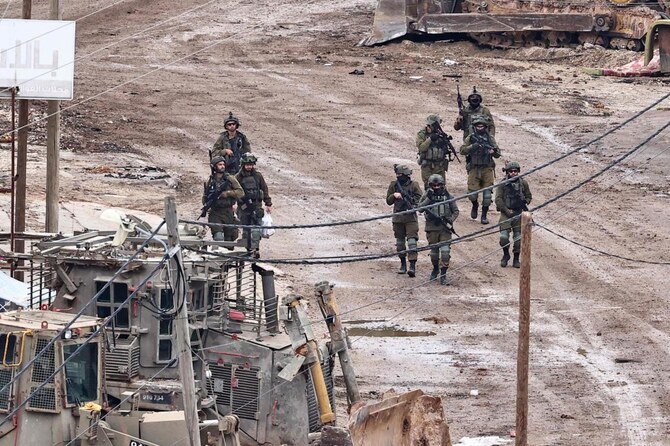
Aided by geolocation data, the group built its case around Vagdani’s own social media posts. A photograph showed him in uniform in Gaza, where he served in an infantry unit; a video showed a large explosion of buildings in Gaza during which soldiers can be heard cheering.
Judges at the International Criminal Court concluded last year there was enough evidence to issue an arrest warrant for Israeli Prime Minister Benjamin Netanyahu for crimes against humanity for using “starvation as a method of warfare” and for intentionally targeting civilians. Both Israel and Netanyahu have vehemently denied the accusations.
Since forming last year, Hind Rajab has made dozens of complaints in more than 10 countries to arrest both low-level and high-ranking Israeli soldiers. Its campaign has yet to yield any arrests. But it has led Israel to tighten restrictions on social media usage among military personnel.
“It’s our responsibility, as far as we are concerned, to bring the cases,” Haroon Raza, a co-founder of Hind Rajab, said from his office in Rotterdam in the Netherlands. It is then up to authorities in each country — or the International Criminal Court — to pursue them, he added.
The director general of Israel’s Foreign Ministry, Eden Bar-Tal, last month said fewer than a dozen soldiers had been targeted, and he dismissed the attempted arrests as a futile public relations stunt by “terrorist organizations.”
Universal jurisdiction is not new. The 1949 Geneva Conventions — the post Second World War treaty regulating military conduct — specify that all signatories must prosecute war criminals or hand them over to a country who will. In 1999, the United Nations Security Council asked all UN countries to include universal jurisdiction in their legal codes, and around 160 countries have adopted them in some form.
“Certain crimes like war crimes, genocide and crimes against humanity are crimes under international law,” said Marieke de Hoon, an international law expert at the University of Amsterdam. “And we’ve recognized in international law that any state has jurisdiction over those egregious crimes.”
Israel used the concept to prosecute Adolf Eichmann, an architect of the Holocaust. Mossad agents caught him in Argentina in 1960 and brought him to Israel where he was sentenced to death by hanging.
More recently, a former Syrian secret police officer was convicted in 2022 by a German court of crimes against humanity a decade earlier for overseeing the abuse of detainees at a jail. Later that year, an Iranian citizen was convicted by a Swedish court of war crimes during the Iran-Iraq war in the 1980s.
In 2023, 16 people were convicted of war crimes through universal jurisdiction, according to TRIAL International, a Swiss organization that tracks proceedings. Those convictions were related to crimes committed in Syria, Rwanda, Iran and other countries.
In response to Brazil’s pursuit of Vagdani, the Israeli military has prohibited soldiers below a certain rank from being named in news articles and requires their faces to be obscured. It has also warned soldiers against social media posts related to their military service or travel plans.
The evidence Hind Rajab lawyers presented to the judge in Brazil came mostly from Vagdani’s social media accounts.
“That’s what they saw and that’s why they want me for their investigation,” he told the Israeli radio station Kansas “From one house explosion they made 500 pages. They thought I murdered thousands of children.”
Vagdani does not appear in the video and he did not say whether he had carried out the explosion himself, telling the station he had come into Gaza for “maneuvers” and “was in the battles of my life.”
Social media has made it easier in recent years for legal groups to gather evidence. For example, several Daesh militants have been convicted of crimes committed in Syria by courts in various European countries, where lawyers relied on videos posted online, according to de Hoon.
The power of universal jurisdiction has limits.
In the Netherlands, where Hind Rajab has filed more than a dozen complaints, either the victim or perpetrator must hold Dutch nationality, or the suspect must be in the country for the entirety of the investigation — factors likely to protect Israeli tourists from prosecution. Eleven complaints against 15 Israeli soldiers have been dismissed, some because the accused was only in the country for a short time, according to Dutch prosecutors. Two complaints involving four soldiers are pending.
In 2016, activists in the UK made unsuccessful attempts to arrest Israeli military and political leaders for their roles in the 2008-09 war in Gaza.
Raza says his group will persist. “It might take 10 years. It might be 20 years. No problem. We are ready to have patience.”
There is no statute of limitations on war crimes.


![]()

Some Israeli soldiers traveling abroad are targeted for alleged war crimes in Gaza
Short Url
https://arab.news/cck4k
Some Israeli soldiers traveling abroad are targeted for alleged war crimes in Gaza


Latest updates


© 2026 SAUDI RESEARCH & PUBLISHING COMPANY, All Rights Reserved And subject to Terms of Use Agreement.