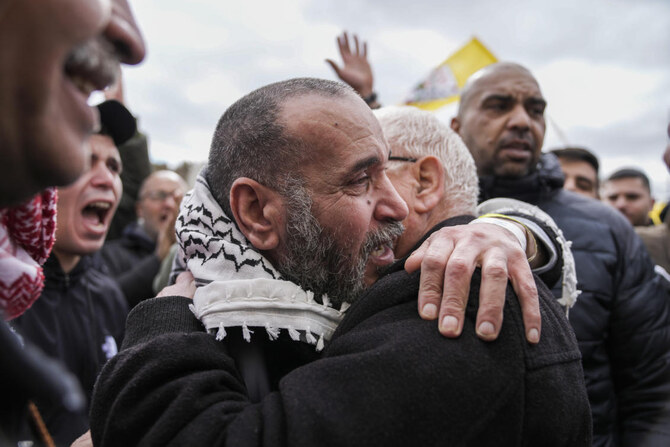
RAMALLAH: Palestinian President Mahmoud Abbas has issued a decree overturning a system of payments to the families of Palestinians imprisoned or killed by Israeli forces that has been a longstanding source of friction with the United States.
The current system has been dubbed “pay for slay” by critics who say it rewards the families of militants who carry out attacks on Israel, although that label is rejected by Palestinians.
Payments will be transferred to a government body affiliated with the president’s office, according to the text of the decree, with a new disbursement mechanism, details of which have so far not been announced.
Scrapping the system has been a major demand of successive US administrations on the Palestinian Authority, the body set up three decades ago under the Oslo interim peace accords which exercises limited governance in parts of the Israeli-occupied West Bank.
The decision comes as the Palestinian Authority faces mounting financial pressure from a slowdown in aid, a squeeze on a system of tax revenue transfers by Israel and a slump in contributions from Palestinians who have been shut out of the Israeli labor market by the war in Gaza.
Israel has been deducting the payments made by the authority from taxes collected on its behalf from goods that cross its territory to Palestinian areas.
The Palestinian Authority has appealed for more aid from Arab and European states to make up for the shortfall of billions of shekels but has so far struggled to make headway.


![]()

Palestinian president scraps prisoner payment system criticized by US
Short Url
https://arab.news/jqwkt
Palestinian president scraps prisoner payment system criticized by US
- Move was a response to a long-standing request from Washington


Latest updates




© 2026 SAUDI RESEARCH & PUBLISHING COMPANY, All Rights Reserved And subject to Terms of Use Agreement.