WASHINGTON: Instances of hate speech against minorities in India such as Muslims increased 74 percent in 2024, a Washington-based research group said on Monday, with incidents ballooning around last year’s national elections.
India Hate Lab documented 1,165 instances of what it considered to be hate speech in 2024, compared with 668 a year earlier, that it observed at events such as political rallies, religious processions, protest marches and cultural gatherings.
“The fact that 2024 was a general election year in India, with polling held in seven phases between April 19 and June 1, played a crucial role in shaping the patterns of hate speech incidents compared to 2023,” the group said in a report.
India’s embassy in Washington had no immediate comment.
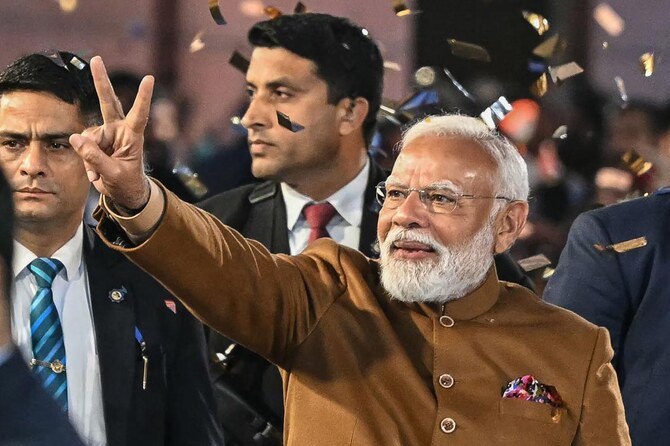
The report comes days before a White House meeting between US President Donald Trump and India’s Hindu nationalist Prime Minister Narendra Modi, whose government is blamed by rights groups including Human Rights Watch and Amnesty International for the mistreatment of minorities in India.
Modi’s government and party have denied being discriminatory and said their policies, such as food subsidy schemes and electrification drives, benefit all Indians.
India Hate Lab said a third of hate speech incidents last year occurred from March 16 through June 1 during the height of election campaigning, with May being a “notable peak.”
The group cited remarks by Modi in April in which he referred to Muslims as “infiltrators” who have “more children.”
Modi won a third successive term and denied stoking divisions. His Bharatiya Janata Party failed to win a majority and relied on coalition allies to form a government.
India Hate Lab said 80 percent of hate speech incidents last year occurred in states governed by the BJP and its allies.
The group, founded by US-based Kashmiri journalist Raqib Hameed Naik, is a project of the Center for the Study of Organized Hate, a nonprofit think tank based in Washington. The BJP has said the group presents a biased picture of India.
Rights advocates, in noting the plight of Indian minorities, point to a 2019 citizenship law the UN called “fundamentally discriminatory,” anti-conversion legislation that challenges the constitutionally protected right to freedom of belief, and the 2019 revoking of Muslim majority Kashmir’s special status.
They also highlight the demolition of properties owned by Muslims that authorities said were illegally constructed, and a ban on the hijab head covering — commonly worn by Muslim girls and women — in classrooms in Karnataka in line with new school uniform rules when the BJP was in power in that state.
India Hate Lab said it used in its report the United Nations’ definition of hate speech: prejudiced or discriminatory language toward an individual or group based on attributes including religion, ethnicity, nationality, race or gender.


![]()


Anti-minority hate speech in India rose by 74% in 2024, research group says
Short Url
https://arab.news/cfrtx
Anti-minority hate speech in India rose by 74% in 2024, research group says
- India Hate Lab said a third of hate speech incidents last year occurred from March 16 through June 1 during the height of election campaigning
- Group cited remarks by Modi in April in which he referred to Muslims as “infiltrators” who have “more children”


Duterte drew up ‘death lists’, boasted about murders: ICC prosecutor
- Former Philippines president Rodrigo Duterte personally drew up “death lists” and boasted about murders committed during his “war on drugs“
THE HAGUE: Former Philippines president Rodrigo Duterte personally drew up “death lists” and boasted about murders committed during his “war on drugs,” an International Criminal Court prosecutor alleged Tuesday at a crimes against humanity hearing.
On day two of proceedings against Duterte, ICC prosecutor Edward Jeremy laid out searing testimony including allegations that children had their heads wrapped in packing tape and strangled to death.
“As president, Duterte publicly named persons he alleged were involved in drugs, and many of those would end up as victims in his so-called war on drugs,” Jeremy said.
The “Duterte list” was “basically a death list,” Jeremy cited a witness as saying, showing a video of Duterte himself saying: “I am the sole person responsible for it all.”
Duterte faces three ICC counts of crimes against humanity, with prosecutors alleging his involvement in at least 76 murders between 2013 and 2018.
Prosecutors say this is a “mere fraction” of the thousands believed killed in his “war on drugs” as mayor of Davao City and then president.
“As witnesses stated, the poor were often targeted, because they were the ones least likely to file complaints against the police,” said Jeremy.
Jeremy played a clip of Duterte joking about “extrajudicial killings” during a speech.
“And in this opulent, gilded, presentation room, the officials laugh along with their president while he boasts about his skills in extrajudicial killing,” said Jeremy.
“And outside on the streets of the Philippines, the bodies pile up.”
Jeremy alleged that almost 1,500 people had already been killed at the time of this clip.
The week-long ICC proceedings are not a trial but a “confirmation of charges” hearing, enabling judges to weigh whether to move ahead with a trial.
Duterte, 80, is not in the courtroom after exercising his right not to appear.
His defense team says he is weak and in cognitive decline. The prosecution and victims counter that he is healthy but does not want to face loved-ones of victims.
The court passed him fit to attend but granted him his right to absence.
Once the hearings wrap up Friday, the court will take up to 60 days to decide whether to proceed to a full trial, usually by written judgment.
Duterte’s defense lawyer, Nicholas Kaufman, on Monday said his client “maintained his innocence absolutely.”
Kaufman argued that while Duterte used “bluster and hyperbole” in his speeches, he also frequently ordered authorities only to shoot in self-defense.
On day two of proceedings against Duterte, ICC prosecutor Edward Jeremy laid out searing testimony including allegations that children had their heads wrapped in packing tape and strangled to death.
“As president, Duterte publicly named persons he alleged were involved in drugs, and many of those would end up as victims in his so-called war on drugs,” Jeremy said.
The “Duterte list” was “basically a death list,” Jeremy cited a witness as saying, showing a video of Duterte himself saying: “I am the sole person responsible for it all.”
Duterte faces three ICC counts of crimes against humanity, with prosecutors alleging his involvement in at least 76 murders between 2013 and 2018.
Prosecutors say this is a “mere fraction” of the thousands believed killed in his “war on drugs” as mayor of Davao City and then president.
“As witnesses stated, the poor were often targeted, because they were the ones least likely to file complaints against the police,” said Jeremy.
Jeremy played a clip of Duterte joking about “extrajudicial killings” during a speech.
“And in this opulent, gilded, presentation room, the officials laugh along with their president while he boasts about his skills in extrajudicial killing,” said Jeremy.
“And outside on the streets of the Philippines, the bodies pile up.”
Jeremy alleged that almost 1,500 people had already been killed at the time of this clip.
The week-long ICC proceedings are not a trial but a “confirmation of charges” hearing, enabling judges to weigh whether to move ahead with a trial.
Duterte, 80, is not in the courtroom after exercising his right not to appear.
His defense team says he is weak and in cognitive decline. The prosecution and victims counter that he is healthy but does not want to face loved-ones of victims.
The court passed him fit to attend but granted him his right to absence.
Once the hearings wrap up Friday, the court will take up to 60 days to decide whether to proceed to a full trial, usually by written judgment.
Duterte’s defense lawyer, Nicholas Kaufman, on Monday said his client “maintained his innocence absolutely.”
Kaufman argued that while Duterte used “bluster and hyperbole” in his speeches, he also frequently ordered authorities only to shoot in self-defense.
Latest updates


© 2026 SAUDI RESEARCH & PUBLISHING COMPANY, All Rights Reserved And subject to Terms of Use Agreement.