
NAIROBI/KABUL: Eleven suitcases, stuffed with puffer jackets and winter boots, stood ready outside Somali refugee Hassan’s corrugated iron home in Kenya’s sweltering Dadaab camp.
His dream of a new life in Seattle was finally within reach.
The 24-year-old and his family of 10 were due to fly to the United States on Feb. 10, ending a wait of more than 15 years and filling Hassan with hope for a fresh start on the US Pacific coast.
That was until US President Donald Trump suspended refugee admissions as one of his first acts in office on Jan. 20.
“When I found out our flight was canceled, it was very bad news for us,” Hassan told the Thomson Reuters Foundation by phone from Dadaab in eastern Kenya’s Garissa county.
“My father sold everything, even his sheep. I was born here in Dadaab and thought I was finally leaving this place, but maybe God has other plans,” added Hassan, whose name has been changed to protect his identity.
From Somalia to Afghanistan, thousands of refugees who fled conflict, disaster or persecution, and were approved for resettlement in the United States, have been left stranded after Trump halted the country’s refugee program. The suspension of the US Refugee Admissions Program (USRAP) was to ensure public safety and national security, Trump said in an executive order. It will be reviewed in three months to determine if it sufficiently benefits Americans, the order said.
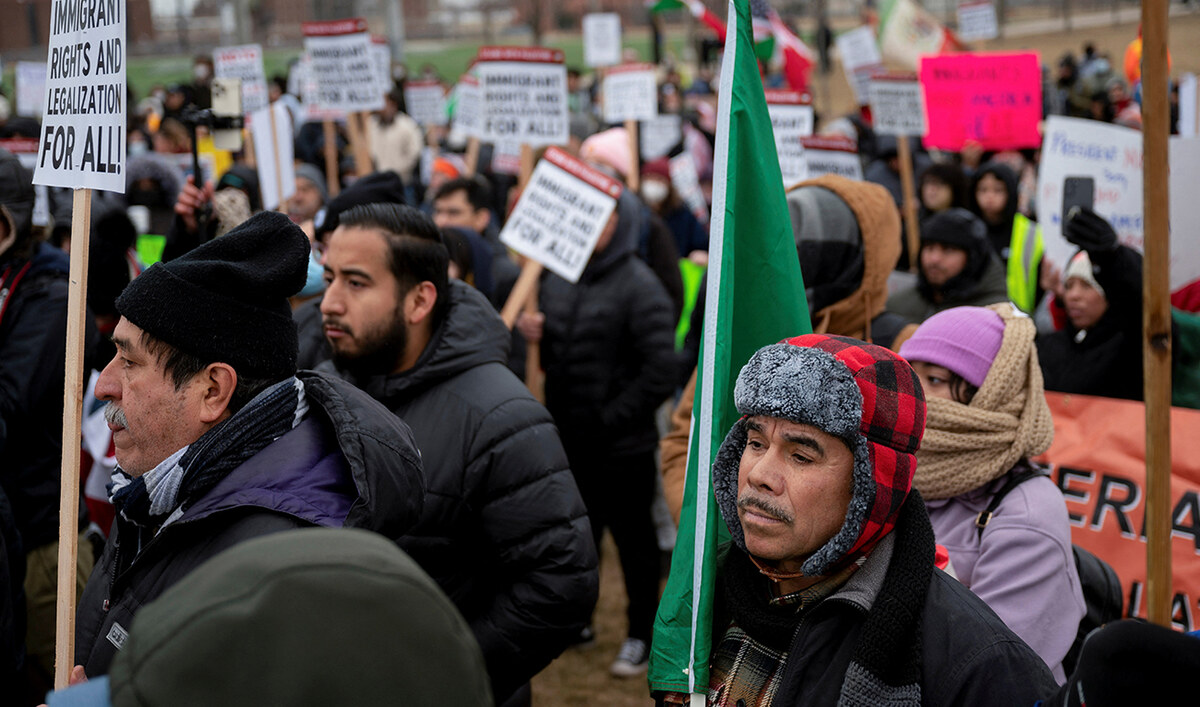
People gather during a protest against US President Donald Trump’s intensified enforcement of Immigration and Customs Enforcement (ICE), in the Little Village neighborhood of Chicago, Illinois, US on February 8, 2025. (REUTERS)
This is not the first time that Trump has placed restrictions on refugees.
In his first term, he banned arrivals from some Muslim-majority nations, temporarily halted the resettlements and slashed the country’s admissions cap to a record low.
But refugee rights groups said the new suspension of USRAP was unprecedented.
Erol Kekic, a senior vice president at the Church World Service — a charity that screens refugees for US resettlement — said it was “devastating” and “heart-breaking.”
“We have never seen anything like this at this level before, despite the changes that have taken place during the first Trump administration,” Kekic told the Thomson Reuters Foundation.
“Refugee resettlement is one of those proud traditions in the United States that has been practiced for such a long time, and we’re hoping to try to find a way to continue to do it.”
NO OPPORTUNITIES
According to the United Nations, nearly 38 million people worldwide are refugees — and 65 percent of them come from just four countries: Syria, Venezuela, Ukraine and Afghanistan.
Many refugees live in poverty in countries such as Iran, Turkiye, Uganda, Pakistan and Kenya, and face a barrage of challenges. Often banned from working, they live in decrepit housing and usually lack the most basic of services.
Kenya is home to more than 820,000 refugees, most of whom fled neighboring Somalia after it descended into civil war in 1991. Over the years, more refugees have streamed in, uprooted by drought, famine and persistent insecurity.
Many are housed in sprawling refugee camps like Dadaab — a settlement spread over 50 square km (19 square miles) of semi-arid desert that is home to more than 415,000 people.
Residents have few ways to earn a living other than rearing goats, manual labor and running kiosks sewing clothes, selling camel meat or charging cell phones from solar panels.
Kenya forbids refugees from leaving the camp to seek work.
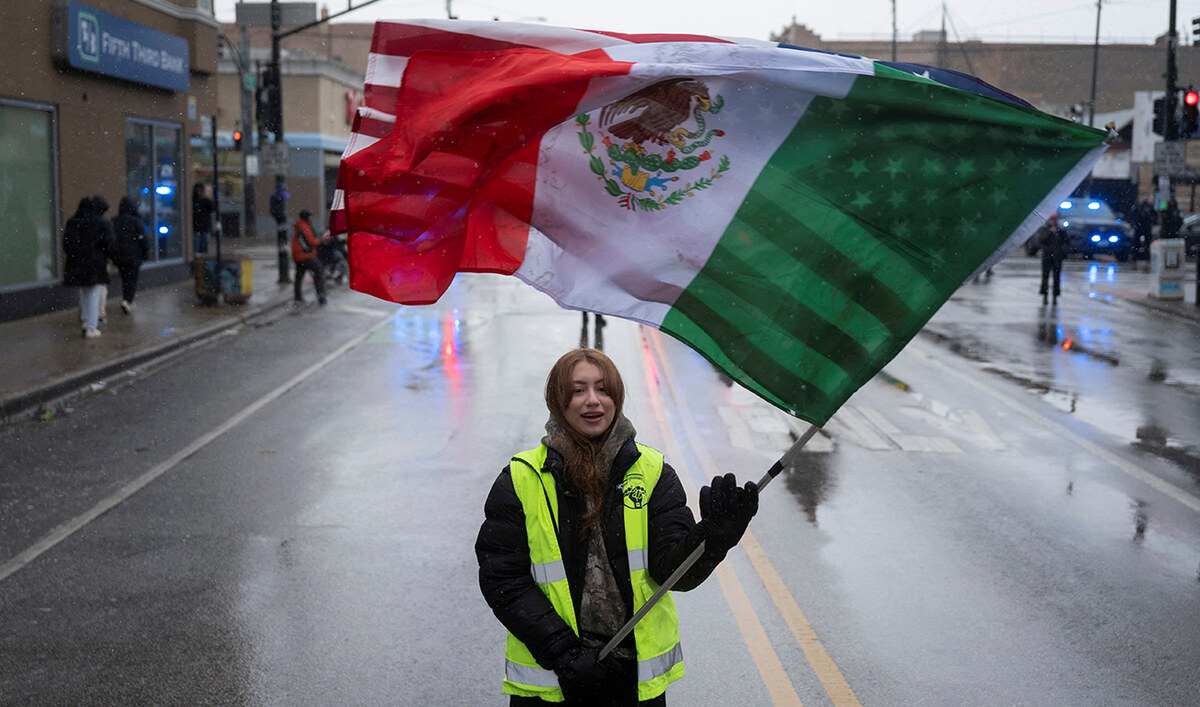
A woman waves a Mexican and American flag together during a protest against US President Donald Trump’s intensified enforcement of Immigration and Customs Enforcement (ICE), in the Little Village neighborhood of Chicago, Illinois, US on February 8, 2025. (REUTERS)
As a result, people are poor and bereft of options.
They live in tarpaulin tents or shacks made of corrugated iron and branches, and rely on rations of cooking oil, milk powder, rice and sugar sent by foreign donors.
Many Somali refugees have lived in Dadaab for decades; some were born in the camp and have never seen life outside.
With most unable to return home to Somalia, tens of thousands have sought a better life whole continents away.
While the United States is often a prized destination, US policy on refugee resettlement is complex.
Vetting and screening — X-rays, vaccinations and a host of other medical examinations — can take more than a decade.
Refugee upon refugee recounts the same tale of years lost to process and procedure, interviews, screenings and then — finally — approval granted only to see their long-awaited escape flights suspended until further notice, no explanation given.
During Trump’s first term, the fear of languishing in camps for years saw young men lured by people smugglers into risky, illegal routes to Europe or to the United States via Mexico.
“These people smugglers are smart. They target young men who are desperate after having their flights canceled and promise to take them through another route,” said Abdirahim, 29, who had his flight canceled in Trump’s first term and now again in his second term.
“But many boys just go missing. Or their families here in Dadaab get calls from smugglers in Libya who have kidnapped them and demand thousands of dollars in ransom,” added Abdirahim, whose name has been changed to protect his identity.
‘WE ARE NOT BAD PEOPLE’
As well as refugees, thousands of Afghan and Iraqi nationals — people who had worked with the US government and been granted Special Immigrant Visas (SIVs) to resettle in the United States — have also been left in limbo.
In Afghanistan, many people have been forced into hiding fearing reprisals after the Taliban returned to power in 2021.
Subhan Safi, 28, worked with US troops as a plumber for three years. In December 2023, he was granted an SIV and more than one year on, was still awaiting evacuation from Kabul.
“I have been waiting to get on a flight ... but now I am facing an uncertain future and do not know what will happen next,” he told the Thomson Reuters Foundation in Kabul.
“I’m still hopeful that the US president’s decision will change, and that people like me, who are at risk, will be allowed entry. I’m very eager to start a new and better life,” added Safi, whose name has been changed to protect his identity.
The US State Department would not say how many people were awaiting resettlement, but confirmed admissions were on hold.
“Consistent with President Trump’s Executive Order ... the Department of State is coordinating with implementing partners to suspend refugee arrivals and case processing activities,” it said in a statement to the Thomson Reuters Foundation.
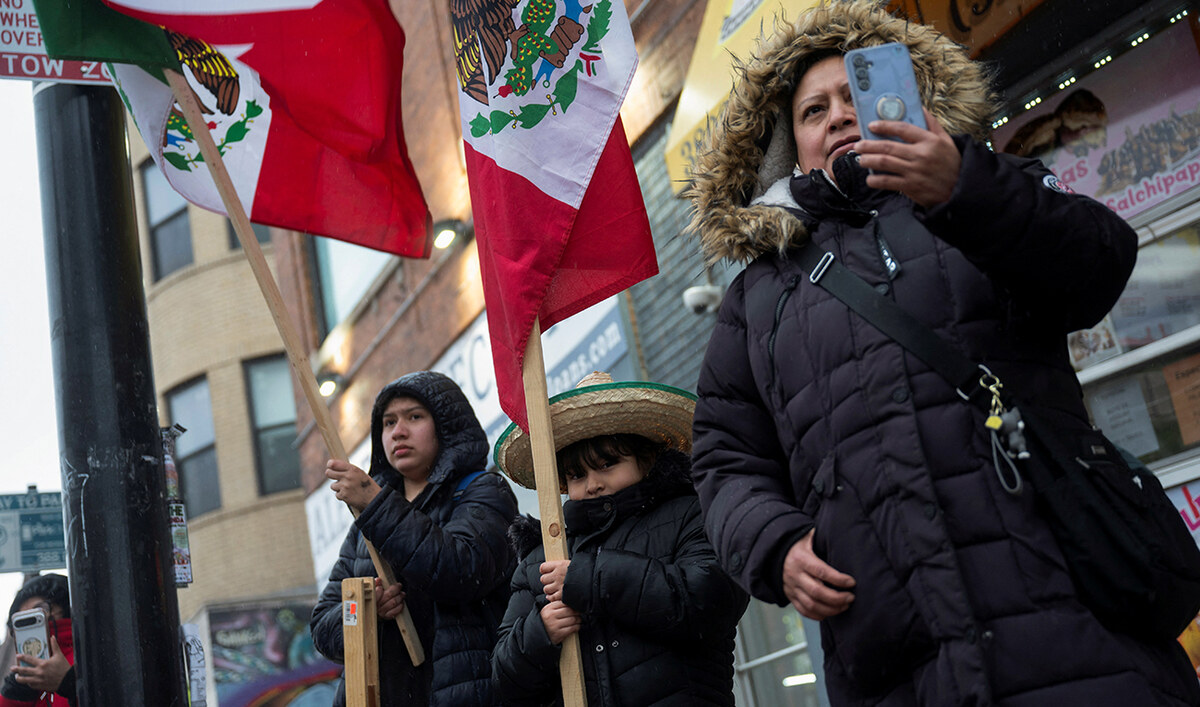
People watch demonstrators march during a protest against US President Donald Trump’s intensified enforcement of Immigration and Customs Enforcement (ICE), in the Little Village neighborhood of Chicago, Illinois, US on February 8, 2025. (REUTERS)
The UN refugee agency (UNHCR) said it was analizing the order, and was ready to work with Trump to find solutions.
“Refugee resettlement is a life-saving measure for those most at risk, including survivors of violence or torture, women and children at risk, and individuals with legal or physical protection needs,” said a UNHCR spokesperson.
Dadaab refugees said they had no choice but to hope that Trump would lift his suspension after the three-month review.
Some even said they didn’t blame him.
“I agree with President Trump. Illegal people should not be in his country. I think once he has deported all the illegal people, he will let the refugees come and do their jobs,” said Abdi, 24, who has been waiting 16 years for resettlement.
“We are not bad people. We want go to the US but we want to go properly and legally,” added Abdi, whose name has been changed to protect his identity.