

Two cops killed, two injured as militants attack police post in northwest Pakistan

Policemen gather following a militant attack on police post in Fateh Khel, on the outskirts of Bannu, on February 8, 2025. (Photo courtesy: Social Media)
Short Url
Updated 08 February 2025
Follow

Two cops killed, two injured as militants attack police post in northwest Pakistan

  • Incident occurred in Bannu district of Khyber Pakhtunkhwa when militants attacked police with heavy weapons
  • Separately, military says one of three militants killed in North Waziristan two days ago was an ‘Afghan national’

ISLAMABAD: Two policemen were killed and two others wounded after militants attacked a police check-post in Pakistan’s northwestern Khyber Pakhtunkhwa (KP) province, a police official said on Saturday.
Pakistan has struggled to contain surging militancy in KP since a fragile truce between the Pakistani Taliban, or the Tehreek-e-Taliban Pakistan (TTP), and the state broke down in November 2022.
In 2024 alone, the military reported that 383 soldiers and 925 militants were killed in various clashes.
The latest incident occurred in the Bannu district of the province when militants attacked the police post in Fateh Khel, a rundown locality on the outskirts of Bannu, according to local police officer Nadir Khan.
“Terrorists mounted the attack at midnight, leaving two police officers, Rahimullah and Ziaullah, dead and two others injured,” Khan told Arab News.
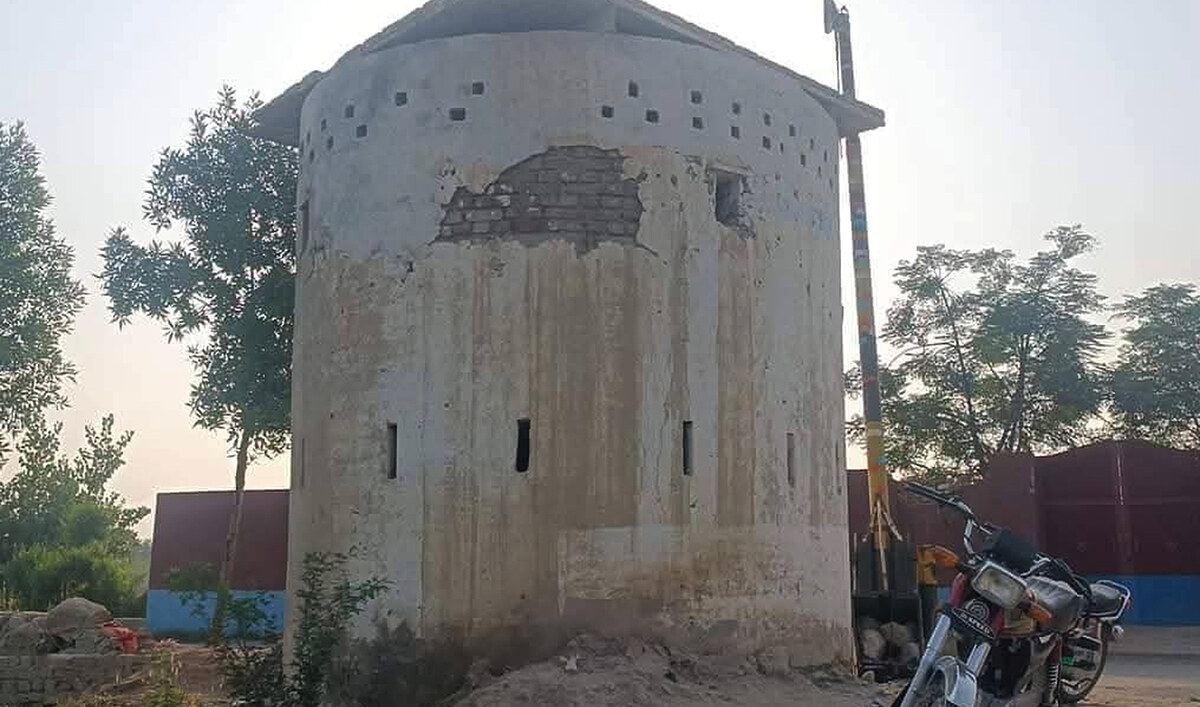


This photo shows a damaged building following a militant attack on police post in Fateh Khel, on the outskirts of Bannu, on February 8, 2025. (Photo courtesy: Social Media)

“The terrorists, who used heavy weapons in the attack, were forced to flee after the police retaliated.”
While no group immediately claimed responsibility for the attack, the suspicion is likely to fall on the Pakistani Taliban, who have frequently targeted security forces and police convoys and check-posts, besides targeted killings and kidnappings of law enforcers and government officials in recent months.
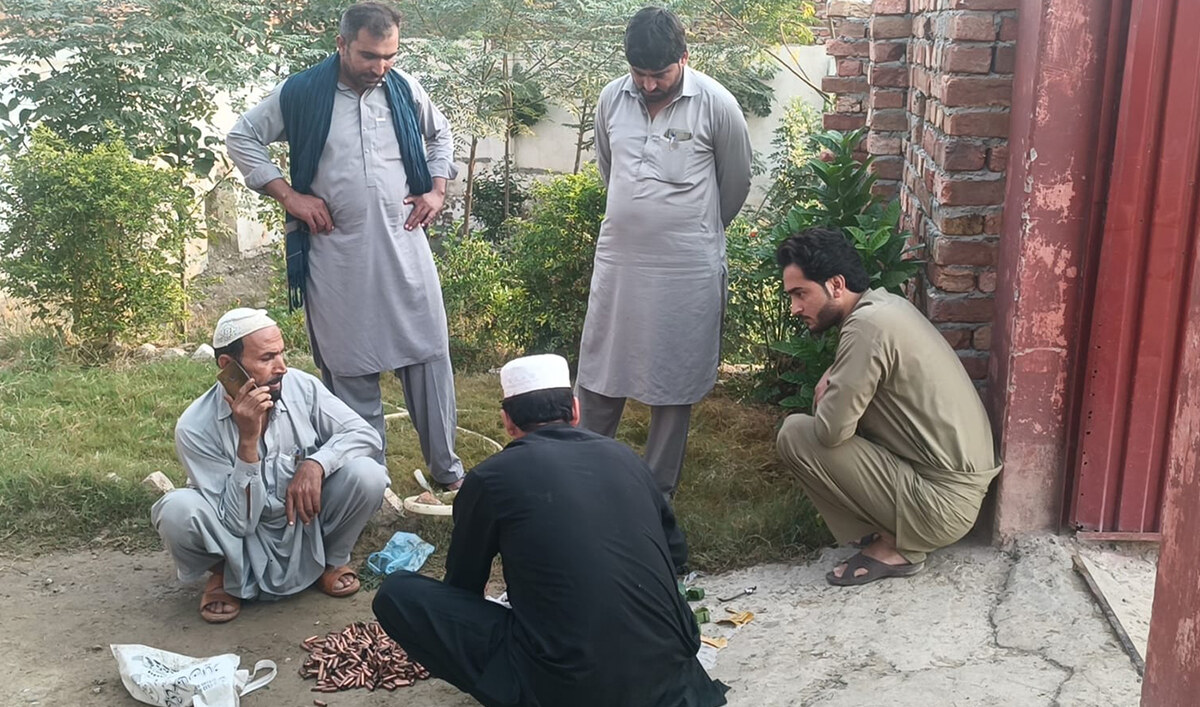


Officials gather evidence following a militant attack on police post in Fateh Khel, on the outskirts of Bannu, on February 8, 2025. (Photo courtesy: Social Media)

The latest attack came two days after Pakistani security forces killed three militants in KP’s North Waziristan district, which borders Afghanistan.
In a separate statement issued on Saturday, the Pakistani military said an Afghan national was among the militants killed in North Waziristan.
“The individual was later identified as Luqman Khan alias Nusrat (Afghan National), Son of Kamal Khan, resident of Spera District, Khost Province, Afghanistan,” said the Inter-Services Public Relations (ISPR), the Pakistani military’s media wing.
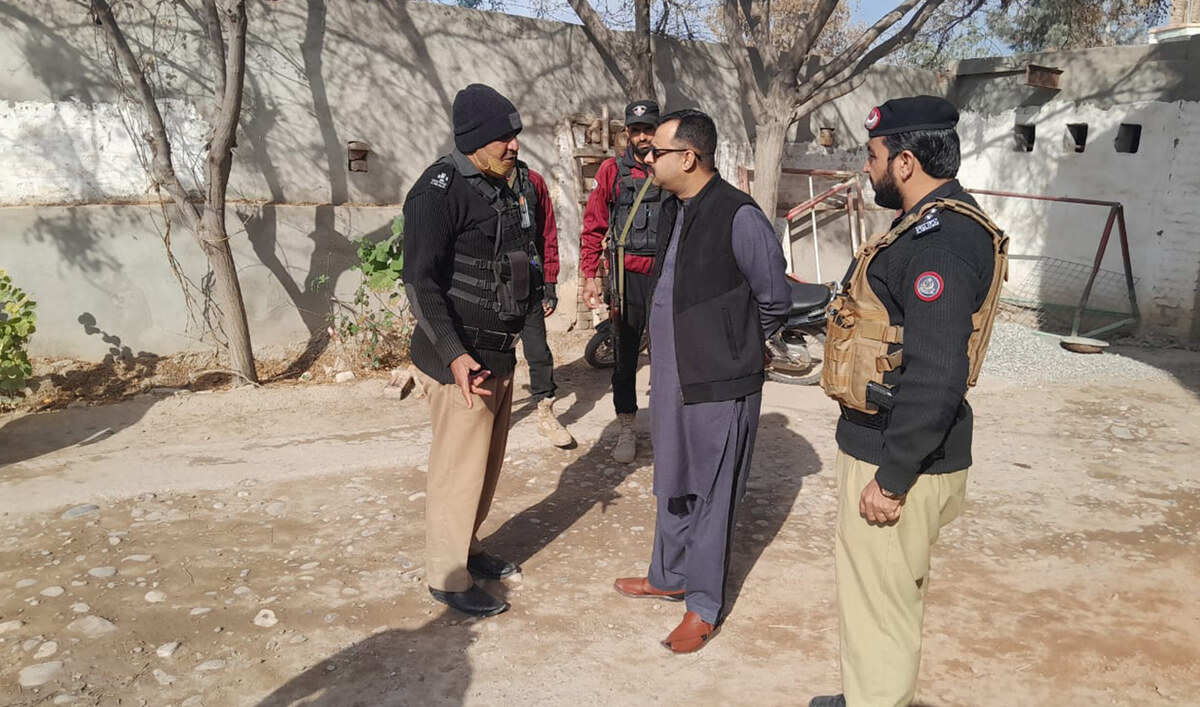


Policemen gather following a militant attack on police post in Fateh Khel, on the outskirts of Bannu, on February 8, 2025. (Photo courtesy: Social Media)

“Interim Afghan Government authorities are being approached to take over the body of the individual, being an Afghan citizen.”
Islamabad has frequently blamed the surge in militancy on Afghanistan, accusing it of sheltering and supporting militant groups that launch cross-border attacks. Afghan officials deny involvement and insist that Pakistan’s security issues are an internal matter of Islamabad.


Pakistan terms climate change, demographic pressures as ‘pressing existential risks’

Updated 4 sec ago
Follow

Pakistan terms climate change, demographic pressures as ‘pressing existential risks’

  • Pakistan has suffered frequent climate change-induced disasters, including floods this year that killed over 1,000
  • Pakistan finmin highlights stabilization measures at Doha Forum, discusses economic cooperation with Qatar 

ISLAMABAD: Pakistan’s Finance Minister Muhammad Aurangzeb on Saturday described climate change and demographic pressures as “pressing existential risks” facing the country, calling for urgent climate financing. 

The finance minister was speaking as a member of a high-level panel at the 23rd edition of the Doha Forum, which is being held from Dec. 6–7 in the Qatari capital. Aurangzeb was invited as a speaker on the discussion titled: ‘Global Trade Tensions: Economic Impact and Policy Responses in MENA.’

“He reaffirmed that while Pakistan remained vigilant in the face of geopolitical uncertainty, the more pressing existential risks were climate change and demographic pressures,” the Finance Division said. 

Pakistan has suffered repeated climate disasters in recent years, most notably the 2022 super-floods that submerged one-third of the country, displaced millions and caused an estimated $30 billion in losses. 

This year’s floods killed over 1,000 people and caused at least $2.9 billion in damages to agriculture and infrastructure. Scientists say Pakistan remains among the world’s most climate-vulnerable nations despite contributing less than 1 percent of global greenhouse-gas emissions.

Aurangzeb has previously said climate change and Pakistan’s fast-rising population are the only two factors that can hinder the South Asian country’s efforts to become a $3 trillion economy in the future. 

The finance minister noted that this year’s floods in Pakistan had shaved at least 0.5 percent off GDP growth, calling for urgent climate financing and investment in resilient infrastructure. 

When asked about Pakistan’s fiscal resilience and capability to absorb external shocks, Aurangzeb said Islamabad had rebuilt fiscal buffers. He pointed out that both the primary fiscal balance and current account had returned to surplus, supported significantly by strong remittance inflows of $18–20 billion annually from the Middle East and North Africa (MENA) and Gulf Cooperation Council (GCC) regions. 

Separately, Aurangzeb met his Qatari counterpart Ali Bin Ahmed Al Kuwari to discuss bilateral cooperation. 

“Both sides reaffirmed their commitment to strengthening economic ties, particularly by maximizing opportunities created through the newly concluded GCC–Pakistan Free Trade Agreement, expanding trade flows, and deepening energy cooperation, including long-term LNG collaboration,” the finance ministry said. 

The two also discussed collaboration on digital infrastructure, skills development and regulatory reform. They agreed to establish structured mechanisms to continue joint work in trade diversification, technology, climate resilience, and investment facilitation, the finance ministry said.