BRUSSELS: The main international forum for drumming up weapons and ammunition for Ukraine will for the first time meet under the auspices of a country other than the US as uncertainty surrounds the future of Washington’s support for arming the war-torn country.
The Ukraine Defense Contact Group, a consortium of about 50 partner nations, was brought together by former US Defense Secretary Lloyd Austin to coordinate weapons support in the months after Russia invaded Ukraine in February 2022.
President Donald Trump has expressed skepticism for backing Ukraine, criticizing its President Volodymyr Zelensky and saying last month that his administration had already held ” very serious” discussions with Russia about ending the conflict.
The UK is convening the 26th meeting of the contact group on Wednesday at NATO headquarters in Brussels.
The meeting is aimed at discussing “priorities for Ukraine as the international community continues to work together to support Ukraine in its fight against (Russian President Vladimir) Putin’s illegal invasion,” the British Ministry of Defense said in a statement released on Thursday.
It’s the first time that a country other than the US has convened the forum, although Austin’s successor, Pete Hegseth, is scheduled to take part. It was not immediately clear whether the UK convened the meeting on its own initiative or whether Washington requested it.
A senior US official said, “We appreciate the UK’s leadership in convening the 50-plus countries who participate in this forum. Ally and partner burden-sharing remains critical to helping achieve peace in Ukraine.”
The official spoke on condition of anonymity as they were not authorized to speak to the media.
The US is by far the largest single foreign contributor of military aid to Ukraine, providing about 30 percent of Ukraine’s weaponry, as much as the 27 members of the European Union put together.
Kathleen Burk, emeritus professor of history at University College London, told The Associated Press that if the US has asked Britain to chair the meeting of Ukraine’s Western backers, it “seems to tell me that disengagement has already begun.”
Zelensky attended the last meeting in January, as the Biden administration rushed to provide his country with as much military support as it could, including a new $500 million package of weapons and relaxing restrictions on missile strikes into Russia.
The aim was to put Ukraine in the strongest position possible for any future negotiations to end the war.
In June last year, NATO defense ministers approved a permanent system to provide reliable long-term security aid and military training for Ukraine after delays in Western deliveries of funds, arms and ammunition helped invading Russian forces to seize the initiative on the battlefield.
The NATO Security Assistance and Training for Ukraine (NSATU), which began work in December, had been described as a way to “Trump-proof” NATO backing for Ukraine, a reference to concern that Trump might withdraw US support for Kyiv.
NSATU, which is headquartered at a US military base in Wiesbaden, Germany, was publicly portrayed by NATO officials as a system that would complement rather than replace the contact group.


![]()

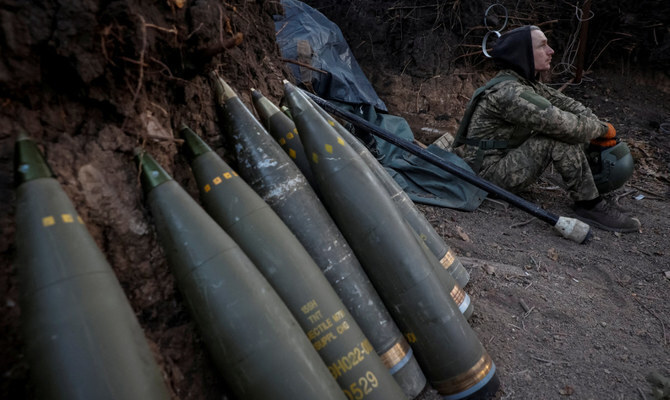
Ukraine’s Western backers will meet for arms talks as doubts over US intentions grow
Short Url
https://arab.news/m37fe
Ukraine’s Western backers will meet for arms talks as doubts over US intentions grow
- President Donald Trump has expressed skepticism for backing Ukraine
- The UK is convening the 26th meeting of the contact group on Wednesday at NATO headquarters in Brussels


Latest updates


© 2026 SAUDI RESEARCH & PUBLISHING COMPANY, All Rights Reserved And subject to Terms of Use Agreement.