

Pakistan begins burials for 13 migrants drowned off Africa

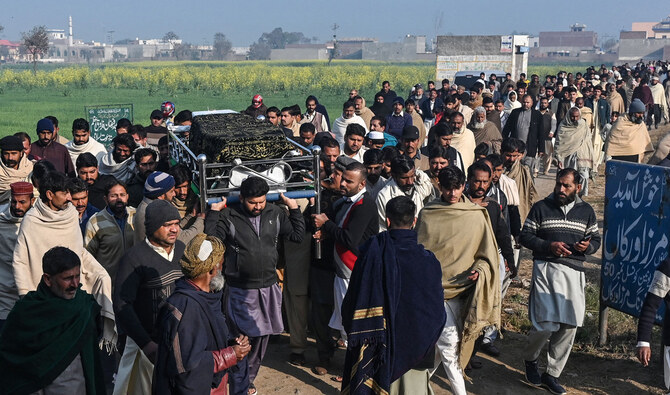
Family members and residents carry the coffin of Arslan Khan, a victim of last month’s migrant boat capsizing off North Africa, during his funeral ceremony in Mirza Virkan village, in eastern Punjab province, on February 6, 2025. A Pakistan village on February 6 buried one of its residents among 13 migrants from the country who drowned as their boat capsized off North Africa last month. (AFP)
Short Url
Updated 06 February 2025
Follow

Pakistan begins burials for 13 migrants drowned off Africa

  • Each year thousands of Pakistanis pay large sums to traffickers to launch risky and illegal journeys to Europe
  • Pakistanis are frequently among those drowned on crammed migrant boats which sink on Mediterranean Sea

MIRZA VIRKAN: A Pakistani who drowned along with 12 compatriots when a boat carrying dozens of migrants capsized off northwest Africa was buried in his hometown on Thursday.
Each year thousands of Pakistanis pay large sums to traffickers to launch risky and illegal journeys to Europe, where they hope to find work and send funds to support families back home.
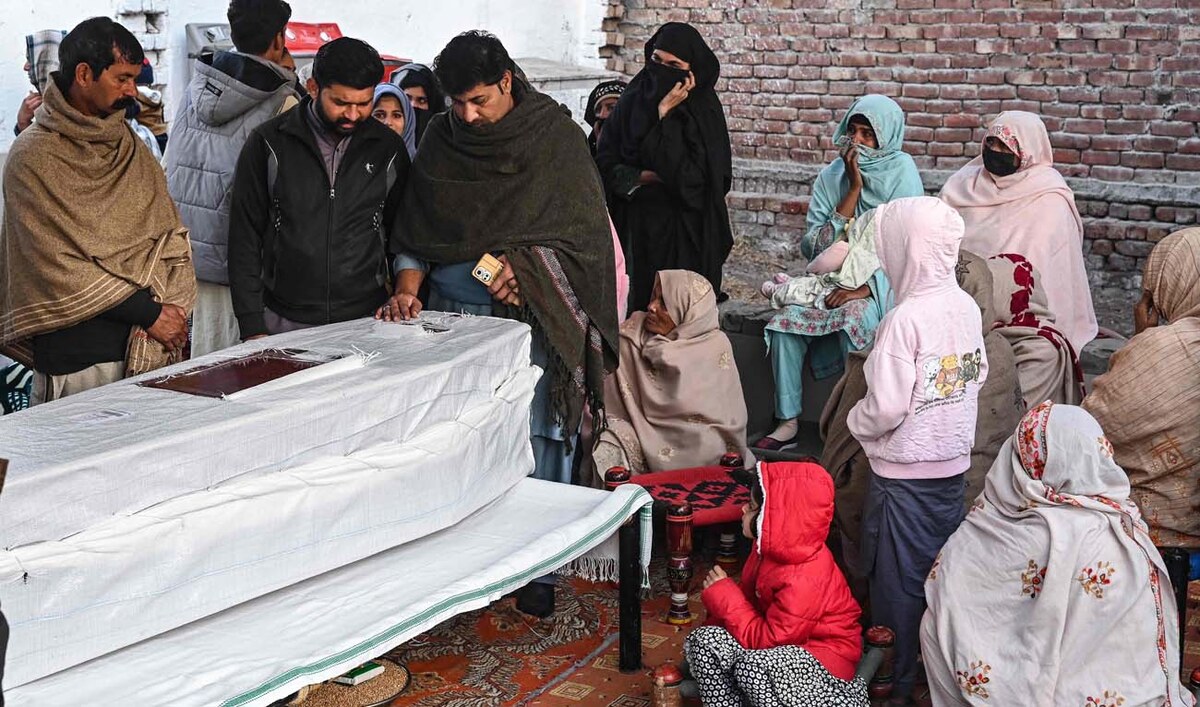


Family members and residents gather around the coffin of Arslan Khan, a victim of last month’s migrant boat capsizing off North Africa, during his funeral ceremony in Mirza Virkan village, in eastern Punjab province, on February 6, 2025. (AFP)

Pakistanis are frequently among those drowned on crammed boats which sink on the Mediterranean Sea separating North Africa from Europe — the world’s deadliest migrant route.
Islamabad’s foreign ministry this week said 13 of its citizens were among the dead recovered from a boat which went down in the Atlantic.
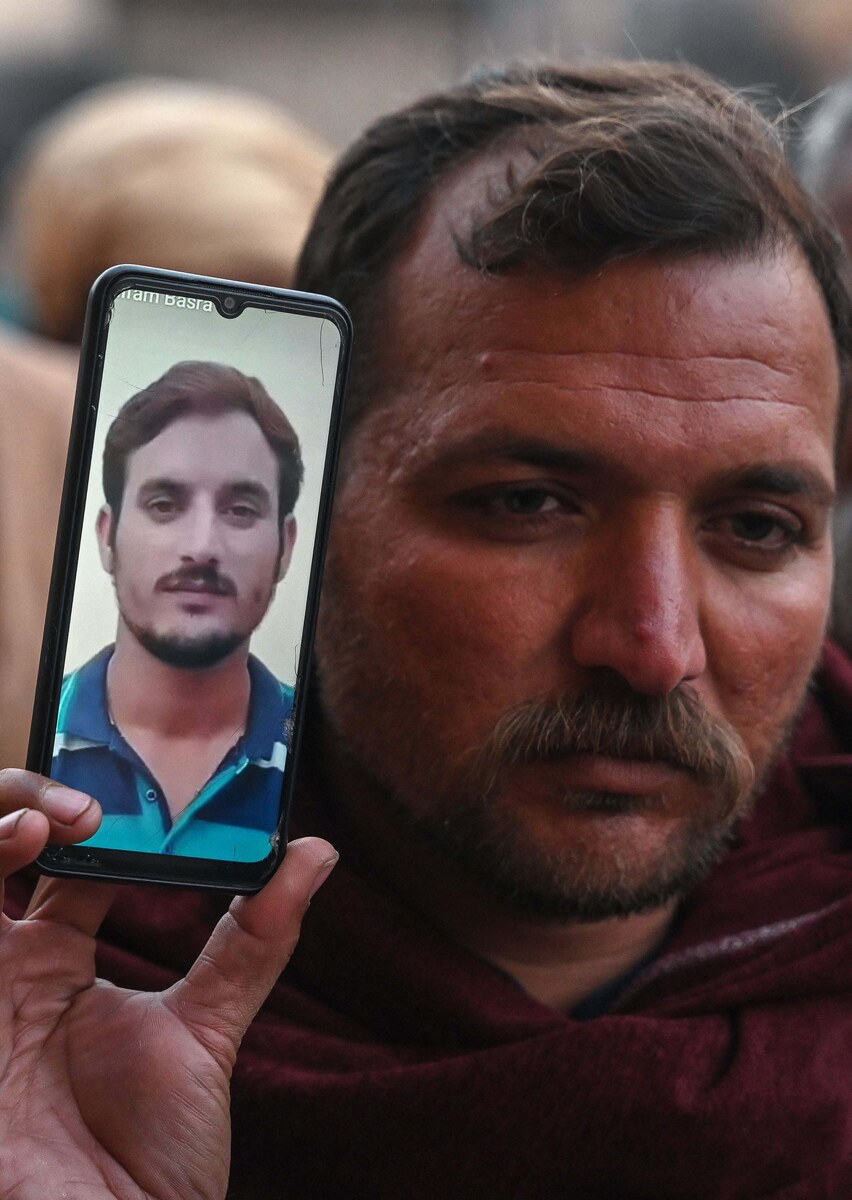


Adnan Khan, brother of Arslan Khan, a victim of last month’s migrant boat capsizing off North Africa, shows his photograph during funeral ceremony in Mirza Virkan village, in eastern Punjab province, on February 6, 2025. (AFP)

Around 80 passengers were aboard the vessel, which left Mauritania and sailed north toward Spain’s Canary Islands before it capsized near the Western Sahara port of Dakhla, the ministry said on January 16.
On Thursday the village of Mirza Virkan in eastern Punjab province buried Arslan Khan — one of four bodies from the shipwreck repatriated a day earlier.
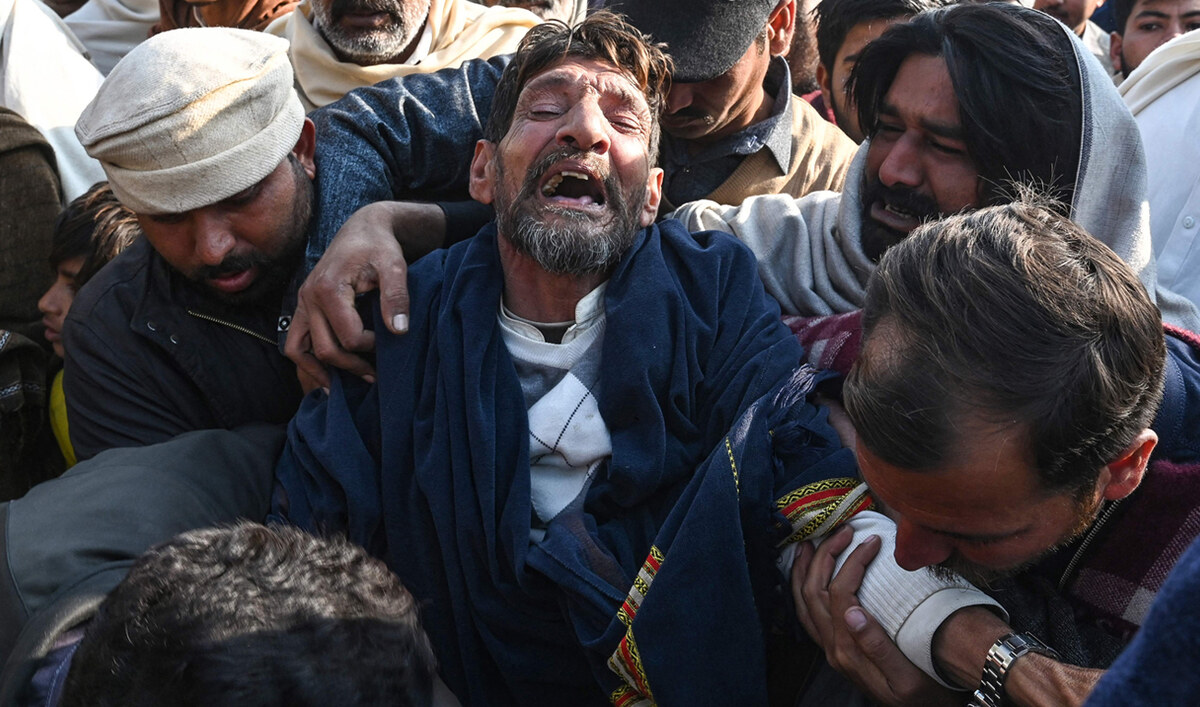


Ramazan Khan (C), father of Arslan Khan, a victim of last month’s migrant boat capsizing off North Africa, breaks down during a funeral ceremony in Mirza Virkan village, in eastern Punjab province, on February 6, 2025. (AFP)

“We sent Arslan to build a better future, and the trafficker assured us that he would send him legally,” his 34-year-old brother Adnan Khan told AFP.
“We sold our property and animals for Arslan’s future, but the trafficker betrayed us — he sent back our brother’s dead body.”
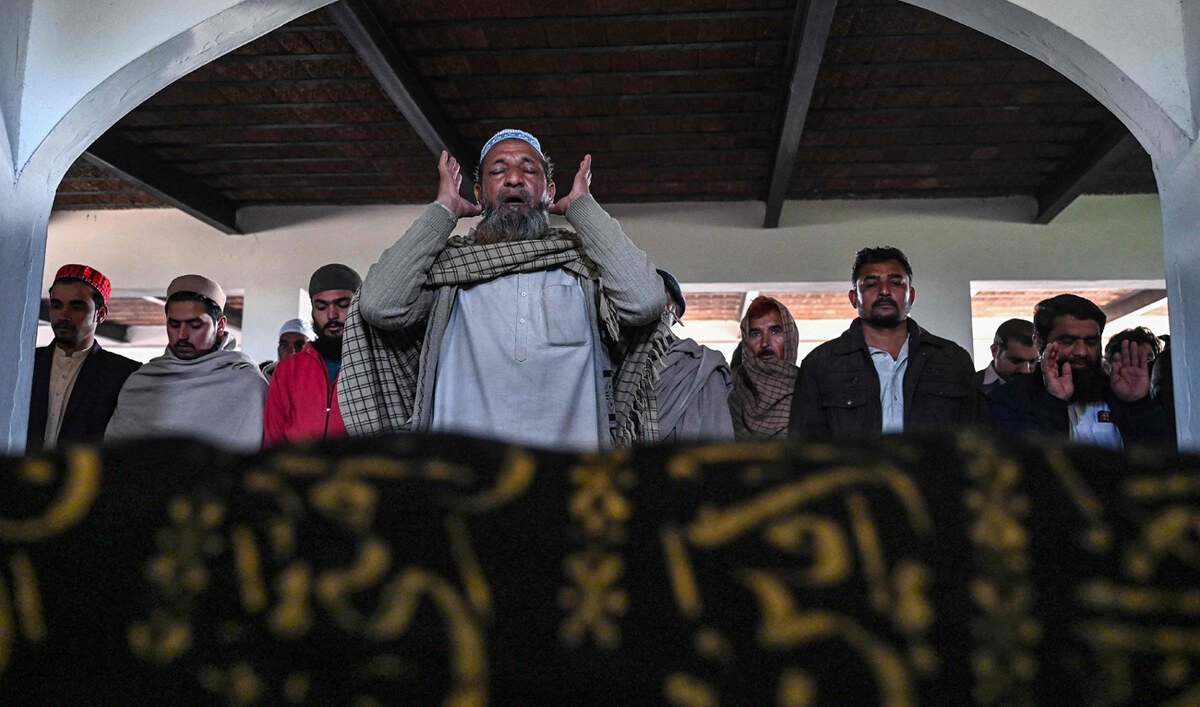


Family members and residents offer prayers during a funeral ceremony of Arslan Khan, a victim of last month’s migrant boat capsizing off North Africa, in Mirza Virkan village, in eastern Punjab province, on February 6, 2025. (AFP)

Pakistan has one of the highest rates of emigration in the world, according to the United Nation’s International Organization for Migration.
Many migrants depart from Punjab and the northeastern region of Pakistan administered Kashmir because their communities have historic ties to the country’s diaspora in Europe.
An official from the Federal Investigation Agency, speaking anonymously to AFP in 2023, estimated Pakistanis attempt 40,000 illegal trips every year.
In June that year the Mediterranean witnessed one of its worst migrant shipwrecks when a rusty and overloaded trawler sank overnight.
It was carrying more than 750 people — up to 350 of them Pakistanis according to Islamabad — but only 82 bodies were ever recovered.


Pakistan terms climate change, demographic pressures as ‘pressing existential risks’

Updated 06 December 2025
Follow

Pakistan terms climate change, demographic pressures as ‘pressing existential risks’

  • Pakistan has suffered frequent climate change-induced disasters, including floods this year that killed over 1,000
  • Pakistan finmin highlights stabilization measures at Doha Forum, discusses economic cooperation with Qatar 

ISLAMABAD: Pakistan’s Finance Minister Muhammad Aurangzeb on Saturday described climate change and demographic pressures as “pressing existential risks” facing the country, calling for urgent climate financing. 

The finance minister was speaking as a member of a high-level panel at the 23rd edition of the Doha Forum, which is being held from Dec. 6–7 in the Qatari capital. Aurangzeb was invited as a speaker on the discussion titled: ‘Global Trade Tensions: Economic Impact and Policy Responses in MENA.’

“He reaffirmed that while Pakistan remained vigilant in the face of geopolitical uncertainty, the more pressing existential risks were climate change and demographic pressures,” the Finance Division said. 

Pakistan has suffered repeated climate disasters in recent years, most notably the 2022 super-floods that submerged one-third of the country, displaced millions and caused an estimated $30 billion in losses. 

This year’s floods killed over 1,000 people and caused at least $2.9 billion in damages to agriculture and infrastructure. Scientists say Pakistan remains among the world’s most climate-vulnerable nations despite contributing less than 1 percent of global greenhouse-gas emissions.

Aurangzeb has previously said climate change and Pakistan’s fast-rising population are the only two factors that can hinder the South Asian country’s efforts to become a $3 trillion economy in the future. 

The finance minister noted that this year’s floods in Pakistan had shaved at least 0.5 percent off GDP growth, calling for urgent climate financing and investment in resilient infrastructure. 

When asked about Pakistan’s fiscal resilience and capability to absorb external shocks, Aurangzeb said Islamabad had rebuilt fiscal buffers. He pointed out that both the primary fiscal balance and current account had returned to surplus, supported significantly by strong remittance inflows of $18–20 billion annually from the Middle East and North Africa (MENA) and Gulf Cooperation Council (GCC) regions. 

Separately, Aurangzeb met his Qatari counterpart Ali Bin Ahmed Al Kuwari to discuss bilateral cooperation. 

“Both sides reaffirmed their commitment to strengthening economic ties, particularly by maximizing opportunities created through the newly concluded GCC–Pakistan Free Trade Agreement, expanding trade flows, and deepening energy cooperation, including long-term LNG collaboration,” the finance ministry said. 

The two also discussed collaboration on digital infrastructure, skills development and regulatory reform. They agreed to establish structured mechanisms to continue joint work in trade diversification, technology, climate resilience, and investment facilitation, the finance ministry said.