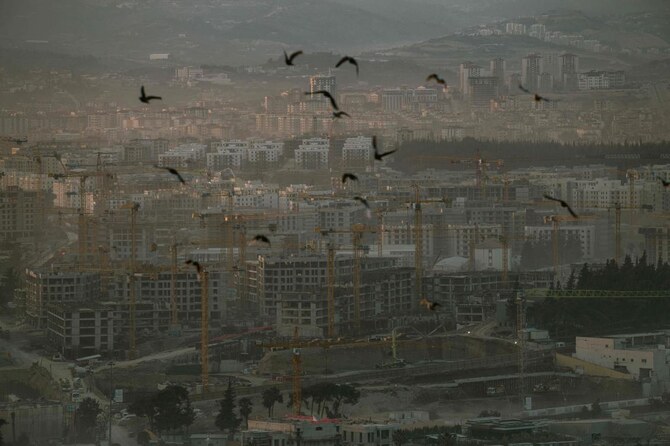
ANKARA: Two years after the deadliest and most destructive earthquake in modern Turkish history, hundreds of thousands of people remain displaced, with many still living in temporary housing, as rebuilding efforts lag behind initial targets.
The 7.8-magnitude earthquake on February 6, 2023, and its aftershocks rattled 11 Turkish provinces and parts of northern Syria, killing more than 55,000 people and injuring more than 107,000.
The disaster reduced entire towns to rubble, including homes, hospitals, and historical landmarks, with Hatay, Kahramanmaras and Adiyaman hardest hit.
The government has pledged to build 650,000 homes, with President Tayyip Erdogan promising in the weeks after the tremor that 319,000 would be delivered within a year.
“We are fortunate to have delivered 201,431 independent units to their rightful owners less than two years after the earthquake,” Erdogan said after a cabinet meeting on Monday.
Environment and Urbanization Minister Murat Kurum said $75 billion had been spent on rebuilding across the quake region.
The critical phases of reconstruction have been completed, he said, adding that housing and business projects were progressing rapidly.
Many residents, however, remain in makeshift conditions, while others have left their home provinces entirely, disrupting communities and livelihoods.
Ozgur Ozel, leader of the main opposition CHP, said only 30 percent of the pledged reconstruction had been completed. The housing completion rate in Hatay, one of the worst-hit provinces, was only 18 percent, he said.
“Only three out of ten who believed in Erdogan now have homes, while the other seven are still in containers or seeking refuge in the homes of relatives,” Ozel said on Tuesday.
“How can they look into the eyes of those they forced to live in containers for two years and say, ‘We have kept all our promises, thank God’?“
Lingering hardships
International and local aid groups say a full recovery remains far off, with thousands of Turks still facing barriers to returning home.
The Hatay Earthquake Victims’ Association said in a report that more than 400,000 people remain in container-home cities, facing poor sanitation, inadequate health care, and an uncertain future.
It also raised concerns about asbestos exposure from unregulated demolitions and land seizures under emergency decrees.
The International Federation of Red Cross and Red Crescent Societies (IFRC) said that millions of people in Turkiye and Syria were still struggling to rebuild their lives. It called the pace of reconstruction “far too slow” for such a disaster.
Delays in reconstruction hurt long-term stability and risk depopulation of the region, some aid groups say.
In Hatay, in southernmost Turkiye, empty streets, shuttered businesses, and demolition work still define the city, which was once a bustling mixture of cultures and religions, and a draw for tourism.
Ankara says its response to the earthquake has been effective and on track.
Kurum, the government minister, said 423,000 homes and workplaces will be handed over to survivors by the end of 2025, adding that Turkiye had allocated 584 billion Turkish lira ($19 billion) for recovery efforts.


![]()
![]()

Two years after quake disaster, Turkiye’s painful recovery continues

Short Url
https://arab.news/44wat
Two years after quake disaster, Turkiye’s painful recovery continues
- The disaster reduced entire towns to rubble, including homes, hospitals, and historical landmarks, with Hatay, Kahramanmaras and Adiyaman hardest hit.


Latest updates





© 2026 SAUDI RESEARCH & PUBLISHING COMPANY, All Rights Reserved And subject to Terms of Use Agreement.