


Pakistan eyes tech-driven export growth as local firms join AI event in UAE

Particpants are pictures at the AI Everything Global 2025 in Dubai, UAE, on February 5, 2025. (AiEverythingGlobal/X)
Short Url
Updated 06 February 2025
Follow

Pakistan eyes tech-driven export growth as local firms join AI event in UAE

  • AI Everything Global 2025 is one of the largest public-private artificial intelligence gatherings of the year
  • Eleven Pakistani companies and two start-ups are attending the event featuring several global tech giants

ISLAMABAD: Pakistan is participating in AI Everything Global 2025, a major artificial intelligence event in the United Arab Emirates, with hopes of leveraging technology to drive a significant jump in exports, its ambassador said on Wednesday.

AI Everything Global 2025 is one of the largest public-private AI gatherings of the year, bringing together over 500 exhibitors and 150 investors from 70 countries. The event, which began in Abu Dhabi on February 4 and continues in Dubai from February 5-6, serves as a platform for industry leaders, governments and innovators to explore AI’s impact on economic transformation.

It features global tech giants including ASUS, IBM, Zoom, Oracle and Intel presenting cutting-edge AI solutions.

Pakistan has made its presence felt at the event with a delegation of over 30 industry leaders, backed by the Pakistan Software Export Board (PSEB) and the Trade Development Authority of Pakistan (TDAP). The Commercial Section of Pakistan’s Consulate in Dubai is facilitating participation, which aims to strengthen Pakistan’s AI footprint and explore collaborations in the growing digital economy.

“There are 11 Pakistani companies and two start-ups [attending the event],” Ambassador Faisal Niaz Tirmizi said. “There are 30 delegates, and it’s a great opportunity [for them].”

“I always say if we harness technology, because the world depends on technology, our total [Pakistani] exports are $30 billion, and we can export even more through technology,” he added.
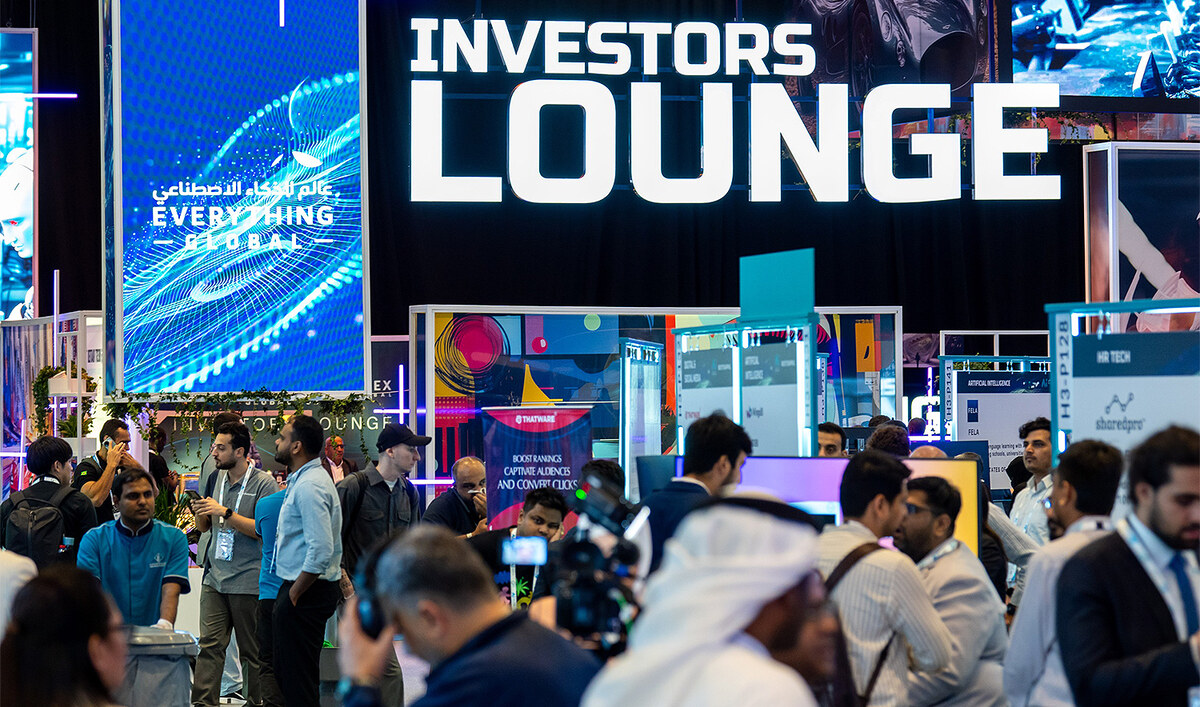


Particpants are pictures at the AI Everything Global 2025 in Dubai, UAE, on February 5, 2025. (AiEverythingGlobal/X)

The potential of Pakistan’s tech industry was also highlighted by Abu Bakar, CEO of PSEB, who said the country was making strides in IT exports.

“We have just started,” he said. “Our [IT] export was $3.2 billion last year. I think we have a lot of aspirations. God willing, this year [the IT export] will be more than $4 billion.”

“We have to go up to $15 billion,” he continued. “For that, everyone has to work together for brand Pakistan and tech destination Pakistan. And we feel very happy to see that our companies get a lot of recognition here [in the UAE].”

The event comes as AI is projected to contribute $100 billion to the UAE’s GDP by 2030, aligning with the country’s National Strategy for Artificial Intelligence 2031 and its ambition to become a global AI leader.

Pakistan’s participation reflects its efforts to integrate AI into its economy, upskill its workforce and expand the country’s digital exports.


Pakistan to maintain hard line on Afghanistan after strikes as Taliban vows military response

Updated 5 sec ago
Follow

Pakistan to maintain hard line on Afghanistan after strikes as Taliban vows military response

  • Islamabad blames Afghanistan’s ‘guerrilla mindset’ for escalating tensions between the two countries
  • Afghan Taliban spokesperson denies militant presence in his country, accuses Pakistan of hitting civilians

ISLAMABAD: Pakistan vowed on Wednesday to continue its current policy toward Afghanistan unless the Taliban leadership abandons its “guerrilla mindset,” days after Islamabad carried out airstrikes inside Afghan territory, sharply escalating tensions between the two neighbors once again.

Pakistan conducted intelligence-based strikes overnight into Sunday in Afghanistan’s eastern Nangarhar and southeastern Paktika provinces, saying it had targeted camps of the banned Tehreek-e-Taliban Pakistan (TTP), its affiliates and Daesh-linked fighters.

Islamabad has long accused Kabul of allowing militant groups to use Afghan soil to launch attacks on Pakistani civilians and security forces, a charge the Taliban deny. The two sides also clashed in October last year, leading Pakistan to close key border crossings for bilateral and transit trade.

State Minister for Interior Talal Chaudhry told Geo News that Pakistan had attempted dialogue but would now persist with practical measures if the Taliban failed to change course.

“They call themselves a state, but they have not yet emerged from their guerrilla mindset,” he said.

“Now, with the practical steps we are taking, we want to change their behavior and see them in the form of a state,” he added.

Pakistan blamed a string of recent suicide bombings in Islamabad, Bajaur and Bannu on militants operating from Afghan territory before launching the latest strikes.

Chaudhry said Afghanistan had been acting like “an irresponsible neighbor,” warning that his country’s current approach would continue if attacks inside Pakistan persisted.

“This war will be won, and all this will end,” he said. “If it is not resolved the straight way, then it will be completely ended by a hard-line approach.”

Meanwhile, Kabul has condemned the airstrikes as violations of its sovereignty and said civilians were killed.

In an interview with Al Arabiya, Taliban government spokesman Zabihullah Mujahid also pledged to respond militarily.

“It would be a military response, but its details are confidential and I cannot explain further,” he said.

Mujahid rejected Pakistan’s allegations that TTP or Daesh militants operate from Afghan soil, saying security problems inside Pakistan were domestic in nature.

“Afghan soil is not allowed to be used against anyone,” he said, adding that Kabul had carried out extensive operations against Daesh and eliminated its presence in Afghanistan.

The 2,600-kilometer border between the two countries remains a vital trade and transit route, but crossings have faced repeated closures amid rising tensions, disrupting commerce and humanitarian movement.

Several regional countries, including Saudi Arabia, Türkiye and Qatar, have sought to mediate between the two countries, though their military exchanges risk further destabilizing their ties.