NEW YORK: You know you’ve said it. We all have. “Mmm, that looks so delicious — I want to try some!” That’s because when it comes to what we eat, it’s not just a matter of taste.
What foods and drinks look like — the colors we see before the first morsels or sips hit our tastebuds — have mattered to people for millennia. And nowhere has that been more blatant than the American food palate, where the visual spectrum we choose from includes not only the primary colors but artificial ones that nature couldn’t even dream up.
For well over a century, food manufacturers in the United States have used synthetic dyes in their products as part of their production and marketing efforts. Often, it’s been in hopes of making a mass-produced food look as fresh and natural as possible, reminiscent of the raw ingredients used in its production. In other cases, it’s been about making an item look interesting or distinctive from competitors, like candies or desserts in an electric blue or neon pink. Think “blue raspberry Slurpee” or “Flamin’ Hot Cheetos.”
It hasn’t been without controversy. Over the decades, there have been pushback and government regulation over just HOW food and drink have been colored, most recently with the decision last month from the federal Food and Drug Administration to ban red dye No. 3 from foods and oral-ingested drugs because of concerns over a possible cancer risk. But no one’s calling for food NOT to be colorful.
That’s because there’s no escaping the importance of what we see when it comes to what we eat, says Devina Wadhera, faculty associate at the College of Integrative Sciences and Arts of Arizona State University.
“Your first sensory contact, if your eyes are open, is going to be sight,” she says. “That’s going to be the first judgment we’re going to make.”
Visual appeal is pivotal
The food manufacturers of the late 19th century knew they had to get the visual appeal right. It was part of their marketing, as a shorthand to encourage brand recognition, to make consumers feel comfortable about quality and overcome worries (or realities) about spoilage as food production became industrialized, says Ai Hisano, author of “Visualizing Taste: How Business Changed the Look of What You Eat.”
Synthetic dyes helped overcome problems like foods losing color in the production process and helped make foods look more “natural,” she says. Then, over time, dyes were deployed to make foods look “fun” and appealing to audiences like young children. (That doesn’t mean manufacturers didn’t sometimes use colorants that could even be deadly — hence the reason there’s regulation.)
She pointed to the mid-20th century example of cake mixes, which reduced the amount of effort required to bake a cake at home because most of the ingredients were already included. Food companies began promoting colorful icing for the cakes as a way women baking at home “could kind of present their personality even though they are making a pre-mixed cake,” Hisano says.
We become conditioned to coloring
The connections we make between colors and foods are learned, Wadhera says. “Throughout our lives, we make associations which mean things. Cake is associated with birthdays. Ice cream is associated with parties and good times, so everything is associative learning. Color is one of those things that we have this tendency to learn about different flavor pairings.”
She gave the example of the spate of products like chips and other snacks that are marketed as having an extra kick. Often, “they’re super red because (companies are) trying to say, ‘Hey, this is going to be spicy’ because they’re trying to get to this sensation or perception that this is going to be really spicy — buy it.”
The connections that we make between color and taste can also change according to the context, says Charles Spence, professor of experimental psychology at the University of Oxford. A blue liquid in a plastic cup in a bathroom? Could be minty mouthwash. The exact same color liquid, in a bar, held in a rocks glass? Could be bitter gin. Different cultures around the world also have different color associations, he says, although it’s fairly constant across geographies that the more vivid a color is, the more intense people assume the flavor will be.
It can even extend past the food itself to the colors involved in its presentation, Wadhera says, pointing to research showing people eating different amounts or preferring certain foods linked to the colors of the dishes used to serve them. And much of the time, she says, people aren’t necessarily aware they’re doing it.
“There’s a lot of things with color that you can manipulate and affect judgments,” she says. “You don’t think of it, though. ... We make automatic judgments on the food and we don’t even realize it.”


![]()

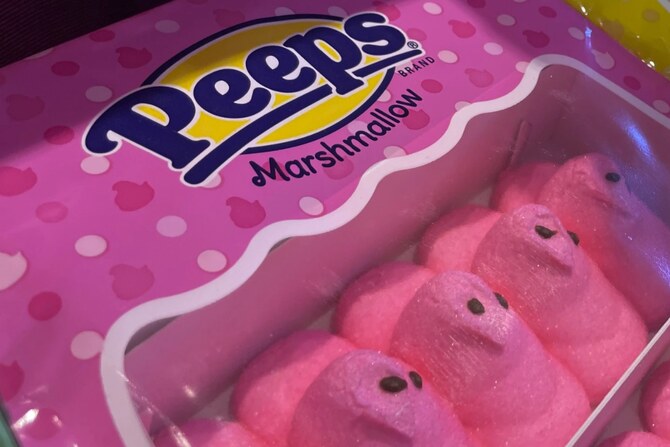
Mmm, that looks yummy! The colors we see make a difference in the food we eat
Short Url
https://arab.news/myhem
Mmm, that looks yummy! The colors we see make a difference in the food we eat
- What food and drink look like, the colors we see, have mattered to people for millennia
- Over the decades, there’s been pushback and government regulation over just HOW food and drink have been colored


Latest updates


© 2026 SAUDI RESEARCH & PUBLISHING COMPANY, All Rights Reserved And subject to Terms of Use Agreement.