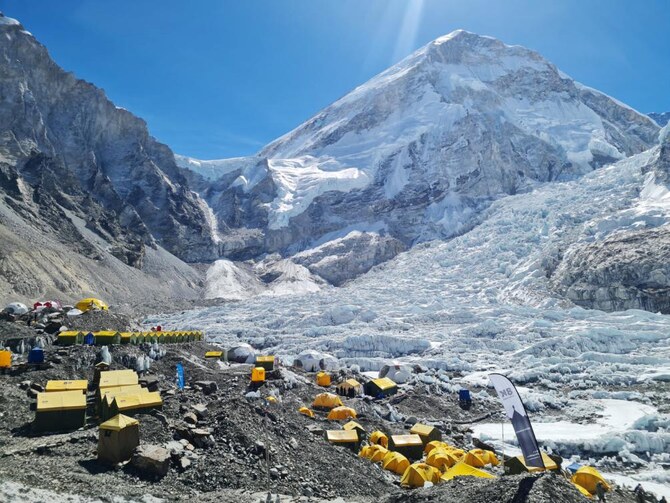
Katmandu: Nepal has hiked the cost of an Everest climbing permit by a third, arguing it will help tackle pollution and boost safety on the world’s highest mountain, the tourism chief said Tuesday.
Fees for the peak spring climbing season will rise from $11,000 to $15,000 for a permit to scale the 8,849-meter (29,032-foot) peak, Narayan Prasad Regmi, director general of the tourism department, told AFP.
“The cost had remained constant for a decade and it was high time to revise that,” he said.
Costs of climbing at less popular — and more demanding — times of year such as during winter or the monsoon rains have also risen at similar rates, including from $5,500 to $7,500 during the autumn season.
Nepal is home to eight of the world’s 14 peaks over 8,000 meters and welcomes thousands of climbers each year.
Foreign climbers already spend tens of thousands of dollars in their attempt to climb Everest, with more than 400 purchasing permits last year, bringing in around $4 million to government coffers.
The funds are put toward cleaning trash from the mountain left by climbers as well as search and rescue operations.
Mountaineering expedition companies hoped the price hike would not deter climbers, warning some might look to scale Everest through China.
“Some climbers might shift to Tibet where the facilities are much better,” said Mingma G Sherpa, who runs the Imagine Nepal mountaineering company, saying the fee must be spent on improving conditions.
“Our government just increases the royalty, but doesn’t do much,” he said.
“It needs to also provide support to the climbers and guides.”
Nepal has been criticized for allowing too many climbers on Everest while doing little to keep the peak clean.
Last year, the Nepal government ordered Everest mountaineers to carry mandatory trackers and carry bags to remove their excrement.
The fee increase was approved by the government in January, but was only published in the national gazette late Monday.


![]()

Nepal hikes Everest climbing fee by a third
Short Url
https://arab.news/4ja94
Nepal hikes Everest climbing fee by a third


Latest updates


Recommended


© 2026 SAUDI RESEARCH & PUBLISHING COMPANY, All Rights Reserved And subject to Terms of Use Agreement.