
ISLAMABAD: The Pakistan government’s recent amendment to the country’s cybercrimes act had “seriously threatened” Internet freedom and free expression, Human Rights Watch said on Tuesday, calling on the nation’s parliament to repeal or revise the Pakistan Electronic Crimes (Amendment) Act, 2025.
The new law, enacted on January 29, includes provisions making the dissemination of “fake or false” information a criminal offense punishable by up to three years in prison without clearly defining “fake or false” news. Stakeholders like journalists unions and digital rights experts say they were excluded from consultations on the bill, which prevented genuine public scrutiny of the new law.
“Pakistan’s amended Prevention of Electronic Crimes Act neither protects the public from legitimate online security threats nor respects fundamental human rights,” said Patricia Gossman, associate Asia director at Human Rights Watch. “The government should uphold the right to free expression and overhaul the new law by removing its abusive provisions.”
The amendments to the Electronic Crimes Act create four new government bodies to regulate online content and broaden the definition of online harm. The government bodies are authorized to block and remove content based on ambiguous criteria that do not meet the standards of proportionality and necessity required under international human rights law, HRW said.
One of the bodies, the Social Media Protection Tribunal, comprises government-appointed members rather than independent members of the judiciary.
Another new body, the Social Media Protection and Regulation Authority, is authorized to order any social media company to remove or block content deemed to be “against the ideology of Pakistan,” be known to be “fake or false,” or to cast aspersions on various public officials. The authority can also require any social media company to register with it and impose any conditions it deems “appropriate” upon registration.
Parliament adopted the amendments in the context of an escalating crackdown on digital speech in Pakistan including frequently shutting down the Internet and throttling Internet networks. The social media platform X has already been banned since days after February general elections last year as allegations of rigging emerged online. There are regular reports of VPN restrictions, and the government is also moving to implement a national firewall.
“Pakistani authorities have denied or limited access to the Internet as a default policing tactic to shut down protests and prevent criticism of the government under the guise of maintaining law and order and curbing misinformation,” HRW said.
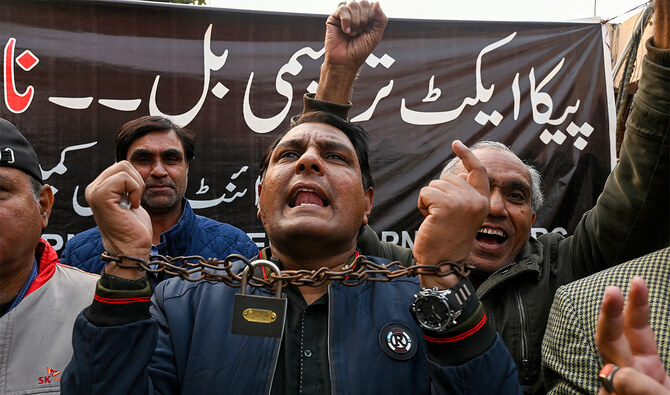
The nongovernmental Human Rights Commission of Pakistan has expressed concern the new law is “likely to become yet another means of targeting political workers, human rights defenders, journalists and dissidents by effectively penalizing criticism of state institutions.” The Pakistan Federal Union of Journalists has announced nationwide protests against the amendment.
“The new Electronic Crimes Act will further entrench violations of free expression and Internet freedoms in Pakistan,” Gossman said. “Digital policing of citizens will not protect them from ‘fake news,’ but will give the authorities a weapon to punish people whose speech they don’t like.”