


DUBAI: In a world grappling with crises ranging from conflict and humanitarian emergencies to economic vulnerability and climate change, the Zayed Award for Human Fraternity stands as a beacon of hope.
Since its establishment in 2019, the award, which includes a $1 million prize, has recognized individuals and organizations whose work embodies the universal values of peace, solidarity, and human dignity.

The trophies for the Zayed Award for Human Fraternity. (Supplied)
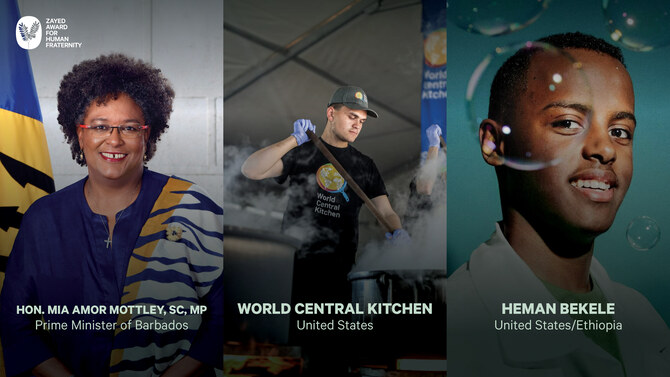
This year, the 2025 honorees — Barbados Prime Minister Mia Amor Mottley, humanitarian relief organization World Central Kitchen, and 15-year-old health innovator Heman Bekele — have each demonstrated a commitment to making the world a better place.
The Zayed Award for Human Fraternity, named in honor of Sheikh Zayed bin Sultan Al Nahyan, the late founder of the UAE, has become a symbol of recognizing and amplifying transformative humanitarian efforts worldwide.
The award is one of the outcomes of the dialogue between the Grand Imam of Al-Azhar Ahmed Al-Tayeb and Pope Francis, which led to the signing of the Document on Human Fraternity in Abu Dhabi in 2019.
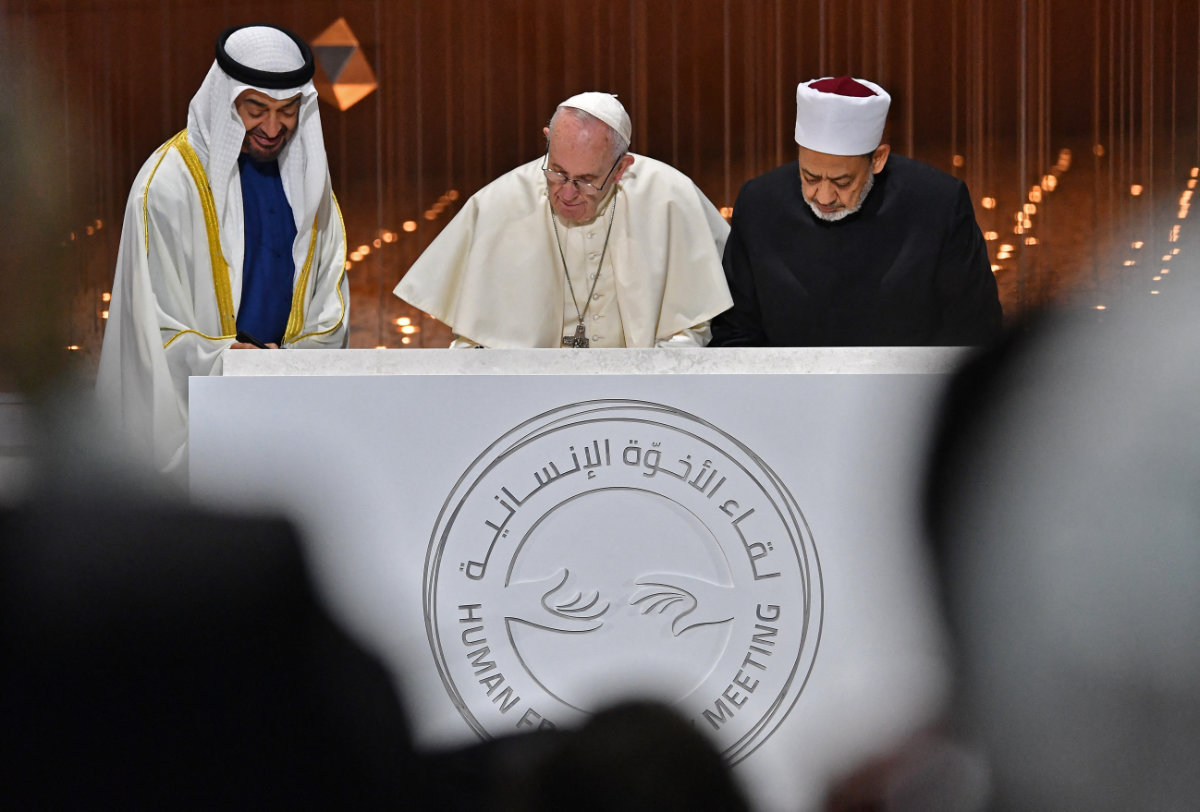
With Abu Dhabi's Crown Prince Mohammed bin Zayed al-Nahyan (L) as witness, Pope Francis (C) and Egypt's Al Azhar Grand Imam Sheikh Ahmed al-Tayeb sign documents during the Human Fraternity Meeting at the Founders Memorial in Abu Dhabi on February 4, 2019. (AFP)
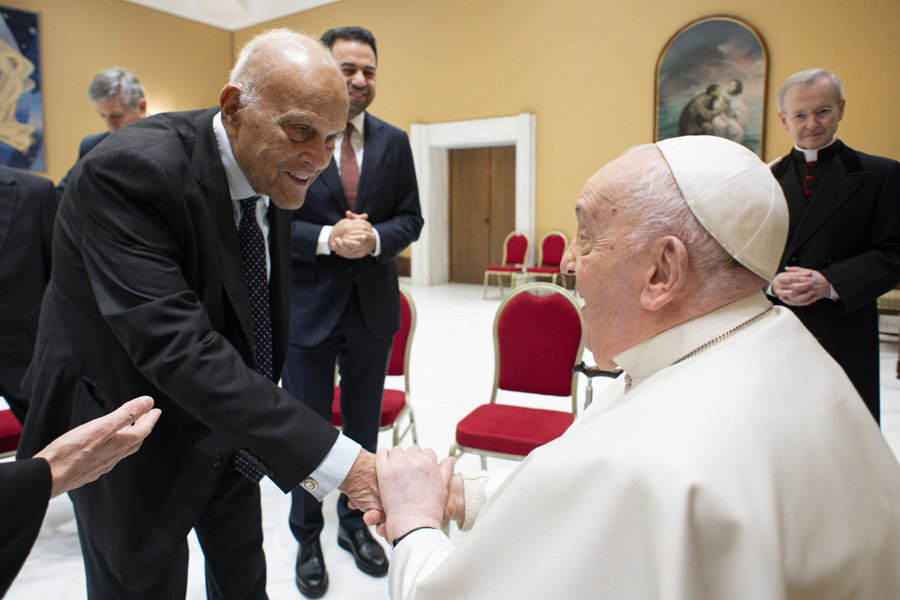
Egyptian-British cardiothoracic surgeon Sir Magdi Yacoub meeting with Pope Francis during last year's edition of the Zayed Award for Human Fraternity. (Supplied)
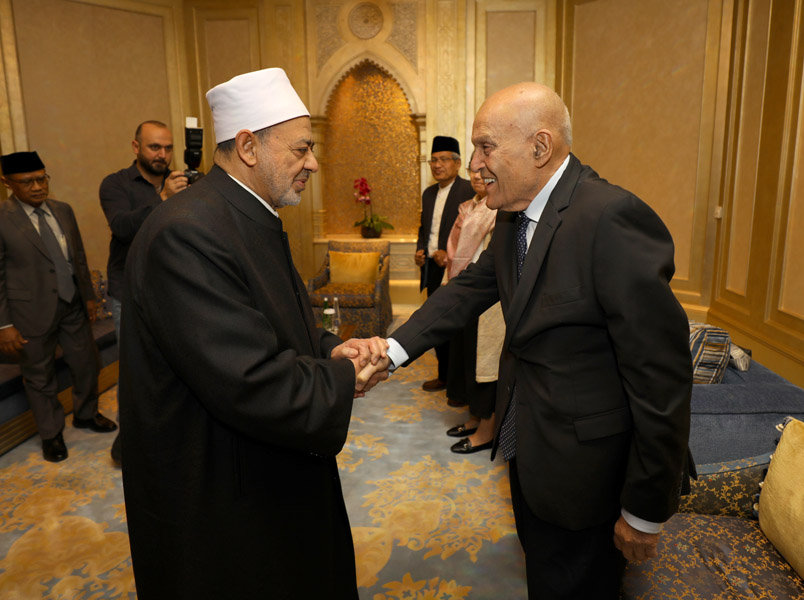
Grand Imam of Al-Azhar Ahmed Al-Tayeb congratulates Sir Magdi Yacoub during last year's awarding ceremonies. (Supplied)
This year’s three recipients will be honored at a ceremony at the Founder’s Memorial in Abu Dhabi on Feb. 4.
The selection process for the annual award is rigorous, with an independent jury reviewing hundreds of nominations from individuals and organizations dedicated to advancing human fraternity.
“It is the judging committee’s honor to spotlight three outstanding honorees who are addressing some of today’s most urgent challenges — climate resilience, humanitarian relief, and youth-driven innovation,” Judge Mohamed Abdelsalam, secretary-general of the Zayed Award for Human Fraternity, said in a statement.
2025 HONOREES
• Barbados Prime Minister Mia Amor Mottley has long advocated for climate resilience, global financial reform, and renewable energy.
• World Central Kitchen has provided more than 300 million meals in crisis zones, including 70 million meals in Gaza since 2023.
• Heman Bekele developed an affordable soap to treat early-stage skin cancer, demonstrating the power of youth-led solutions in healthcare.
“This year’s recipients demonstrate that transformative work can be undertaken at any age, in any place in the world, and in any field.”
Mottley has gained international recognition for her relentless advocacy in addressing climate change and her leadership in pushing for financial reform to support vulnerable nations.
Her efforts through the Bridgetown Initiative — a bold call for restructuring global financial systems — aim to ensure that developing nations have equitable access to climate resilience funding.
“She has committed to achieving 100 percent renewable energy for Barbados by 2030, investing in solar, wind, and other clean energy sources,” the award committee said in a statement.
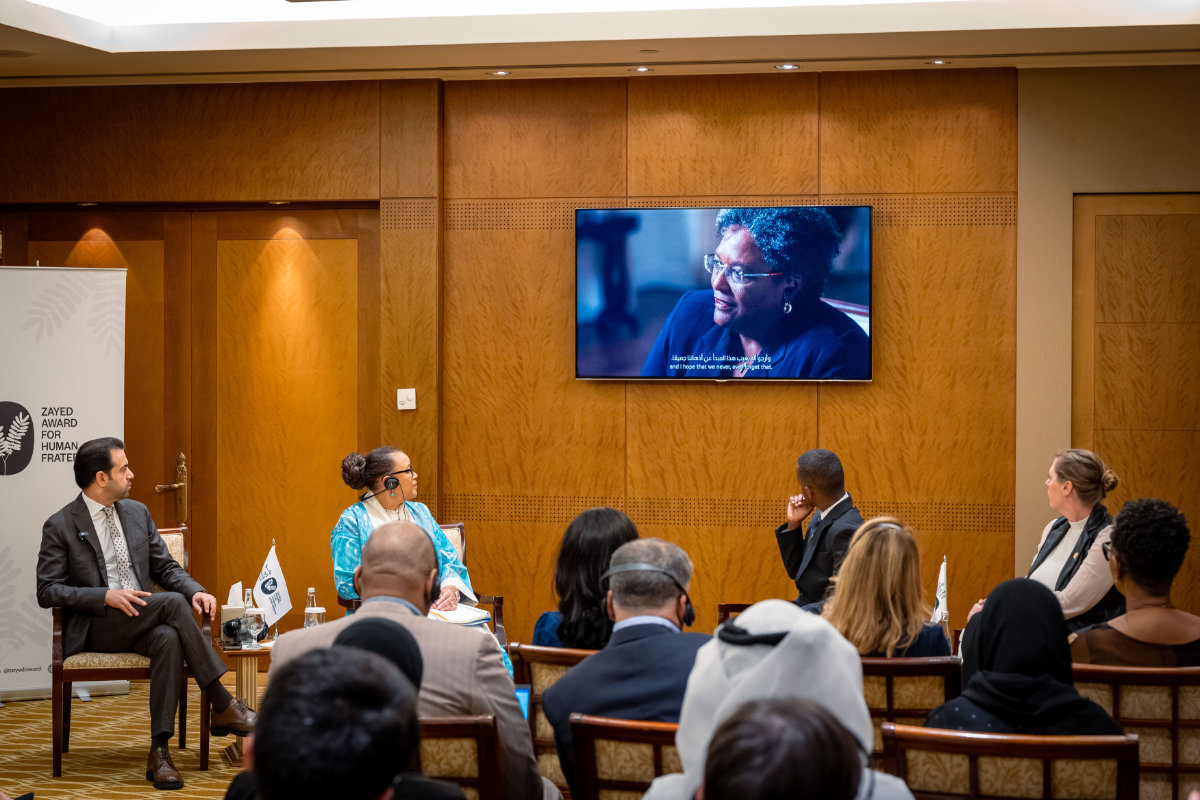
Through her persistent advocacy, Barbados PM Mia Amor Mottley (shown on screen) has helped enable nations burdened by debt to reallocate funds toward climate adaptation and sustainability projects. (Supplied)
By pioneering debt-for-climate swaps, Mottley has enabled nations burdened by debt to reallocate funds toward climate adaptation and sustainability projects.
The award committee said Mottley’s leadership is a testament to how governance, when rooted in sustainability and equity, can create lasting change, and that her selection reinforces the global urgency of addressing climate change as an issue of human fraternity and justice.
Also among this year’s honorees is World Central Kitchen. Founded by Jose Andres in 2010, the charity has redefined humanitarian relief by providing immediate, fresh, and locally-sourced meals to people affected by disasters and crises.
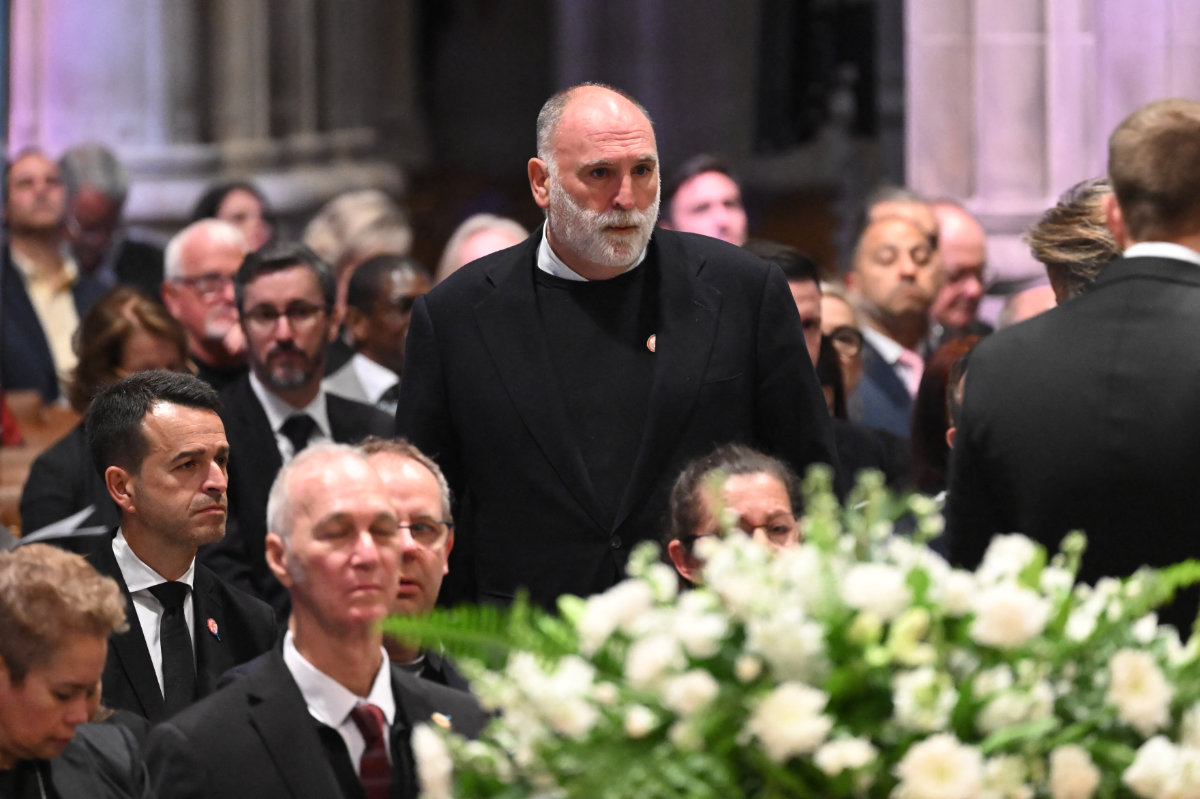
World Central Kitchen founder Jose Andres attends an interfaith memorial service for the seven WCK workers killed in Gaza, at the Washington National Cathedral, in Washington, DC, on April 25, 2024. (AFP)
With more than 300 million meals served in over 30 countries, WCK’s work has proven essential in responding to humanitarian emergencies.
A particularly poignant example of the charity’s impact came in 2023 and 2024 when WCK delivered more than 70 million meals to Palestinians in Gaza, collaborating with local chefs and suppliers to ensure swift and effective relief under challenging circumstances.
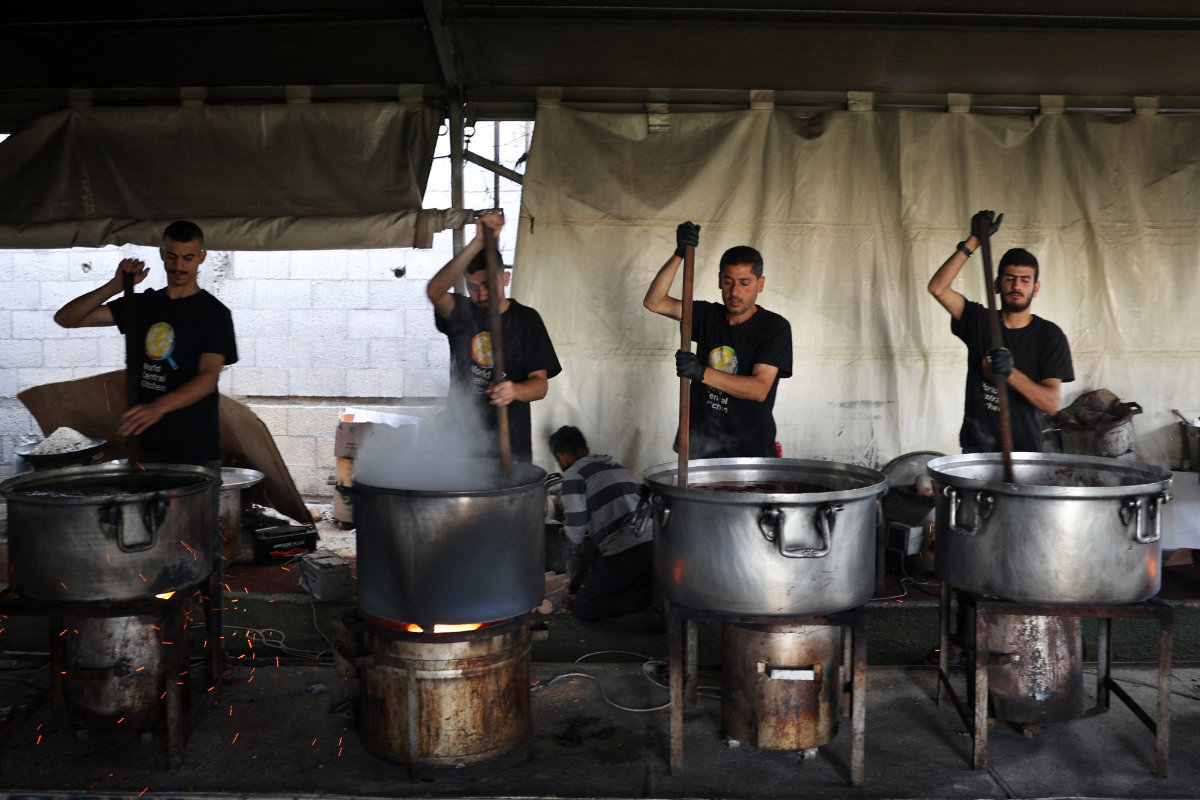
Volunteers of the World Central Kitchen cook meals to be distributed to needy Palestinians in Rafah in the southern Gaza Strip on May 3, 2024, amid the ongoing conflict between Israel and the Hamas movement. (AFP)
“Through collaborations — including with the UAE — and its innovative ‘first-on-the-ground’ approach, WCK has demonstrated its capabilities in providing meals to the people who need them most,” the award committee said.
The organization’s commitment to dignity and community resilience has earned it admiration worldwide. By working alongside local communities, WCK ensures that its relief efforts do not just provide temporary aid but strengthen long-term food security.
In a first for the Zayed Award, a youth category was introduced this year to honor the contributions of the next generation.
At just 15 years of age, Ethiopian-American innovator Heman Bekele has already made a significant contribution to global healthcare.
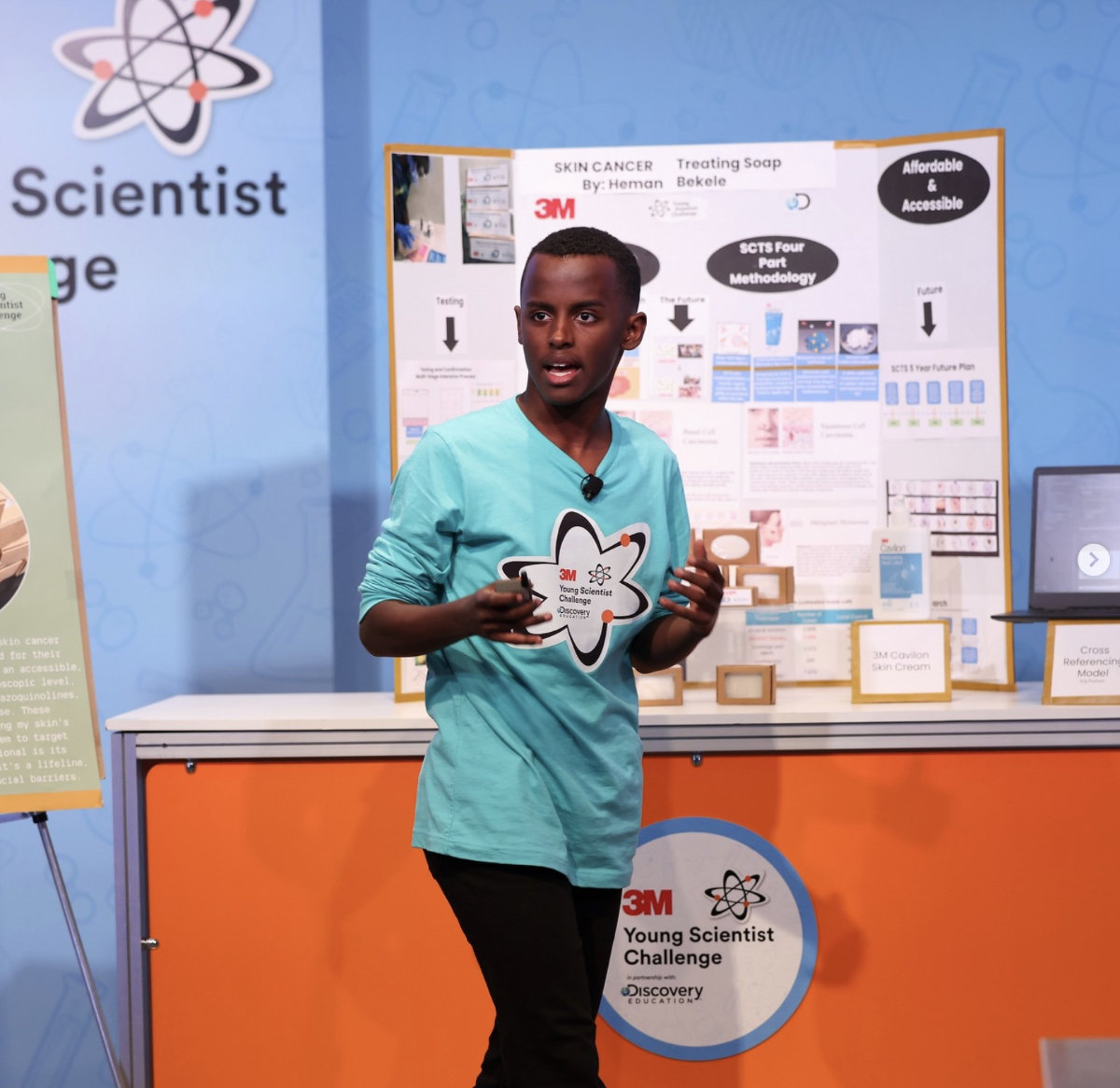
Hemen Bekele competing in the 3M Young Scientist Challenge in 2023. (Instagram)
In 2024, at the age of 14, he developed a cost-effective soap to help prevent and treat early-stage skin cancer, a breakthrough that earned him TIME’s “Kid of the Year” and various accolades in science competitions.
Now working alongside researchers at Johns Hopkins Bloomberg School of Public Health in Baltimore, Bekele aims to scale up his innovation to reach communities most in need.
“His ambition to save lives and his vision of accessible and affordable healthcare” were central to his selection as the first youth honoree of the Zayed Award for Human Fraternity, the award committee said.
Bekele’s work exemplifies the award’s commitment to recognizing contributions at any age. Indeed, his inclusion sends a strong message that the next generation is not just the future of humanitarian innovation but an active and powerful force in the present.
Since its inception, the Zayed Award for Human Fraternity has sought to amplify the voices and initiatives of individuals and organizations that inspire hope and action.
“Beyond recognizing outstanding contributions to human solidarity and fraternity, the award actively fosters global dialogue through dedicated platforms,” Abdelsalam, the award’s secretary general, told Arab News.
One such initiative is the Human Fraternity Majlis, which brings together global leaders, Nobel laureates, and youth representatives to explore solutions to pressing global challenges.
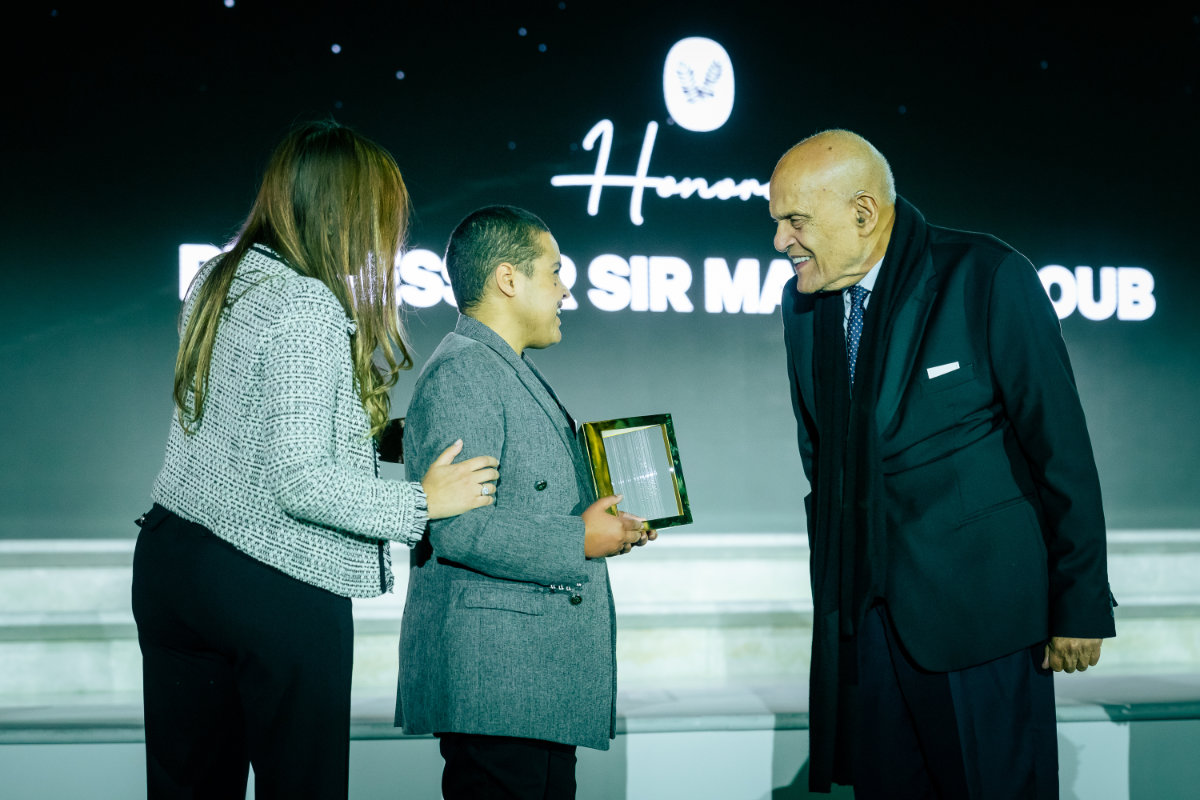
Last year’s winner Sir Magdi Yacoub mee other winners nof the Fraterniuty Awadrd (Supplied)
Another is the annual Zayed Award for Human Fraternity Roundtable, which provides a space for honorees and judges to collaborate on advancing the principles of human fraternity worldwide.
“In just five years, the Zayed Award for Human Fraternity has grown into a worldwide movement that encourages collaboration, fraternity, and communication between individuals from different cultures, religions, and backgrounds,” said Abdelsalam.
“Millions of people worldwide have benefited from the projects spearheaded by past honorees.”
AWARD IMPACT
* Since receiving the award in 2024, Egyptian-British cardiothoracic surgeon Sir Magdi Yacoub has been able to expand his life-saving care to underserved communities.
The award does not just celebrate achievements — it actively supports and expands their reach. A striking example of this is last year’s honoree, renowned cardiac surgeon Professor Sir Magdi Yacoub.
His groundbreaking work in heart surgery and his initiatives to provide life-saving care to underserved communities were amplified through the award’s recognition.
With financial backing from the Zayed Award, Yacoub expanded his work to establish the Rwanda Heart Center in Kigali — a project modeled after his successful Aswan Heart Centre in Egypt.
“The prize means we can do more research, speed up the building of the Rwanda Heart Centre, and continue making an impact,” Yacoub said in 2024.
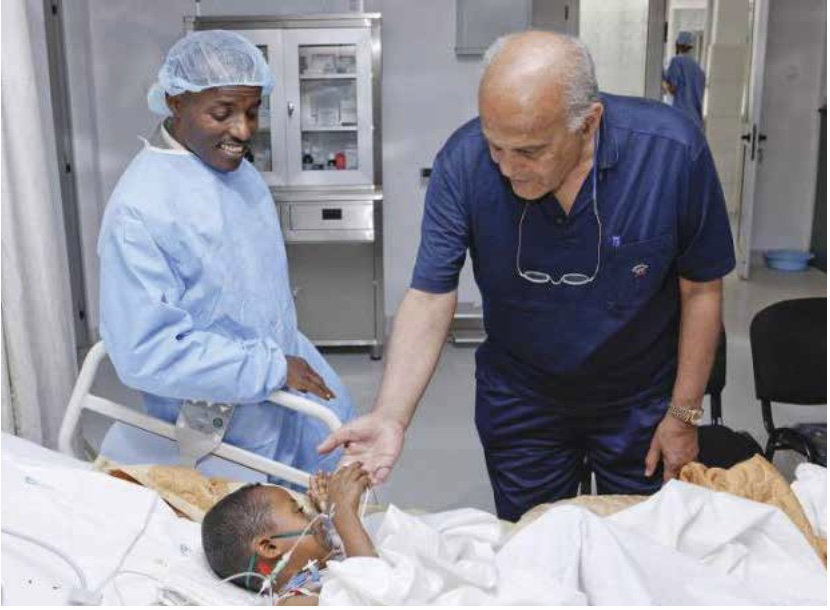
Sir Magdi Yacoub visiting a patient at the Rwanda Heart Centre. (Courtesy of My Heart Centre Rwanda)
Such outcomes highlight the real-world impact of the Zayed Award for Human Fraternity. It is not merely an honor — it is an investment in solutions that drive tangible change.
In recognizing Mottley, WCK, and Bekele, the Zayed Award for Human Fraternity reaffirms the importance of leadership, innovation, and service to humanity.
Whether through shaping climate policy, feeding those in crisis, or developing life-saving healthcare solutions, these honorees exemplify what it means to act for the greater good.
As the 2025 ceremony approaches, the award serves as a reminder that impactful change can come from governments, non-profits, or even a determined teenager with a vision for a better world.
More than ever, these efforts need to be celebrated, supported, and replicated. Or, as Abdelsalam put it: “Now more than ever, these contributions serve as a beacon of hope in a world facing increasing division.”


