


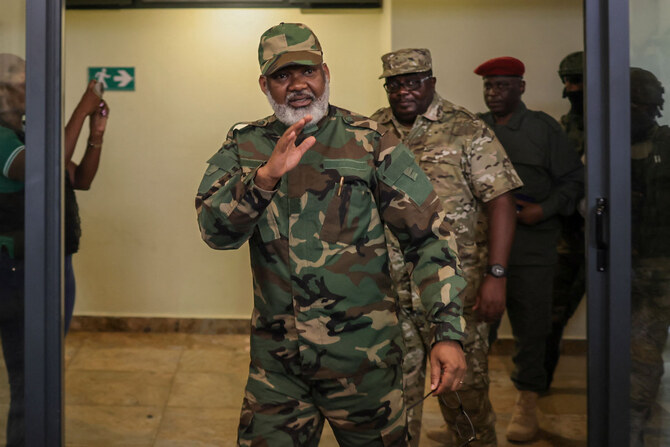

GOMA, Congo: Rwanda-backed rebels were quickly expanding their presence in eastern Congo after capturing Goma, the region’s major city, the UN said Friday, also expressing concerns over executions it learned were carried out by the rebels following a major escalation of their yearslong rebellion.
UN spokesman Stephane Dujarric said the World Health Organization and its partners conducted an assessment with Congo’s government between Jan. 26-30 “and report that 700 people have been killed and 2,800 injured” in Goma and the vicinity.
“These numbers are expected to rise as more information becomes available,” he said.
The rebels were now about 60 kilometers (37 miles) from South Kivu’s provincial capital of Buakavu and “seem to be moving quite fast,” UN peacekeeping chief Jean-Pierre Lacroix said at a press briefing on Friday. M23 has captured several towns after seizing neighboring Goma, a humanitarian hub critical for many of the 6 million people displaced by the conflict.
The central African nation’s military has been weakened after it lost hundreds of personnel and foreign mercenaries surrendered to the rebels after the fall of Goma.
Goma’s capture has brought humanitarian operations to “a standstill, cutting off a vital lifeline for aid delivery across eastern (Congo),” said Rose Tchwenko, country director for Mercy Corps aid group in Congo. “The escalation of violence toward Bukavu raises fears of even greater displacement, while the breakdown of humanitarian access is leaving entire communities stranded without support.”
The Southern African regional bloc, of which Congo is a member, resolved Friday to maintain its peacekeeping force deployed in eastern Congo in 2023. The group’s chairman, Zimbabwe President Emmerson Mnangagwa, called for “bold” and “decisive steps” to boost the force’s capacity. At their meeting in Zimbabwe’s capital Harare, the 16-nation bloc also pledged to work toward a ceasefire.
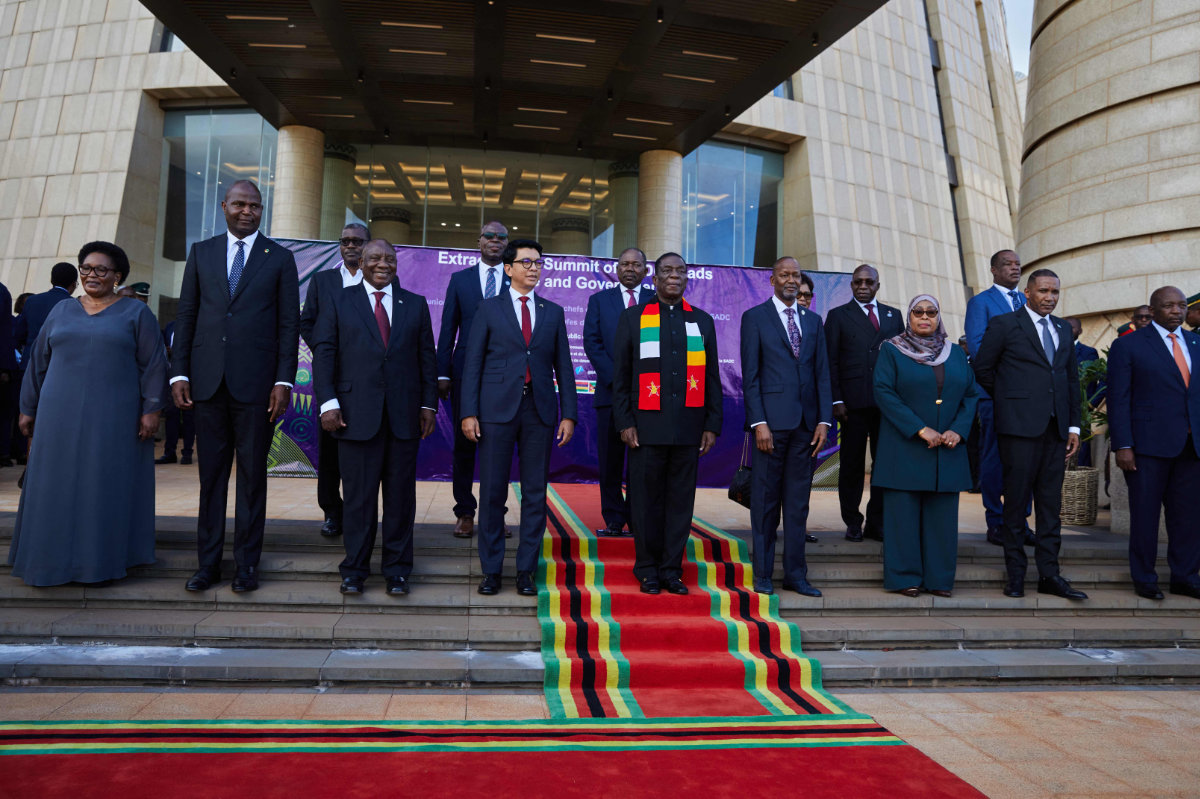
Leaders of the Southern African Development Community, including chairman Emmerson Mnangagwa (center), pose for a photo ahead of the group's extraordinary summit in Harare, Zimbabwe, on January 31, 2025, to discuss the escalating conflict in the eastern DR Congo. (AFP)
At the United Nations, France circulated a draft Security Council resolution to all 15 members Friday urging a halt to the current offensive in eastern Congo, the withdrawal of “foreign elements,” and a resumption of talks to achieve a cessation of hostilities, France’s UN Ambassador Nicolas De Riviere said. He expressed hope it can be adopted soon.
The M23 group is the most potent of more than 100 armed groups vying for control in Congo’s mineral-rich east, which holds vast deposits critical to much of the world’s technology. They are backed by around 4,000 troops from neighboring Rwanda, according to UN experts, far more than in 2012 when they first captured Goma for days in a conflict driven by ethnic grievances.
Observers say that unlike the rebels’ first takeover in Congo, their withdrawal could be more difficult now.
The rebels have been emboldened by Rwanda, which feels Congo is ignoring its interests in the region and failed to meet demands of previous peace agreements, according to Murithi Mutiga, program director for Africa at the Crisis Group think tank. “Ultimately, this is a failure of African mediation (because) the warning signs were always there,” said Mutiga.
Executions, rape as human rights crisis worsens
UN human rights office spokesman Jeremy Laurence spoke at a briefing on Friday about the worsening human rights crisis in the aftermath of the rebellion, including bomb strikes on at least two internally displaced persons camps that killed an unspecified number of people.
“We have also documented summary executions of at least 12 people by M23” from Jan. 26-28, Laurence said, adding that the group has also occupied schools and hospitals in the province and are subjecting civilians to forced conscription and forced labor.
Congolese forces have also been accused of sexual violence as fighting rages on in the region, Laurence said.
“We are verifying reports that 52 women were raped by Congolese troops in South Kivu, including alleged reports of gang rape,” he said.
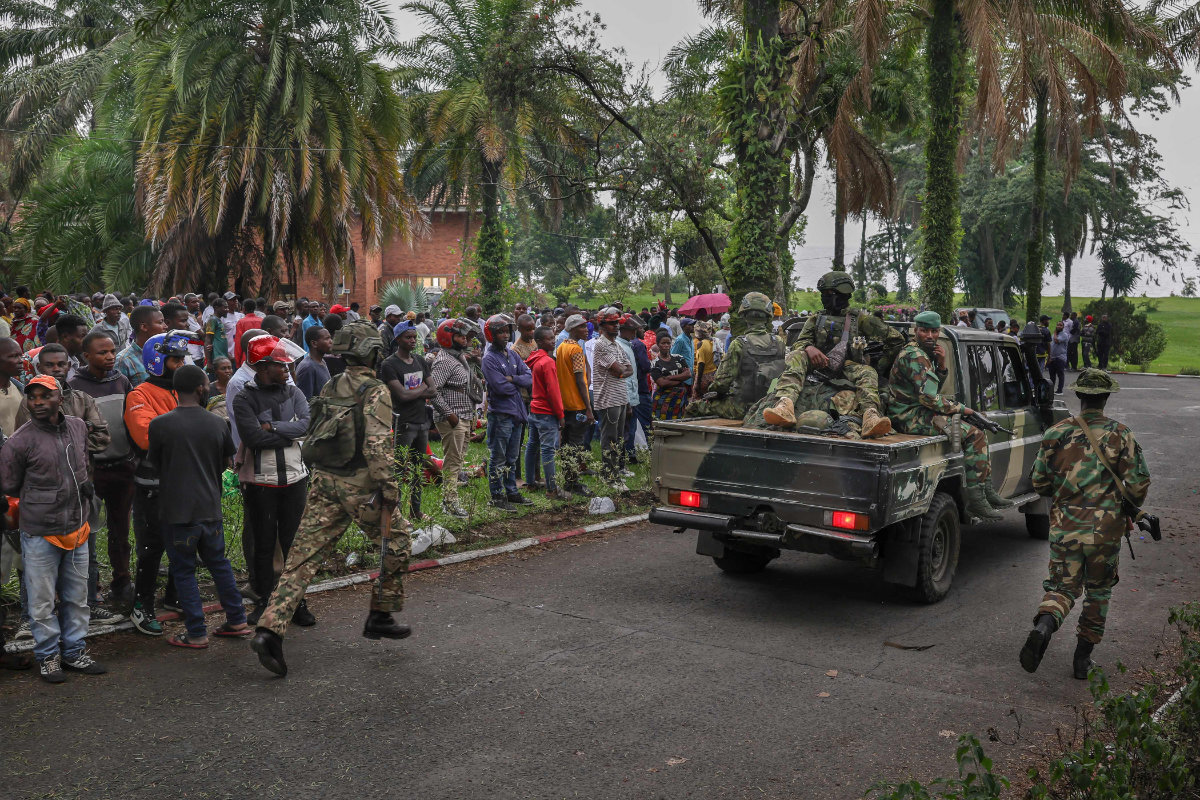
Members of the M23 armed group arrive in a pickup truck at the compound where residents gather for a protest against the Congolese government, expressing support for the M23 armed group in Goma on January 31, 2025. (AFP)
Rebels repelled as young people volunteer to fight
An attack by the rebels in Kalehe territory, about 140 kilometers (about 85 miles) from the South Kivu provincial capital, on Thursday was repelled by security forces, said Lt. Gen. Pacifique Masunzu, who commands a key military defense zone in South Kivu.
Congolese military bases in Bukavu were being emptied on Thursday to reinforce those along the way to the provincial capital, residents have told The Associated Press.
Dujarric, the UN spokesman, said the United Nations has about 1,200 international and national staff and dependents in Bukavu. “We’re moving some people out of there as a precaution,” he said.
Hundreds of young people on Friday registered as volunteers to join military training in the provincial capital, according to Gabriel Kasanji, a local administrative officer. This follows Congolese President Félix Tshisekedi’s call on Thursday for a mass military mobilization.
As he took office on Friday as the new governor of North Kivu, which includes Goma, Maj. Gen. Somo Kakule Evariste vowed to “move as soon as possible” to Goma to restore government control.
“This is not the time for speeches,” the general said. “The flame of resistance will never be extinguished.”
A devastated Goma grapples with occasional shooting and unexploded ordnance
In Goma, UN peacekeeping chief Lacroix said “the situation remains tense and volatile, with occasional shooting continuing within the city.”
Overall, calm is gradually being restored and water and electricity have been restored in much of Goma, but the airport remains closed and the runway unusable, he said.
The UN peacekeeping force in the city, known as MONUSCO, continues to grapple with unexploded ordnance that is “a very serious obstacle to freedom of movement,” Lacroix said.
“We are going to struggle until we restore democracy,” said Corneille Nangaa, one of the political leaders of M23. “From a failed state to a modern state.”


