- Pakistan reported at least 73 cases last year, up from only one in 2021
- Disease is rapidly spreading in volatile provinces like KP and Balochistan
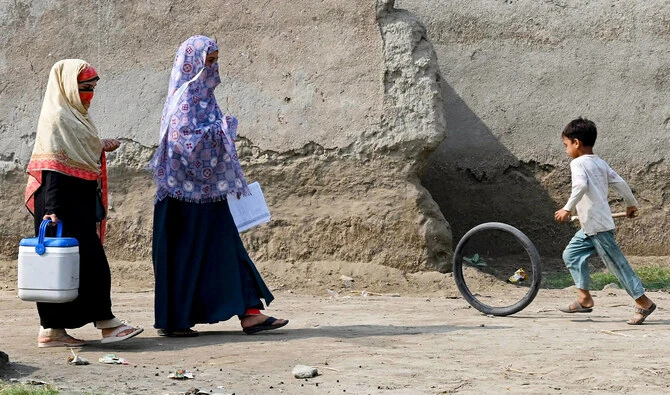
ISLAMABAD: The World Health Organization on Thursday commended Pakistan for having reduced polio cases by over 99% since 1994, saying it would stand alongside Pakistan to “run the last mile” and end the crippling disease.
Pakistan reported at least 73 cases last year, up from only one in 2021, and the disease is now rapidly spreading in the country’s most volatile regions, the northwestern Khyber Pakhtunkhwa province and Balochistan in the southwest. The first case of polio was reported last Wednesday from Khyber Pakhtunkhwa.
Pakistan, along with neighboring Afghanistan, remains one of the last two polio-endemic countries in the world. In the early 1990s, Pakistan reported around 20,000 cases annually, but by 2018, the number had dropped to just eight cases. Only six cases were reported in 2023, and one in 2021.
However, Pakistan’s polio eradication efforts have faced several challenges in recent years, including attacks by militants and misinformation spread by religious hard-liners.
“Since 1994, Pakistan has reduced polio cases by over 99%,” the WHO said on X after Islamabad hosted the Technical Advisory Group for Polio Eradication, a crucial forum that engages global experts and partners to “reinforce the response and seize the historic opportunity to end the global threat of polio.”
“WHO stands alongside Pakistan to run the last mile and end this global threat. No child will be safe from polio until all children are safe.”
On Wednesday, Hanan Balkhy, WHO’s regional director for the Eastern Mediterranean, cautioned that the eradication of polio in Afghanistan and Pakistan was threatened by US President Donald Trump ordering an unprecedented 90-day suspension of almost all foreign aid. On his first day back in the White House, Trump also announced he was withdrawing the United States from WHO.
In a video posted on X on Jan. 28, WHO’s Deputy Director Dr. Mike Ryan said despite support from donors in 2025, there remained a funding gap of $68 million for WHO’s polio eradication work in Pakistan.
“Urgent funding is required so the hard-fought gains are not jeopardized,” he cautioned.
The Pakistan Polio Eradication Program is scheduled to hold the country’s first nationwide vaccination drive of this year from Feb. 3-9.