TEL AVIV: Prime Minister Benjamin Netanyahu vowed 15 months ago that Israel would achieve “total victory” in the war in Gaza — by eradicating Hamas and freeing all the hostages. One week into a ceasefire with the militant group, many Israelis are dubious.
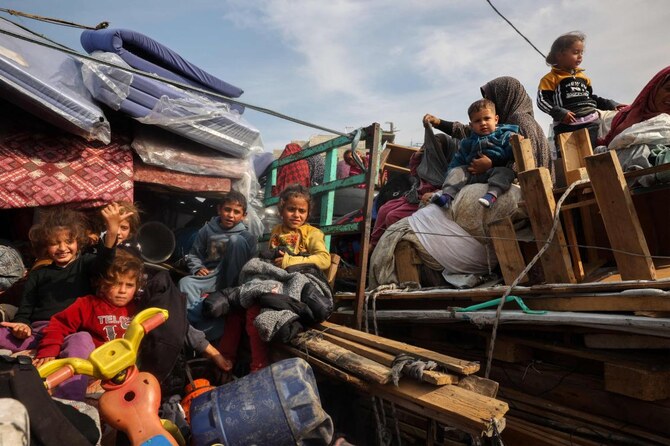
Not only is Hamas still intact, there’s also no guarantee all of the hostages will be released. But what’s really raised doubts about Netanyahu’s ability to deliver on his promise is this week’s return of hundreds of thousands of Palestinians to their homes in northern Gaza. That makes it difficult for Israel to relaunch its war against Hamas should the two sides fail to extend the ceasefire beyond its initial six-week phase.
“There is no war to resume,” said Ofer Shelah, a senior researcher at the Institute for National Security Studies, a Tel Aviv think tank. “What will we do now? Move the population south again?”
“There is no total victory in this war,” he said.
‘Total victory’ is elusive
Israel launched its war against Hamas after the militant group’s Oct. 7, 2023, attack on southern Israel, in which some 1,200 people were killed and roughly 250 were taken hostage. Within hours, Israel began a devastating air assault on Gaza, and weeks later it launched a ground invasion.
Israel has inflicted heavy losses on Hamas. It has killed most of its top leadership, and claims to have killed thousands of fighters while dismantling tunnels and weapons factories. Months of bombardment and urban warfare have left Gaza in ruins, and more than 47,000 Palestinians are dead, according to local health authorities who don’t distinguish between militants and civilians in their count.
But the “total victory” envisioned by Netanyahu remains elusive.
In the first phase of the ceasefire, 33 hostages in Gaza will be freed, nearly 2,000 Palestinian prisoners in Israel will be released, and humanitarian aid to Gaza will be vastly increased. Israel is also redeploying troops to enable over 1 million Palestinians to return to their homes in northern Gaza.
In the second phase of the ceasefire, which the two sides are expected to begin negotiating next week, more hostages would be released and the stage would be set for a more lasting truce.
But if Israel and Hamas do not agree to advance to the next phase, more than half of the roughly 90 remaining hostages will still be in Gaza; at least a third of them are believed to be dead.
Despite heavy international and domestic pressure to develop a postwar vision for who should rule Gaza, Netanyahu has yet to secure an alternative to the militant group. That has left Hamas in command.
Hamas sought to solidify that impression as soon as the ceasefire began. It quickly deployed uniformed police to patrol the streets and staged elaborate events for the hostages’ release, replete with masked gunmen, large crowds and ceremonies. Masked militants have also been seen along Gaza’s main thoroughfares, waving to and welcoming Palestinians as they head back home.
A Hamas victory?
Despite the scale of death and destruction in Gaza — and the hit to its own ranks — Hamas will likely claim victory.
Hamas will say, “Israel didn’t achieve its goals and didn’t defeat us, so we won,” said Michael Milshtein, an Israeli expert on Palestinian affairs.
The return of displaced Palestinians to northern Gaza is an important achievement for Hamas, Milshtein said. The group long insisted on a withdrawal of Israeli troops and an end to war as part of any deal — two conditions that have effectively begun to be realized.
And Hamas can now reassert itself in a swath of the territory that Israel battled over yet struggled to entirely control.
To enable Palestinians to return to northern Gaza, Israel opened the Netzarim corridor, a roughly 4-mile (6-kilometer) military zone bisecting the territory. That gives Hamas more freedom to operate, while taking away leverage that would be difficult for Israel regain even if it restarted the war, said Giora Eiland, a former Israeli general who had proposed a surrender-or-starve strategy for northern Gaza.
“We are at the mercy of Hamas,” he said in an interview with Israeli Army Radio. “The war has ended very badly” for Israel, he said, whereas Hamas “has largely achieved everything it wanted.”
Little appetite to resume war
President Donald Trump could play an important role in determining the remaining course of the war.
He has strongly hinted that he wants the sides to continue to the second phase of negotiations and shown little enthusiasm for resuming the war. A visit by his Mideast envoy, Steve Witkoff, to Israel this week and a visit to the White House next week by Netanyahu will likely give stronger indications of where things are headed.
In announcing the ceasefire, Netanyahu said Israel was still intent on achieving all the war’s goals. He said Israel was “safeguarding the ability to return and fight as needed.”
While military experts say Israel could in practice relaunch the war, doing so will be complicated.
Beyond the return of displaced Palestinians, the international legitimacy to wage war that it had right after Hamas’ attack has vanished. And with joyful scenes of freed hostages reuniting with their families, the Israeli public’s appetite for a resumption of fighting is also on the decline, even if many are disappointed that Hamas, a group that committed the deadliest attack against Israelis in the country’s history, is still standing.
An end to the war complicates Netanyahu’s political horizon. The Israeli leader is under intense pressure to resume the war from his far-right political allies, who want to see Hamas crushed. They envision new Jewish settlements in Gaza and long-term Israeli rule there.
One of Netanyahu’s coalition partners already resigned in protest at the ceasefire deal and a second key ally has threatened to topple the government if the war doesn’t resume after the first phase. That would destabilize the government and could trigger early elections.
“Where is the total victory that this government promised?” Itamar Ben-Gvir, the former Cabinet minister who quit the government over the ceasefire said Monday.
Israel Ziv, a retired general, said restarting the war would require a new set of goals and that its motivations would be tainted.
“The war we entered into is over,” he told Israeli Army Radio. “Other than political reasons, I don’t see any reason to resume the war.”


![]()

Palestinians’ return to northern Gaza complicates Netanyahu’s war aims
Short Url
https://arab.news/c2b5d
Palestinians’ return to northern Gaza complicates Netanyahu’s war aims
- “There is no war to resume,” said Ofer Shelah, a senior researcher at the Institute for National Security Studies, a Tel Aviv think tank
- The “total victory” envisioned by Netanyahu remains elusive


Latest updates




Recommended


© 2026 SAUDI RESEARCH & PUBLISHING COMPANY, All Rights Reserved And subject to Terms of Use Agreement.