

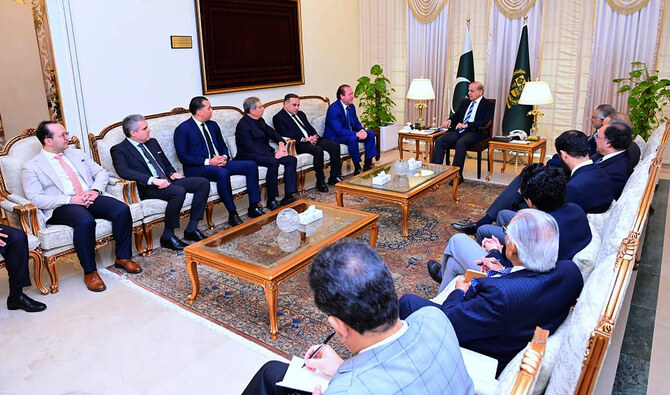

ISLAMABAD: US investor and Texas hedge fund manager Gentry Beach, believed to be close to American President Donald Trump, said on Wednesday he was eyeing investments in Pakistan’s real estate, mineral and energy sectors.
A US business delegation led by Beach arrived in Pakistan for a two-day visit on Tuesday to explore business opportunities, particularly in sectors like mining and minerals, renewable energy, infrastructure development and technology.
Cash-strapped Pakistan, desperate to escape a prolonged macroeconomic crisis, been seeking investments from regional and other foreign allies to shore up its $350 billion economy.
“Real estate’s going to be our first place of investment, it’s going to be a significant real estate investment,” Beach told reporters in Islamabad when asked about key sectors he was interested in investing in. “We are going to launch in a few different areas some incredible projects.”
Part of the delegation’s real estate plans included building “super high-end luxury branded” villas.
“We have a number of brands that really want to come to Pakistan,” he said. “And so we are very excited to build the highest-end product that’s ever been built in Pakistan.”
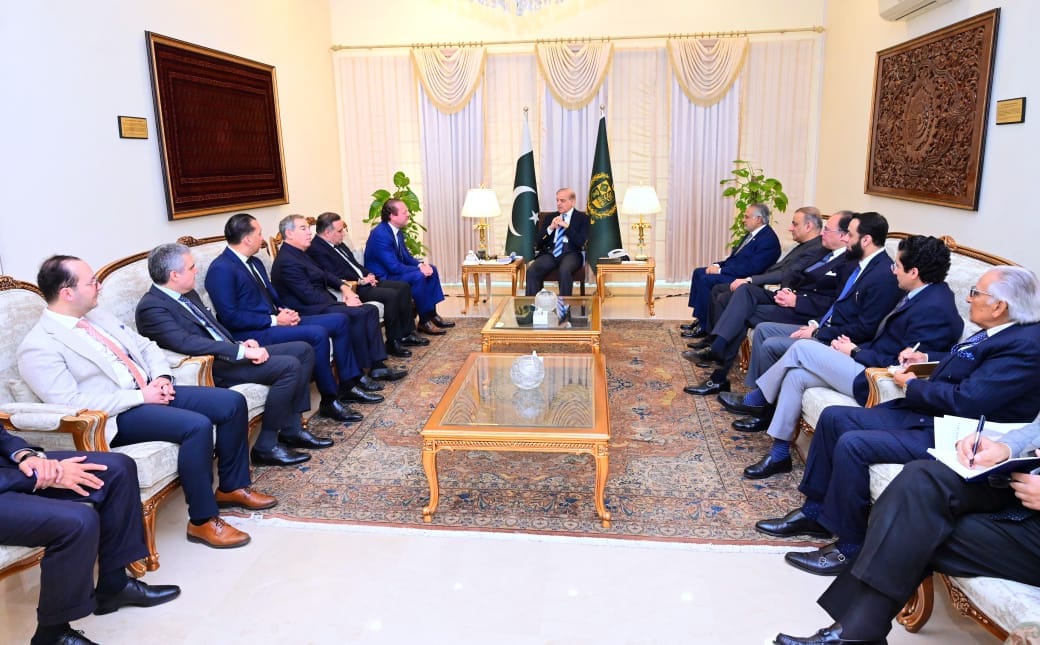
A delegation of leading US Investors led by Gentry Beach meets Pakistan Prime Minister Shehbaz Sharif in Islamabad on January 29, 2025. (Photo courtesy: PMO)
Beach said the delegation was also considering investments in Pakistani minerals, citing the country’s large reserves of gold, platinum and other precious metals. Pakistani officials estimate $6 trillion worth of natural deposits in the country.
“We have several locations and due diligence that we are working on right now,” Beach explained. “We’re bringing in the teams as we speak to evaluate those. I believe that we will have one of those [agreements on minerals] signed, agreed to and funding in the next two weeks.”
The American businessman acknowledged the problem of the US having outsourced its supply chain to China for rare earth elements.
“And that’s over, okay. We don’t have many enemies in the world but China is a place that is becoming more difficult for us for sure,” Beach said.
“And I would tell you that we are taking this into our own hands and we are going to get out and get the critical minerals that America and American businesses need,” he added, saying Pakistan would be an important partner in this shift.
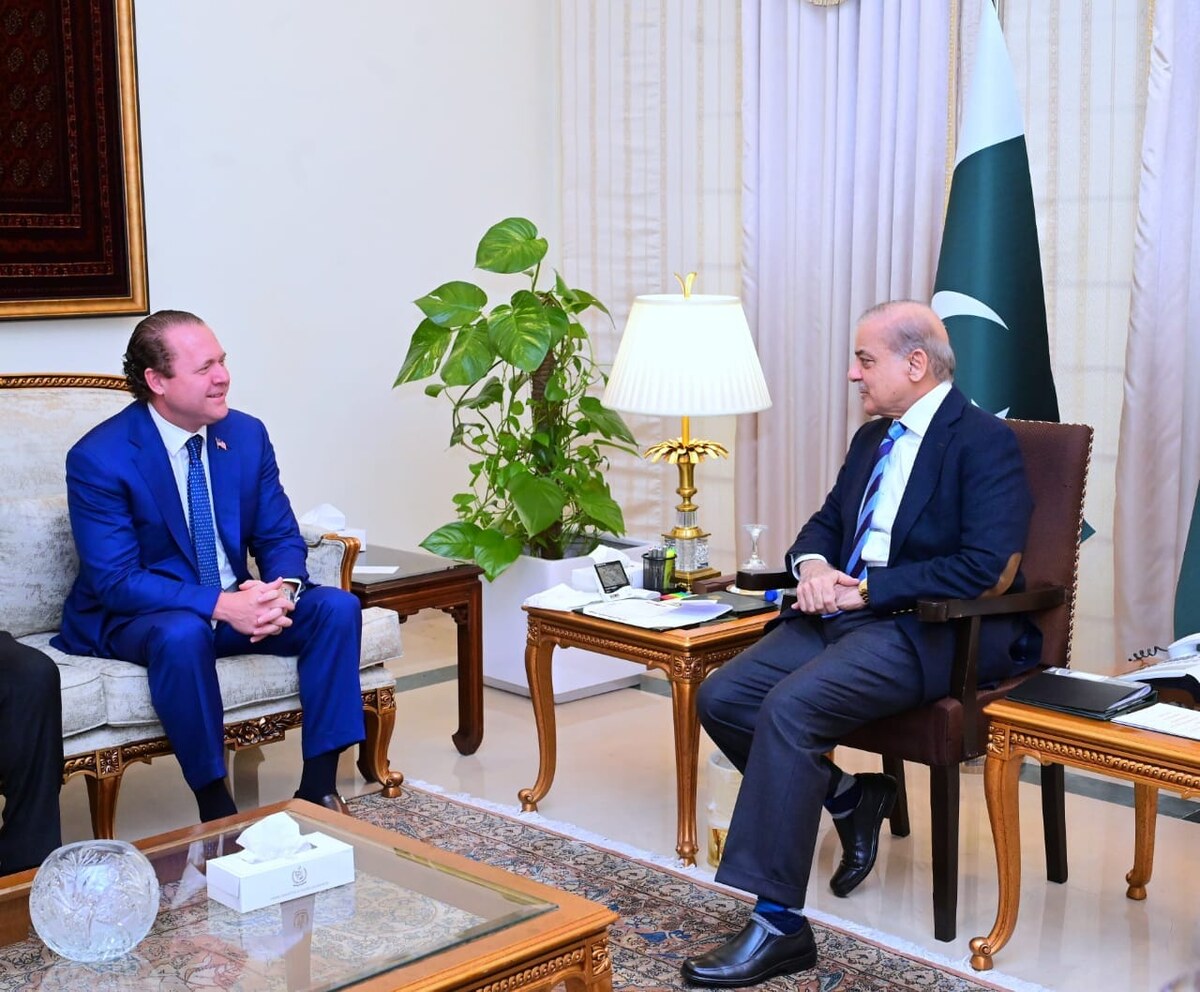
Pakistan Prime Minister Shehbaz Sharif speaks during a with a delegation of US Investors led by Gentry Beach in Islamabad on January 29, 2025. (Photo courtesy: PMO)
Beach said teams would be coming next month to evaluate Pakistan’s oil and gas sector, appreciating the country’s “incredible natural gas infrastructure already in place.”
“You have the infrastructure, you never go to a developing country where the infrastructure is already in place and you have to just supply the gas,” he said. “That is a huge opportunity.”
Beach said the US could bring in Western technology in drilling in Pakistan and “develop things very quickly.”
“We see ourselves as the first one through the door,” he said. “Then we are going to bring lots of Western companies through the door.”
Pakistan in 2023 nearly defaulted on the payment of foreign debts when the International Monetary Fund rescued it by agreeing to a $3 billion bailout to Pakistan. Last year, Islamabad secured a new $7 billion loan deal from the IMF. Since then, the country’s economy has started improving with weekly inflation coming down from 27 percent in 2023 to 1.8 percent earlier this month.
Sharif has also vowed to reduce dependence on foreign loans in the coming years and seek more direct investment.
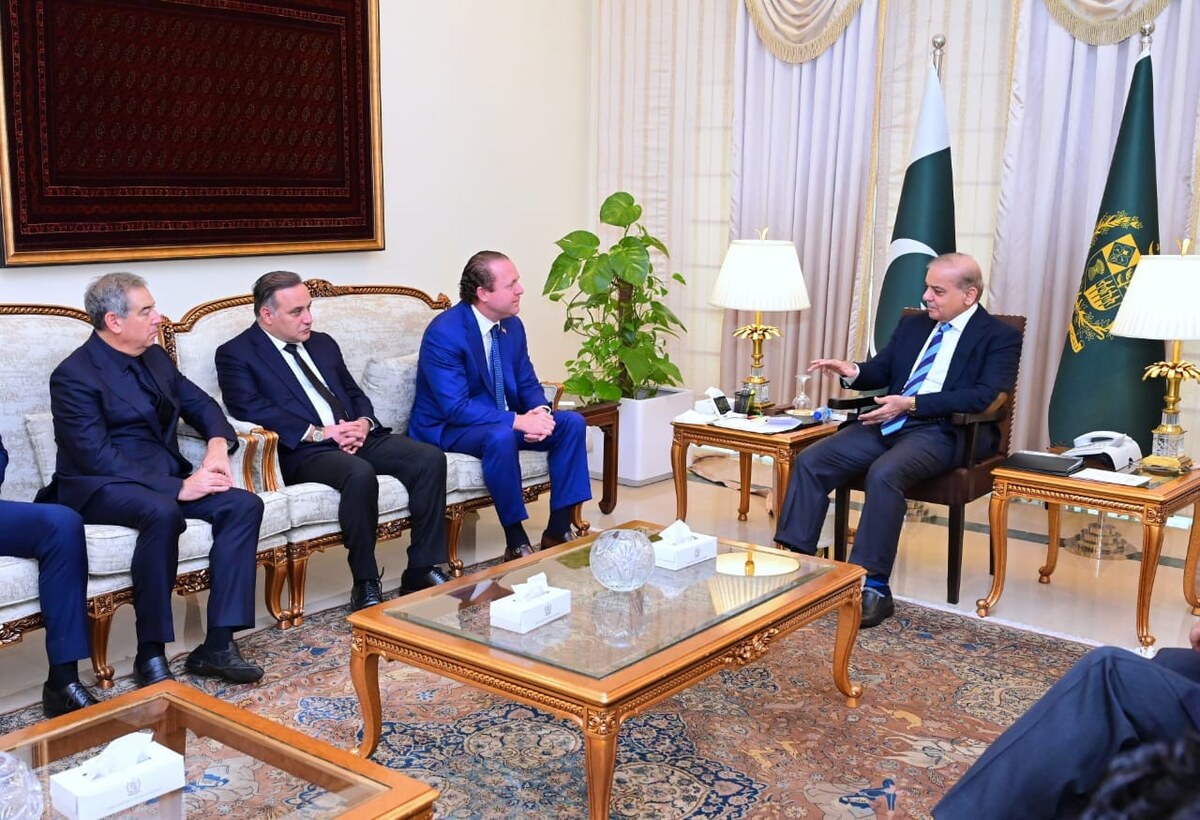
A delegation of leading US Investors led by Gentry Beach meets Pakistan Prime Minister Shehbaz Sharif in Islamabad on January 29, 2025. (Photo courtesy: PMO)
Pakistan’s business and investment landscape poses considerable challenges. Complex and inconsistent regulations, inadequate protection of intellectual property rights, and ever-changing taxation policies are some of the many business climate challenges cited by investors. Security concerns marked by internal and regional conflicts also undermine investor confidence in protection and profitability of their investments. The Pakistani government launched the Special Investment Facilitation Council (SIFC) in June 2023 to attract foreign investment from allies and other nations. Since its creation, the SIFC’s scope has expanded into a wide range of policy areas.
Despite the challenging investment climate, the United States is one of Pakistan’s largest sources of FDI. US companies have profitable operations across a range of sectors, notably franchise operations, fast-moving consumer goods, agribusiness, and financial services. Other sectors attracting US interest include ICT, renewable energy and health care services.


