

Al-Habtoor Group halts investment plans in Lebanon amid growing instability

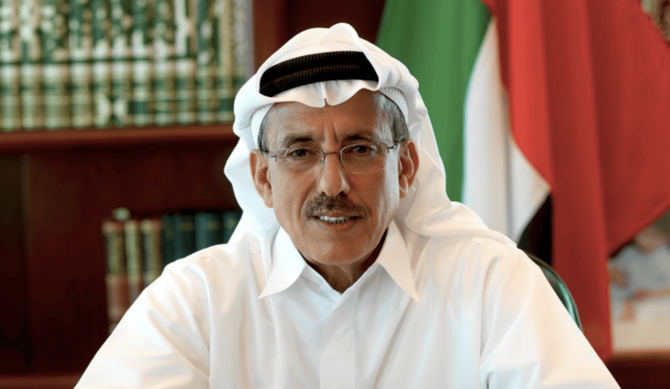
Khalaf Al-Habtoor, chairman of the group, explained that recent developments had deeply shaken his optimism. File
Short Url
Updated 28 January 2025
Follow

Al-Habtoor Group halts investment plans in Lebanon amid growing instability

DUBAI: UAE-based business conglomerate Al-Habtoor Group has abandoned its plans to reenter the Lebanese market, citing ongoing “unrest and instability” caused by armed militias.

In a statement issued on Tuesday, Khalaf Al-Habtoor, chairman of the group, explained that recent developments had deeply shaken his optimism.

“My team and I had been diligently preparing to launch new projects and expand existing investments in Lebanon, encouraged by promising signs such as the election of Gen. Joseph Aoun as president and the nomination of Nawaf Salam as prime minister. Both individuals embody integrity, credibility, and respect, instilling renewed hope among the Lebanese people — and investors like myself — for the country’s future,” the statement read.

However, he said that the continued dominance of armed militias, particularly what he described as “Shiite militias”, and the “absence of rule of law” have made it impossible for investors to proceed with confidence.

Tensions escalated with Hezbollah supporters holding rallies in Beirut, including in Christian-majority neighborhoods, further raising sectarian divisions. The protests followed the return of Shiite residents to southern Lebanon after a ceasefire between Israel and Hezbollah was recently extended.

In his statement, Al-Habtoor lamented the lack of decisive action from Lebanese authorities, including the army and the Ministry of Defense, in addressing these disturbances, noting that the situation was only worsening.

Unless the new government takes a firm stance against those working to destabilize the country, hopes for a “new Lebanon” will remain unfulfilled, he said.

Al-Habtoor clarified that the decision to pull out was made after careful analysis and close monitoring of the situation. As a result, neither he, his family, nor any group managers would be traveling to Lebanon.

Earlier this month, and following the wave of optimism that followed the election of President Aoun and Prime Minister Nawaf Salam, Al-Habtoor told Arab News in an interview that his group intended to move forward with plans to reopen its five-story mall in Beirut and relaunch the Habtoorland amusement park in Jamhour, contingent on Lebanon’s government delivering the promised security and stability measures.

The group, a multibillion-dollar global conglomerate, has diverse interests spanning luxury hotels, shopping malls, and more. As of January last year, its investments in Lebanon were estimated at around $1 billion.


Saudi businesses step up AI use as adoption reaches 27.6%: GASTAT 

Updated 5 sec ago
Follow

Saudi businesses step up AI use as adoption reaches 27.6%: GASTAT 

RIYADH: Artificial intelligence adoption among businesses in Saudi Arabia rose to 27.6 percent in 2024, reflecting a steady expansion in the use of advanced digital tools across the Kingdom’s private sector, according to official data. 

The information and communications sector recorded the highest uptake of AI technologies at 52.8 percent, followed by finance and insurance at 44.7 percent and education at 42.1 percent, the General Authority for Statistics said in its Establishments’ ICT Access and Usage Statistics 2024 report. 

This data underscores the growing digital maturity of the Kingdom’s private sector, with certain industries leading the transition toward advanced technologies.   

The professional services sector showed a notable 39.2 percent adoption rate, while other sectors, such as real estate at 28.2 percent, wholesale and retail trade at 25 percent, and manufacturing at 26 percent, reflected varying levels of engagement with AI tools.    

In contrast, sectors like construction at 25.8 percent, human health and social work at 29.9 percent, and arts, entertainment and recreation at 20.1 percent lagged behind, highlighting differences in AI integration across the economy.   

Other sectors showing moderate uptake of AI technologies include transportation and storage at 38.3 percent and mining and quarrying at 32.4 percent.   

Meanwhile, industries such as administrative and support services at 25.2 percent, and electricity and gas supply at 25.7 percent, reported lower levels of AI adoption compared to digital frontrunners.    

The report also revealed that internet access among establishments across Saudi Arabia reached 98 percent in 2024, marking a 0.3 percentage point increase over the previous year.    

Social media usage was reported by 63 percent of establishments, and 76.3 percent of businesses used internet platforms to conduct electronic banking transactions.   

In addition to AI, the adoption of cloud computing technologies grew significantly. A total of 46.8 percent of establishments reported using cloud services, with the most common uses being ready-made office applications at 53.5 percent, email services at 50.3 percent, and file storage at 41.1 percent. 

Meanwhile, Internet of Things technologies were widely employed for building security at 68.4 percent, energy management at 36.5 percent, and maintenance purposes at 21.1 percent.  

The Establishments’ ICT Access and Usage Survey is conducted using internationally aligned methodologies and follows the Statistical Business Process Guide and standards set by the UN Conference on Trade and Development, GASTAT stated.