

Mayors set out real estate and infrastructure opportunities in Asir and Makkah 

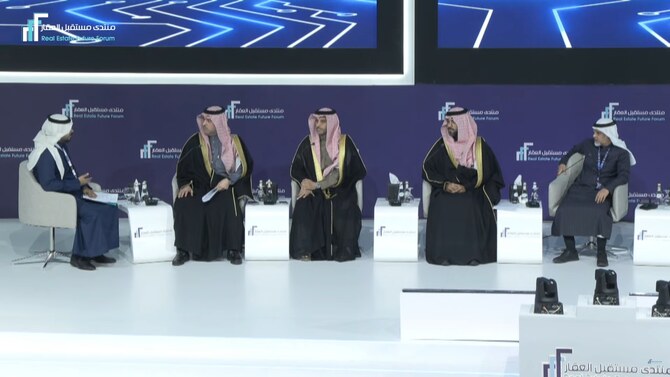
Abdullah Al-Jali and Musad Al-Daood appeared on a panel at the Real Estate Future Forum in Riyadh. Screenshot
Short Url
Updated 28 January 2025
Follow

Mayors set out real estate and infrastructure opportunities in Asir and Makkah 

RIYADH: Saudi Arabia is accelerating its real estate and infrastructure development efforts to meet growing demand and improve the quality of life in key regions, including Asir and Makkah, according to top officials. 

These initiatives, in line with Vision 2030, aim to boost tourism, attract investments, and improve livability for residents and visitors.

During a panel at the Real Estate Future Forum in Riyadh, Abdullah Al-Jali and Musad Al-Daood, mayors of the Asir region and Makkah, respectively, outlined their municipalities’ strategies to address these objectives. 

Al-Jali emphasized the untapped potential in the Asir region’s real estate market, saying: “Currently, 90 percent of the real estate market is concentrated in Riyadh, Jeddah, and other major cities, leaving the remaining regions with just 10 percent of the market share.” 

He added: “What we are witnessing today is a growing opportunity driven by the increasing demand for tourism in the Asir region. 

“This surge in demand is putting significant pressure on the real estate market, both now and for the future.” 

The Asir region mayor stressed the need to attract more investments over the next few years to meet this rising demand.

Highlighting the municipality’s role, Al-Jali underlined its efforts to facilitate infrastructure and real estate development. 

“As a municipality, we act as the main enabler for infrastructure development. We provide approvals for real estate investments, construction plans, and land use while also overseeing route clustering and road development,” he explained. 

To support the region’s real estate goals, Al-Jali invited investors to explore opportunities in Asir. 

“We can facilitate your investment and enable you from the very first phase,” he said, pointing to mixed-use projects in the pipeline and housing developments aimed at both locals and international buyers seeking summer homes. 

Al-Jali also addressed broader challenges, such as waste management and visual distortion, calling for greater collaboration. 

“Managing visual distortion is not an easy objective to achieve, and Riyadh is currently ahead of us in that regard,” he said. 

He urged citizens and stakeholders to support waste management efforts, emphasizing that maintaining public spaces should be treated as a collective responsibility. 

Makkah’s mayor Al-Daood highlighted the unique challenges and opportunities facing the holy city, which hosts millions of religious tourists annually. 

“We are focused on developing the infrastructure of Holy Makkah and equipping the city with the necessary facilities to support its unique religious significance as it welcomes millions of religious tourists from around the world,” he said. 

“We have directives from his royal highness, the crown prince, to combat visual distortion and enhance the cleanliness of the city, particularly in Makkah, to align with our new strategy,” he added. 

Al-Daood emphasized the importance of having a framework to meet the demands of Makkah’s 1.5 million annual pilgrims during the peak season. 

“We continuously plan ahead to address the growing demand and ensure the effective management of the large masses of visitors. This involves increasing our planning efforts and working closely with our partners and stakeholders,” he explained. 

In addition to its religious role, Al-Daood noted that Makkah is home to 2 million residents, necessitating investment in healthcare and entertainment infrastructure. 

“With 2 million citizens living in the city, it is essential to provide facilities for entertainment as well. Yes, Makkah has a strong religious identity that prevails, but that does not mean our citizens do not deserve a great quality of life,” he said. 


Fiscal discipline critical as high interest rates persist: Saudi finance minister  

Updated 22 sec ago
Follow

Fiscal discipline critical as high interest rates persist: Saudi finance minister  

RIYADH: Saudi Arabia’s finance minister warned that both advanced and emerging economies risk long-term instability if governments rely on borrowing and optimistic assumptions instead of disciplined fiscal management, as global interest rates are likely to remain elevated for years.  

Speaking during a panel at the annual AlUla Conference for Emerging Market Economies, Mohammed Al-Jadaan said countries are unlikely to see meaningful monetary easing in the near term, underscoring the need to preserve fiscal space and prioritize spending that supports sustainable growth.   

“We are unlikely to see an easing in monetary policy in the few years to come,” he said, adding that while interest rates may come down from current levels, they are “not too much lower” than where they are now, reinforcing the need to focus on fiscal policy.  

Al-Jadaan cautioned that some advanced economies are now repeating mistakes long associated with emerging markets. “Some advanced economies are going through the same struggles because they are falling into the same trap that emerging economies fell into, thinking they could live through it, and unfortunately, it is not sustainable,” he said.  

He said that unless governments treat fiscal policy as a serious balance-sheet issue rather than a cash-flow exercise, they risk falling into the trap of spending whenever they can borrow money, noting that countries can become insolvent even while holding cash if liabilities outpace assets.  

Al-Jadaan emphasized the importance of building fiscal buffers during periods of economic strength. “Where you fail is when you are in good times and fail to build the buffers,” he said, adding that inflated revenue assumptions often lead governments into debt when anticipated income does not materialize.  

The importance of buffers was echoed by Pakistan’s Finance Minister Muhammad Aurangzeb, who said the issue is far from academic for Pakistan. “The bane of our country has been the twin structural deficits, so we need to religiously guard the progress we have made over the last two to three years in terms of successive primary surpluses,” Aurangzeb said.  

He pointed to a sharp improvement in Pakistan’s fiscal position. “We hit about 8 percent fiscal deficit, and we are now at about 5.4 percent, and the current trajectory looks good in terms of bringing it even below 5 percent,” he said, citing gains across revenue, expenditure, and debt management.  

Aurangzeb said recent climate shocks had underscored the value of fiscal space. “Three years back we had a catastrophic flood and had to go into international appeal, but with the fiscal space we had available last year, we could muster our own resources to absorb that shock,” he said, adding that buffers allow governments to respond to exogenous events without destabilizing public finances.  

Both ministers warned against using borrowing as a shortcut to growth. “You don’t finance growth by throwing more money and borrowing more money,” Al-Jadaan said, calling for prioritization and efficiency in spending and treating fiscal space as a strategic asset.  

Al-Jadaan also distinguished between productive and unproductive deficits, warning that “bad deficit is a deficit that is not going to yield any growth and instead yields a liability for the future,” particularly when it finances consumption or recurring operating costs. By contrast, he said investment in infrastructure such as airports, ports, and railroads can act as a catalyst for private sector investment.  

Aurangzeb said Pakistan is pursuing reforms to support that approach, including expanding the tax base and reducing governance leakages. “We were below 10 percent tax to GDP and are now close to 12 percent,” he said, adding that technology and AI-led monitoring are helping curb “leakage and theft,” which he described as a euphemism for corruption.  

He also pointed to progress on debt. “Our debt-to-GDP ratio was about 74 percent and is now down to 70 percent,” Aurangzeb said, noting that greater fiscal discipline could free up resources for sectors such as human capital, agriculture, and information technology.  

Al-Jadaan concluded by warning that even well-intentioned borrowing carries risks. “Even on the good deficit side, markets are brutal,” he said, cautioning that excessive borrowing at a rapid pace can push up funding costs across the wider economy.