
GENEVA: The International Committee of the Red Cross warned on Monday that surging attacks in Sudan had severely disrupted access to clean water and electricity for millions of people across the war-ravaged country.
“We are witnessing a disturbing pattern of attacks on critical civilian infrastructure so essential for people’s survival,” Dorsa Nazemi-Salman, head of ICRC operations in Sudan, said in a statement, urging all parties to “protect these vital facilities,” including power plants, water stations, and dams.
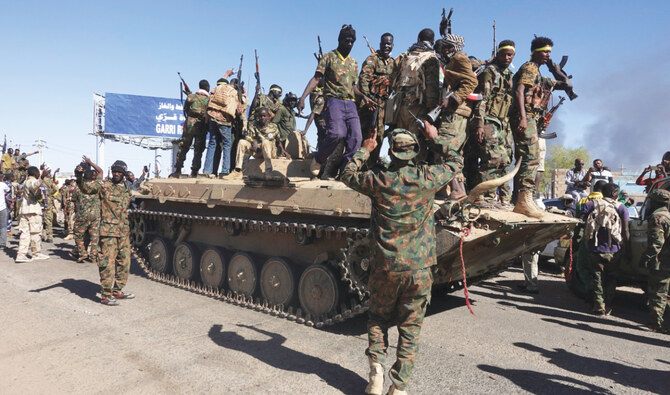
Since April 2023, Sudan has been engulfed in a brutal war between army chief Gen. Abdel Fattah Al-Burhan and his former deputy and head of the paramilitary Rapid Support Forces, Gen. Mohammed Hamdan Daglo.
The war has claimed the lives of tens of thousands of people, uprooted more than 12 million, and pushed many Sudanese to the brink of famine.
It has also decimated Sudan’s already fragile infrastructure, with large-scale attacks in recent weeks on dams and oil refineries.
Over the weekend, the UN said an RSF drone attack on a hospital in El-Fasher, in Sudan’s western Darfur region, had killed 70 people, including patients receiving critical care.
ICRC stressed on Monday that electricity and water supply disruptions also have dire ripple effects on the proper functioning of hospitals and critical healthcare.
Lacking access to clean water “undermines public health, significantly heightening the risk of cholera outbreaks and other health crises.”
The organization demanded that parties to the conflict “take immediate measures to protect critical civilian infrastructure, such as hospitals, water, and electricity installations.”
“It is their obligation under international humanitarian law and a commitment they made through the Jeddah Declaration of May 2023,” it said.
“Unless such measures are taken swiftly, civilians severely affected by the conflict risk losing access to essential services.”
ICRC highlighted that essential infrastructure like power plants and water facilities are considered under international humanitarian law as civilian objects that must be protected from direct attacks and the effects of hostilities.