

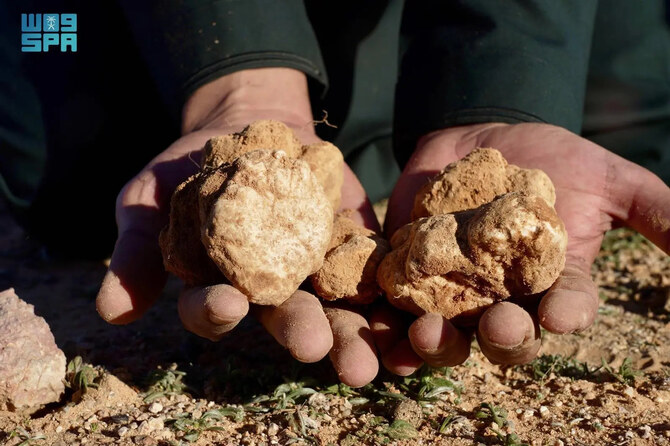
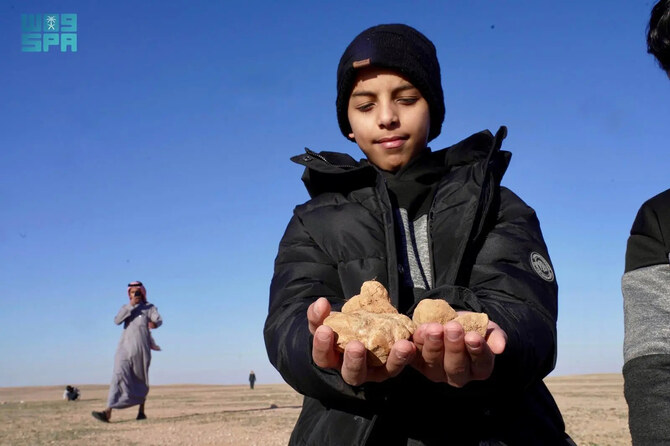

RAFHA: Truffle hunting in the Northern Borders region is an annual activity that combines the thrill of discovery with the beauty of heritage, attracting nature and heritage enthusiasts who embark on sunrise journeys in search of these prized delicacies.
The Saudi Press Agency accompanied a group of enthusiasts in Al-Sahin area, where they gathered truffles in a tranquil desert setting, enjoying the scent of rain mingling with the earth and flora. This experience highlights the deep connection between natural heritage and local culture.

The truffle hunting season is not just a quest for food; it is a celebration of nature and heritage. (SPA)
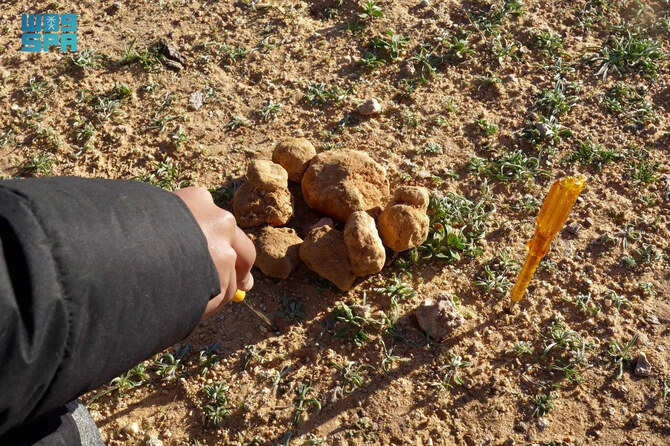
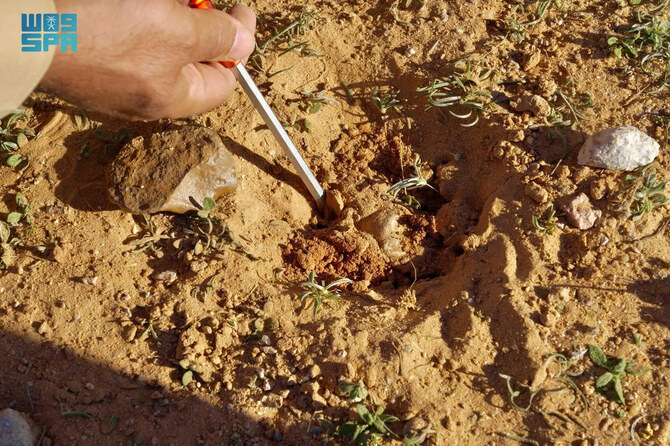
Enthusiasts use traditional knowledge to interpret soil and plant indicators, identifying potential truffle sites. Using simple tools that reflect humanity’s connection to the environment, they employ long sticks to shift the soil and uncover hidden treasures.
Others use their hands to gently remove the surface layer without damaging the truffles, while bags and baskets are prepared for collection.
Types of trufflesin KSA
• Zubaidi - stands out for its round shape
• Khalasi - the smallest and has an irregular shape
• Jabbi - small and round
• Hooper - the most irregular in shape
The truffle season coincides with the rainy period from late winter to early spring, usually beginning in January and lasting until the end of March. During the rainy season in Saudi Arabia, the rainfall enriches the soil and activates truffle seeds, with growth rates varying. Some truffles require 50 to 70 days of rain, while others take less time.
Truffles are wild fungi that grow beneath the surface at different depths, depending on the complex interaction of soil, moisture, and surrounding plants.
They thrive in well-ventilated sandy or clay soil, exhibiting signs such as slight cracks or small lumps when ripe.
Among the various types, the zubaidi stands out for its round shape, while the irregularly shaped khalasi is the smallest. The jabbi is small and round, while the tiny hooper is the most irregular in shape.

he truffle hunting season is not just a quest for food; it is a celebration of nature and heritage. (SPA)
Truffles are celebrated for their unique flavor that enhances the taste of dishes. The truffle hunting season is not just a quest for food; it is a celebration of nature and heritage, fostering social bonds and revitalizing an age-old tradition passed down through generations.
As interest in this heritage activity grows, there is an increasing recognition of the need to educate future generations on preserving the environment and the desert landscapes, which are integral to this land’s cultural heritage. The truffle season is a testament to the splendor of nature and the importance of heritage.


