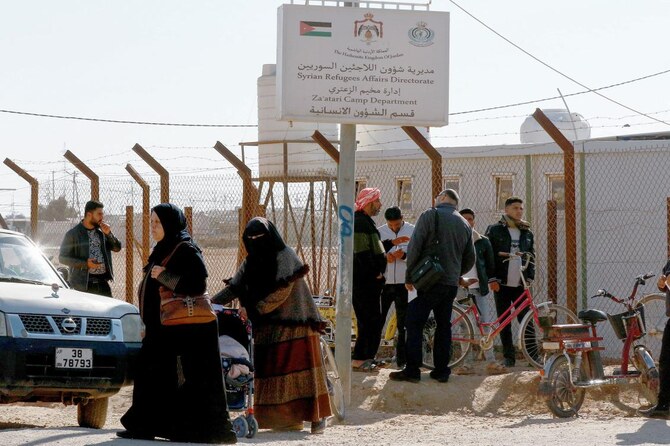
DAMASCUS: Almost 30 percent of the millions of Syrian refugees living in Middle Eastern countries want to return home in the next year, following the fall of President Bashar Assad, up from almost none last year, the head of the UN’s refugee agency said.
The shift is based on an assessment done by the UN in January, weeks after Assad was ousted by Islamist rebels, bringing an abrupt end to a 13-year civil war that had created one of the biggest refugee crises of modern times.
“We have seen the needle move, finally, after years of decline,” Filippo Grandi told a small group of reporters in Damascus, after holding meetings with the Syria’s new ruling administration.
The number of Syrians wishing to return “had reached almost zero. It’s now nearly 30 percent in the space of a few weeks. There is a message there, which I think is very important, must be listened to and must be acted upon,” he said.
Around 200,000 Syrian refugees have already returned since Assad fell, he said, in addition to around 300,000 who fled back to Syria from Lebanon during the Hezbollah-Israel war in September and October, most of whom are thought to have stayed.
Returning the roughly 6 million Syrians who fled abroad and the millions who became internally displaced has been a main aim of Syria’s new administration.
But the civil war has left large parts of many major cities in ruins, services decrepit and the vast majority of the population living in poverty. Syria remains under a harsh Western sanctions regime that effectively cuts off its formal economy from the rest of the world.
To aid Syrians returning, many of whom often sell all their belongings to pay for the trip, UN agencies are providing some cash aid for transportation and will help with food and to reconstruct at least parts of broken homes, Grandi said.
More aid is needed from donors, Grandi said, and sanctions should be reconsidered. He did not comment directly on an announcement on Friday by the new US administration of a broad suspension of foreign aid programs.
“If sanctions are lifted, this will improve the conditions in the places where people return,” he said.
The US earlier this month provided a six-month sanctions exemption for some sectors, including energy, but Syria’s new leaders say much more relief is needed.
Grandi said refugees were responding to a political process that the new administration’s leader Ahmed Sharaa has committed to, aimed at producing a governing authority by March 1 that better represents Syria’s diversity.
“Refugees are listening to what he’s saying, to what his people are saying, and that’s why I think many people decided to go back,” Grandi said. “But many more will come if these things continue to be positive.”


![]()

Nearly 30% of Syrians want to go home, up from almost zero, UN refugee chief says
Short Url
https://arab.news/2c3g6
Nearly 30% of Syrians want to go home, up from almost zero, UN refugee chief says
- Filippo Grandi says "needle has moved" on refugees wanting to return now Bashar Assad has been deposed


Latest updates


© 2026 SAUDI RESEARCH & PUBLISHING COMPANY, All Rights Reserved And subject to Terms of Use Agreement.