- More than 500 historic items, contemporary artworks on display
- 1685 Nile map’s journey to Jeddah a ‘cultural milestone’
JEDDAH: A six-meter map of the Nile believed to be more than 300 years old has left its home in the Vatican archives for the first time to become the centerpiece of the second Islamic Arts Biennale launched in Jeddah on Saturday.
Visitors to Jeddah’s Western Hajj Terminal, the biennale venue, can see the map along with 10 other artifacts from the Vatican Library.
The historic chart, drawn with watercolor ink on Venetian paper and depicting historic sites along the Nile, has been dated to around 1685.
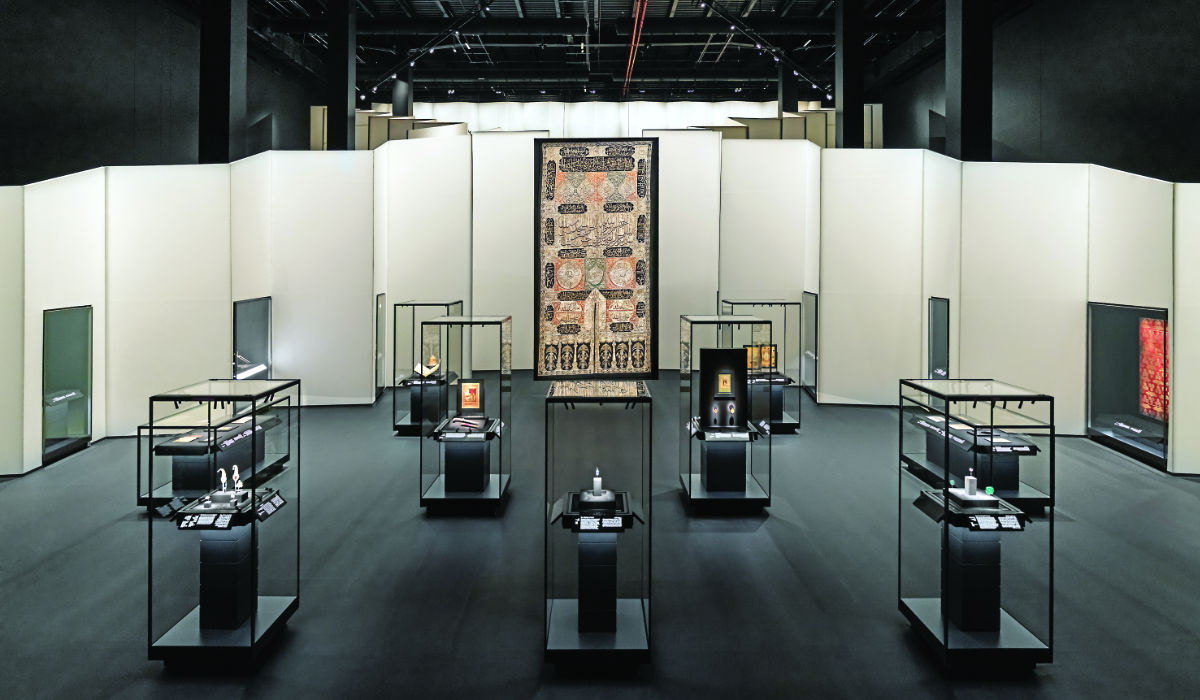
Its inclusion in the biennale marks a cultural milestone, showcasing the Vatican’s commitment to interreligious and intercultural dialogue, according to Vatican archivist and librarian Angelo Vincenzo Zani.
The map underwent restoration by the Vatican before making the journey to Jeddah. It is displayed alongside a sister map of the Arabian Gulf from the National Library of Qatar.
Both maps are believed to have been acquired in the 1700s in Constantinople by Giuseppe Alemanni, a Lebanese librarian who later became the Vatican Library’s prefect.
HIGHLIGHTS
• Organized by the Diriyah Biennale Foundation, the exhibition in Jeddah explores faith by juxtaposing contemporary and newly commissioned artworks with historical objects from Islamic cultures.
• More than 30 cultural institutions have provided objects from their collections, as well as 29 newly commissioned works of art.
Zani attended the biennale’s opening ceremony and later told Arab News that the artifacts highlight a rich history of cultural exchange and shared knowledge.
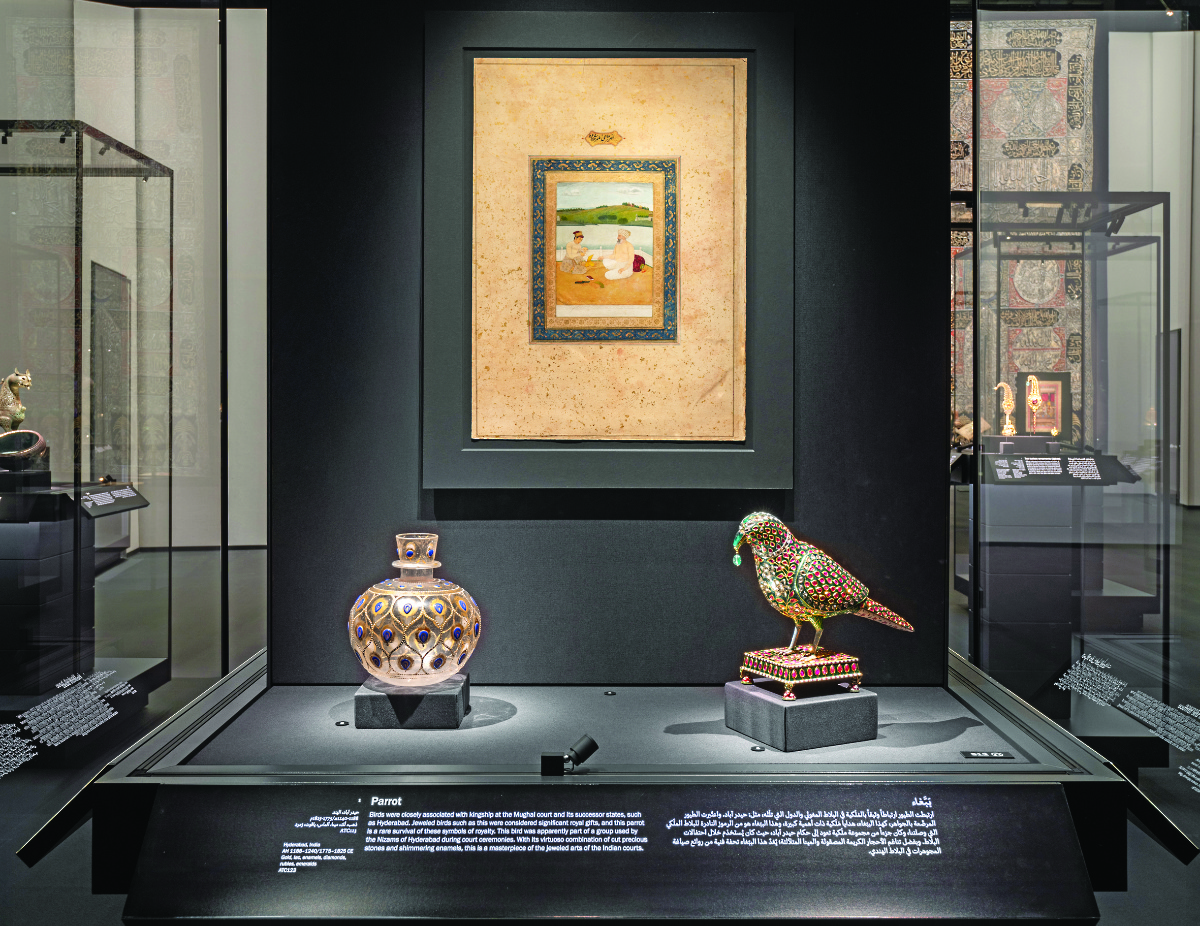
“I think this Islamic Arts Biennale is very important. The concept of art is very important — to expand knowledge and creativity. Art is an emotion that we can all understand. It can cross over in a dialogue that is ‘in between’.”
The 2025 biennale’s theme, “And all that is in between,” draws from the Qur’anic verse “And God created the Heavens and the Earth and all that is in between.”
The Vatican Library is also showcasing several works from its collections in “The Art of Numbers” display at Al-Madar section of the biennale.
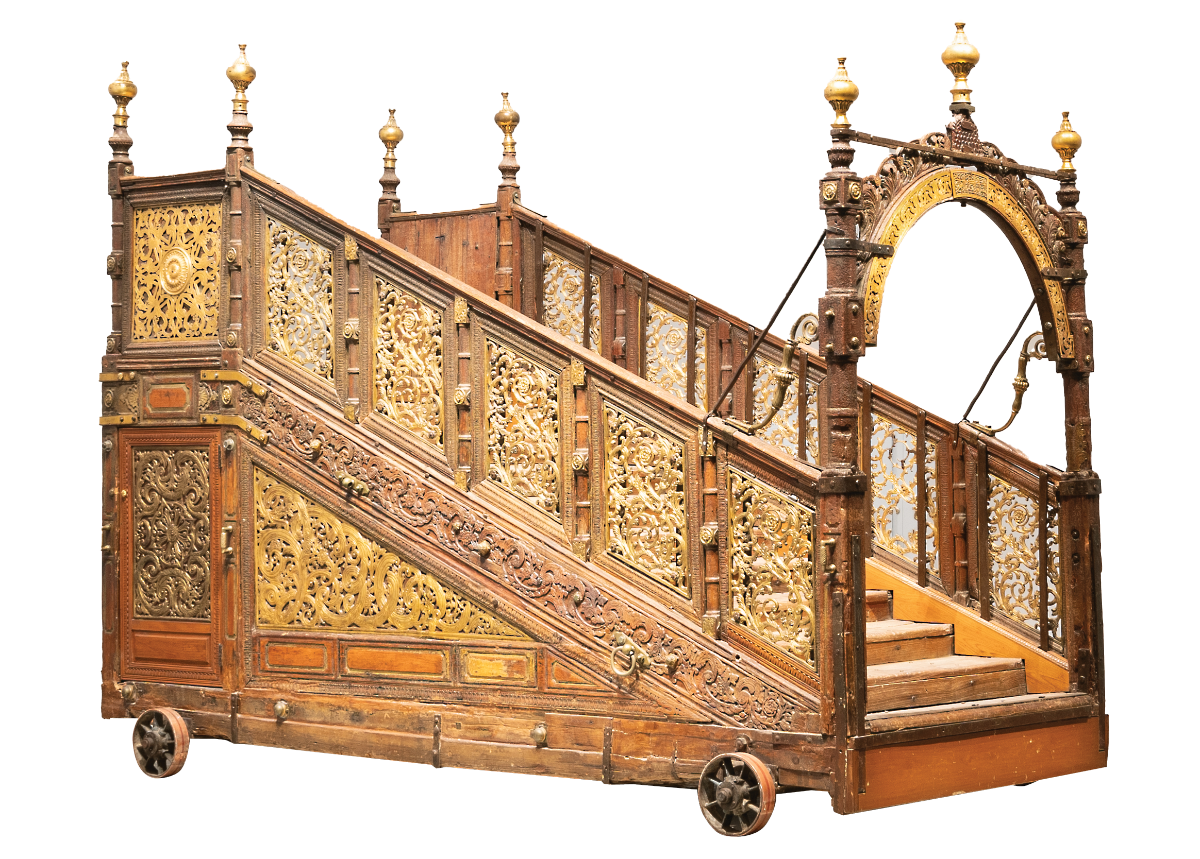
Al-Madar, or “The Orbit” section, features items from 20 institutions with significant Islamic art collections worldwide.
The section examines the role of numbers in collective history, exploring their origins in natural calculations and applications across Islamic culture, mathematics, architecture, music, design, celestial and terrestrial mapping, ocean navigation, trade and geometric patterns in Qur’anic decoration.
Heather Ecker, Al-Madar’s curator, said the Vatican Library, which was established in the Middle Ages, is the oldest taking part in Al-Madar.
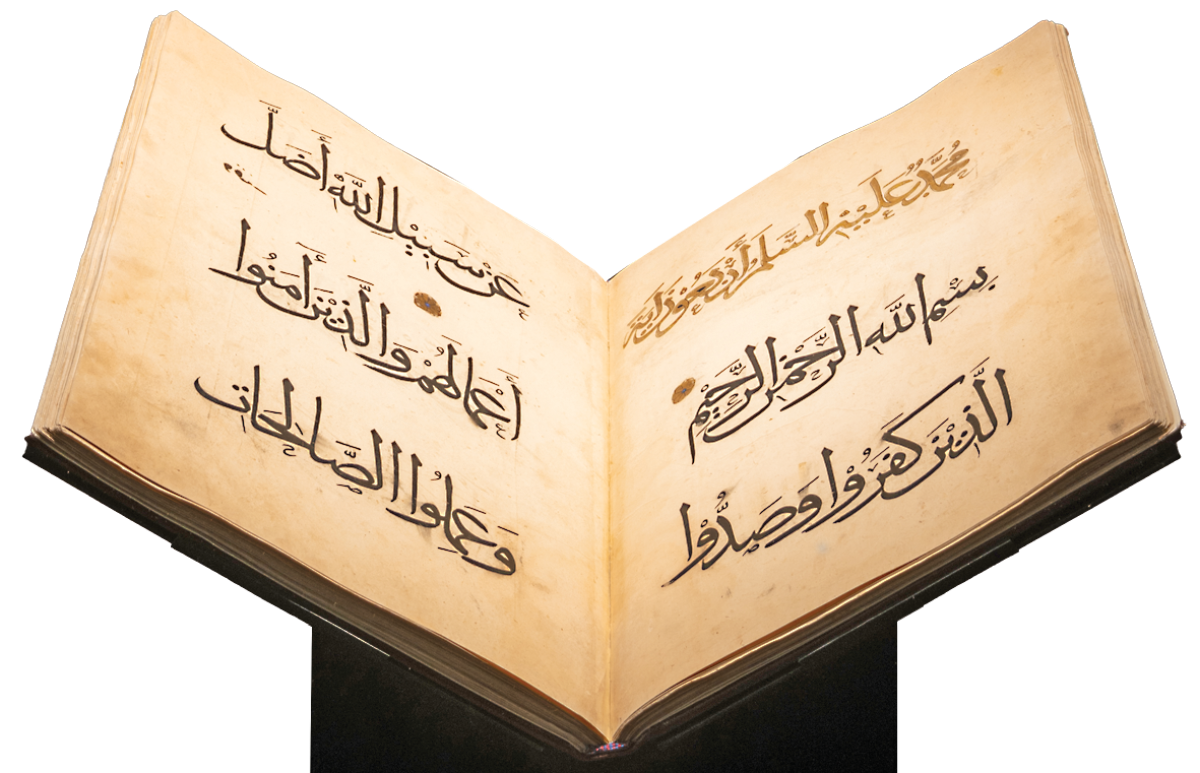
“The Vatican has Arabic manuscripts on virtually any subject, and has a large collection of early Qur’ans. It has early translations of the Qur’an, of which we are exhibiting several,” she said.
Ecker said the Nile map appears to have been linked to a travel log and is a visual record of a journey.
“The maps were created from the written text and from memory, apparently,” she said.
“It’s not a map as we conceive it, because it is image with text, with annotations that correspond to observations made during the voyage and notes taken. It collapses geography in a certain way, so it scrunches up the land between the Nile and the Red Sea, for example, in order to include more sites such as Jeddah.”
The map has been in the Vatican since the late 18th century, but had never been restored and was first shown in 2021, Ecker said. The Diriyah Biennale Foundation helped fund its restoration and conservation.
“It’s much brighter now,” Ecker said. “The paper is much more supple now, so it’s really vastly improved, and it’s much easier to exhibit and for people to appreciate. That was a big undertaking, and important in the field of conservation preservation.”
Organized by the Diriyah Biennale Foundation, the Jeddah exhibition explores faith by juxtaposing contemporary and newly commissioned artworks with historical objects from Islamic cultures.
The event has built on the success of the first biennale, and is bigger in scale and ambition, Aya Al-Bakree, CEO of the foundation, told Arab News.
This year, more than 30 cultural institutions have provided objects from their collections, as well as 29 newly commissioned works of art.
“The biennale is rooted in Saudi Arabia and has become a clear landmark on the international stage as well. We are excited to share this exhibition with audiences from near and far,” Al-Bakree added.
Display space is divided into several sections, each blending Islamic cultural heritage with contemporary interpretations.
The inaugural Islamic Arts Biennale in 2023 attracted more than 600,000 visitors. The 2025 edition will feature more than 500 historical artifacts and contemporary artworks, including treasures from Makkah, Madinah, and around the world.
The 2025 curatorial team is led by Julian Raby, Amin Jaffer, and Abdul Rahman Azzam, with Saudi artist Muhannad Shono as curator of contemporary art.
The Islamic Arts Biennale will run until May 25.