

Kingdom’s digital ‘leapfrog’: Intel executive VP highlights 20-year Saudi partnership

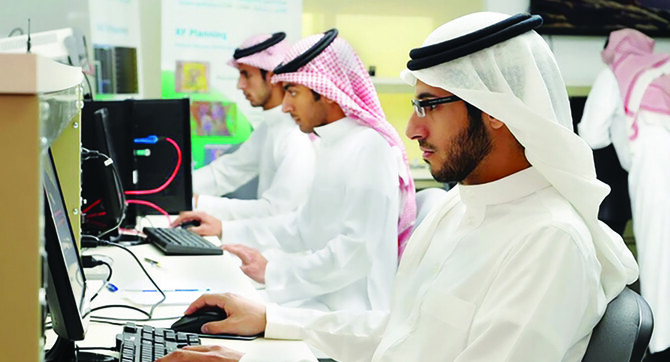
Saudi Arabia is prioritizing the development of a robust tech ecosystem by attracting manufacturers, creating jobs and nurturing local talent. (Reuters photo)
Short Url
Updated 26 January 2025
Follow

Kingdom’s digital ‘leapfrog’: Intel executive VP highlights 20-year Saudi partnership

  • Speaking on the sidelines of the WEF, Christoph Schell emphasized the Kingdom’s commitment to growth and its importance as a key market for Intel
  • Says technology plays a crucial role in the Kingdom’s societal development, with a key focus on fostering innovation and bridging the digital divide

DAVOS: Saudi Arabia’s Vision 2030 has enabled the Kingdom to “leapfrog other countries,” creating a robust ecosystem that aligns with Intel’s digital transformation strategy, the company’s executive vice president and chief commercial officer told Arab News.

Speaking on the sidelines of the World Economic Forum in Davos, Christoph Schell emphasized the Kingdom’s commitment to growth and its importance as a key market for Intel, building on a 20-year legacy of collaboration.

“Having lived for eight years in the Middle East, I know that once you define a plan, and you work that plan, that plan will also work out,” Schell said. “So there’s a lot of trust that this vision will become reality.”

Schell, who previously served as HP’s general manager for the Middle East, described the region — and Saudi Arabia specifically — as being at an “exciting historical moment” in terms of technology, innovation and business, positioning the Kingdom as a “crucial market in size and influence.”
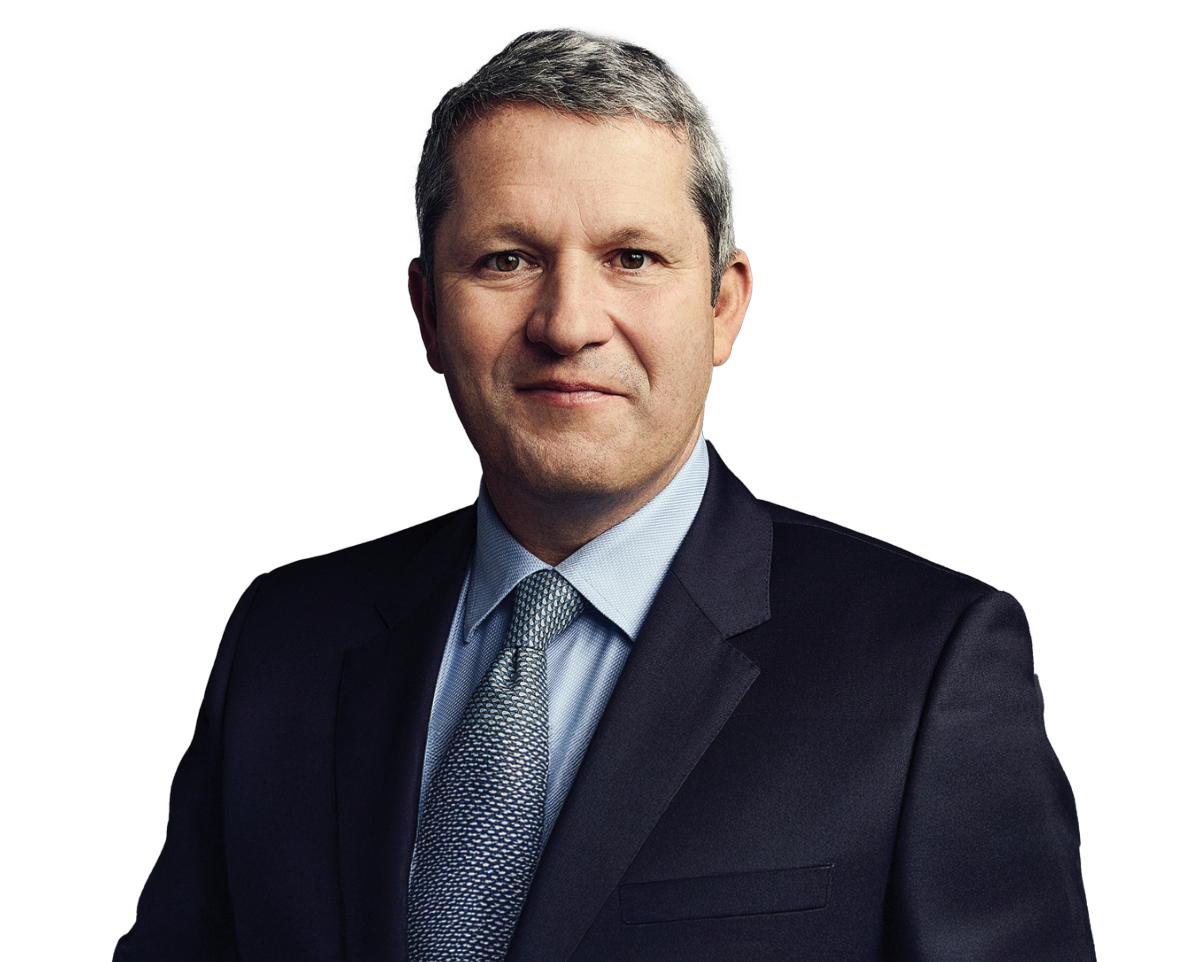


Christoph Schell, Intel's executive vice president and chief commercial officer. (Supplied)

Intel has maintained a strong presence in Saudi Arabia for more than two decades, with its innovation and priorities evolving in response to the Kingdom’s changing needs.

“There’s a very long legacy that the Kingdom has of engaging with Intel and for the population of Saudi Arabia to actually use Intel in their daily lives. That’s true on the consumer side, but that’s also true for the large corporations,” Schell said.

“What I see happening for the first time is that the Saudi customers have been, over these 20 years of engagement, buying monolithic products that Intel had to offer. I think this industry is changing as such that we are talking more and more about custom solutions, custom chips, and these are the first (type of) engagements that we have with Saudi customers now, cross-customization.”

He attributed this shift to significant investments in digital infrastructure and the growing tech sophistication of Saudi consumers and businesses.

“I see Saudi not just consuming technology that is off the shelf, but to demand technology that is best in the very specific requirements that you have,” he said.

Highlighting examples, Schell said that Saudi Arabia’s extreme temperatures had led to customized design requests for products operating in harsh conditions, such as on oil platforms and in peak summer heat.

“That requires different design principles across different products. And that’s the opportunity for us,” he said.
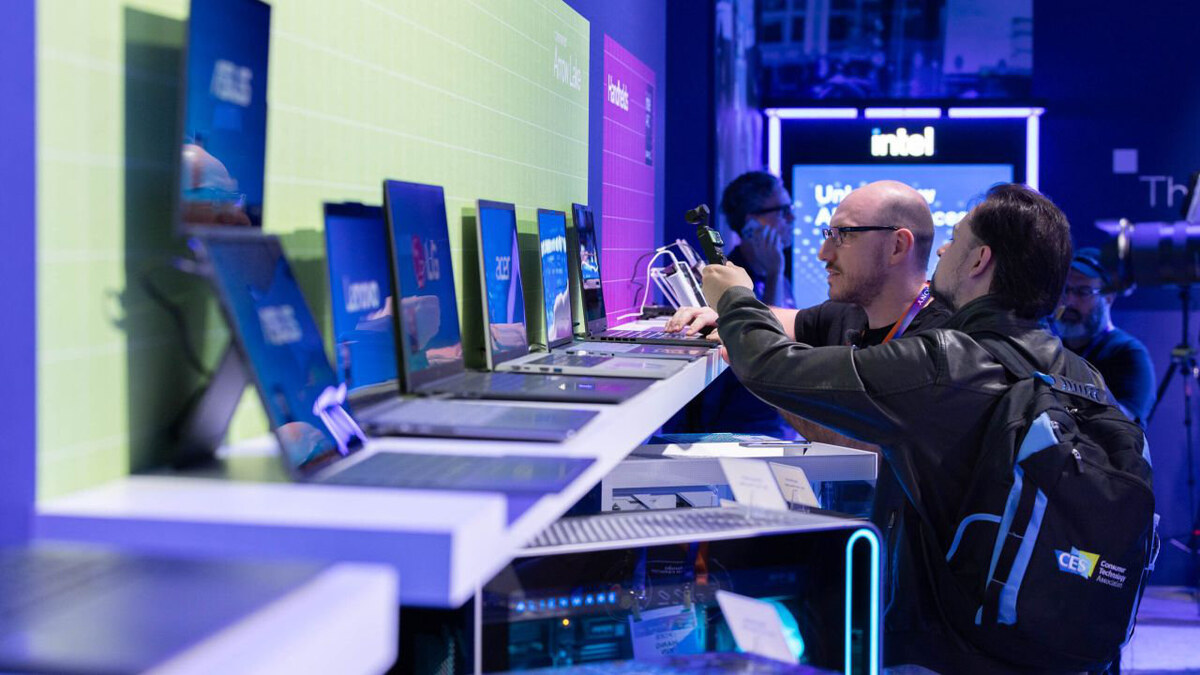


Intel has a partnership with Aramco Digital to establish Saudi Arabia’s first Open RAN (radio access network) development center. (Reuters photo)

In January 2024, Intel announced a partnership with Aramco Digital to establish Saudi Arabia’s first Open RAN (radio access network) development center. Open RAN technology, which allows multiple service providers to deliver services over the same network infrastructure, is expected to accelerate innovation and drive the Kingdom’s digital transformation in line with Vision 2030.

“If you want to scale a data center, if you want to grow a data center, if you want to grow a cloud operation, getting access to power is super important,” he said.

“Obviously the Kingdom has a lot of power, but on the other hand, it is also demanding for that power to be delivered in the most efficient way, and for the computer to be cognizant of power not being there in abundance, but to be managed in a way that is responsible.”

Schell argued that this evolution is a consequence of the cultural and societal shifts in Saudi Arabia, emphasizing the country’s focus on innovation and bridging the digital divide.

“Technologies (are) at the heart of societal development. And I think a lot of the goals that you have as a society is to innovate, is to make sure that there’s no digital divide within the country,” he said.

As part of its vision for the future, Saudi Arabia is prioritizing the development of a robust tech ecosystem by attracting manufacturers, creating jobs and nurturing local talent — a strategy that Schell described as “sustainable.”

“It has a lot to do with education, but I think beyond educating, the ability to design products together, to engineer products together, is something that needs to start, in particular, working together with select universities,” he said.

Schell emphasized the role of AI in shaping the Kingdom’s future, particularly in practical applications such as education and daily life.

“The output that an AI engine delivers is based on the model it uses. And I think what is very important for Saudi Arabia in this context is to have models that have cultural awareness, that have cultural content.”

Drawing on his own experience, Schell highlighted the importance of localization.

“I live in the US right now. I’m German. If I use a US model, a US-centric model, I will get US-centric answers. (While) If I use a Saudi-centric model, I will get Saudi-centric answers.

“This is very important from a culture and from a historic point of view,” he added, stressing the “government’s responsibilities” in fostering an ecosystem that supports culturally relevant AI.


The hidden side of clean power: why grid integration matters

Updated 58 min 40 sec ago
Follow

The hidden side of clean power: why grid integration matters

  • Exploring the predator’s role in the region’s heritage and ecosystem

RIYADH: As Saudi Arabia expands solar, wind, and battery projects, a critical piece of the sustainability puzzle often goes unseen: grid integration.

Before renewable plants can deliver power, engineers must ensure the grid remains stable, safe, and efficient under new loads. Integrating renewables into existing systems has become one of the toughest — and most crucial — steps toward building a truly sustainable energy network.

Engineers widely consider the electricity grid the largest and most complex machine ever built. As more renewable capacity comes online, managing it is becoming as much a data challenge as an energy one.

“A big share of Saudi Arabia’s electricity is generated from renewables and more projects are connected to the grid each year. This shift changes how the electricity grid is managed on a day-to-day basis,” Saeed Al-Zahrani, general manager of data enterprise storage leader NetApp in Saudi Arabia, told Arab News.

“To add context, traditional generation can usually be adjusted in a controlled way. Wind and solar, however, move with conditions such as cloud cover, dust, temperature and wind speed, meaning supply can rise and fall quickly,” he said.

In this environment, grid integration is less about whether enough electricity can be produced and more about whether operators can see and respond to changes across the network fast enough to maintain stability.

Frequency, voltage, congestion, and reserve margins all become more dynamic. Real-time measurements, accurate forecasting, asset status updates, and weather intelligence must come together into a reliable, unified system view.

“From NetApp’s perspective, this is where the data foundation matters most, because the grid can only act confidently when the information behind the decisions is timely, governed, and reliable,” Al-Zahrani said.

Under Vision 2030, Saudi Arabia aims to generate 50 percent of its energy from renewables — an ambitious target that introduces new technical and operational challenges. Weather variability, cyber threats, and system coordination can all affect grid stability.

“Every device that operates under this control regime that’s connected to the grid is digital nowadays. You have smart inverters, you have sensors, you have energy management systems, and all those devices and systems are potential entry points for attackers,” Charalambos Konstantinou, a professor at KAUST, told Arab News.

As solar capacity grows, ensuring seamless integration into the national grid has become one of the most complex challenges of the energy transition. (SPA)

His lab focuses on maintaining reliable and secure power infrastructure, developing faster and smarter control algorithms capable of responding to sudden changes in the power system.

“This is what we’re working to make sure that those algorithms remain robust. They remain resilient. They remain secure, even if something, maybe an extreme weather event, or a cyber attack, is aiming to disrupt them,” he said.

Rapid digitalization, however, can create vulnerabilities if security measures do not keep pace. In 2012, Aramco experienced the Shamoon attack, a computer virus that affected around 30,000 workstations.

“When you scale fast, security practices typically lack behind deployment, and this is essentially what we focus a lot in my group: making sure that internet-connected or digital devices cannot be used as an entry point to destabilizing the grid,” Konstantinou said.

One particularly concerning threat involves load-altering attacks, which can disrupt power systems without requiring deep penetration of the grid itself.

“If an attacker is able to control a large amount of what we call internet connected high voltage devices — think HVAC systems, air conditioning systems, water heaters, electric vehicle chargers — and is able to switch them on and off at the same time, simultaneously, then he or she can create a certain imbalance between generation and demand, and then the grid (becomes) very difficult to handle,” he said.

A view of an Aramco refinery in the Eastern Province. (Supplied)

Such disruptions could potentially trigger widespread blackouts.

Beyond cybersecurity risks, the physical environment also presents challenges. Saudi Arabia’s relatively consistent weather can be an advantage for renewable energy production, but factors such as dust accumulation on solar panels and thermal stress on inverters can still affect performance.

Testing technologies under local conditions — including extreme heat, network behavior, and the mix of generation assets — is essential before large-scale deployment. Equally important are intelligent coordination frameworks that allow flexible energy assets to work together while optimizing energy use across industries.

Renewable-heavy grids across Saudi Arabia and neighboring countries increasingly depend on real-time data from SCADA systems, substation automation, and weather monitoring to balance supply and demand. While these continuous data flows improve efficiency, they also introduce new risks, including potential system disruption and data manipulation.

Vasily Dyagilev, regional director for the Middle East, Russia and CIS at Check Point Software Technologies Ltd., highlighted the scale of these vulnerabilities.

Vasily Dyagilev, regional director of Check Point Software Technologies Ltd. for the Middle East. (Supplied)

“In Saudi Arabia, 58 percent of organizations have experienced information disclosure vulnerabilities, while remote code execution and authentication bypass remain significant threats. The complexity of managing legacy operational technology networks alongside modern cloud-based systems and third-party integrations makes it difficult for utilities to maintain full visibility over their risk landscape.

“The region has also seen high-profile incidents where attacks on SCADA systems led to operational disruptions, highlighting the fragility of critical infrastructure. Effective exposure management, including continuous vulnerability discovery and prioritized remediation based on operational risk, is now recognized as essential for maintaining grid stability and protecting the integrity of real-time data streams.”

Alongside cyber and operational risks, uncertainty in weather patterns remains a key variable in renewable power generation.

Omar Knio, another professor at KAUST, studies how atmospheric processes influence renewable energy systems through uncertainty quantification and climate modeling. Dust particles originating in the Arabian Peninsula, for instance, can travel thousands of kilometers and influence weather patterns across South Asia.

Opinion

This section contains relevant reference points, placed in (Opinion field)

“Phenomena at tiny little scales end up, through teleconnections, making very important contributions to weather patterns and to the climate as far as renewables themselves, because these phenomena affect the solar and wind potentials, they’re extremely important to predict accurately,” Knio said.

“The presence of dust in the atmosphere and cloud cover affect the output of solar panels or solar plants, and similar phenomena happen to wind, and that's why they are really challenging. It's important to be able to predict them as accurately as we can.”

Maintaining a stable renewable grid requires both short-term and long-term forecasting. Hourly predictions are essential for balancing supply and demand, while longer-term projections help planners prepare infrastructure and storage.

Artificial intelligence is increasingly helping researchers build models that forecast weather patterns, simulate thermal behavior in buildings, and analyze industrial energy use. In areas where detailed physical models are limited, AI also helps uncover patterns in human behavior and electricity consumption.

“An example is power demand, consumer behavior, or changes in patterns that have to do with the day of the week, whether it's a weekend, a holiday season, whether it's during harsh weather, or it's during Ramadan: how do these patterns change? And artificial intelligence is really bringing the capability for us to represent and forecast these very complex phenomena,” Knio said.

As renewable energy penetration approaches higher levels, the system becomes more sensitive to fluctuations and extreme events.

“There comes a point where we start having a very dramatic rise in the need for storage capabilities. And the important aspect of why our fuel is important. We can make them cleaner, but they’re wonderful in the sense that they are plentiful right now. They are cheap, but more importantly, they are quite economical to store after. After fuels come nuclear power. So it’s really that storage capability. As we approach 100 percent, the need for storage becomes extremely heightened,” Knio said.