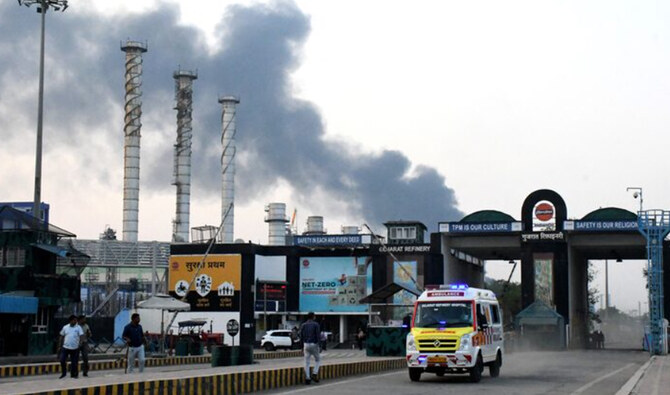
MUMBAI: At least eight workers were killed in a blast at a munitions factory in western India, government officials said Friday, with several others still trapped inside the building.
The explosion happened Friday morning in Bhandara, around 800 kilometers (500 miles) east of India’s financial hub Mumbai, and caused the factory’s roof to collapse.
“In an unfortunate incident today, a blast at Bhandara munitions factory has killed at least eight people and injured seven others,” India’s cabinet minister Nitin Gadkari said.
Gadkari, a lawmaker from Maharashtra state where the explosion occurred, offered his condolences.
Maharashtra’s chief minister Devendra Fadnavis said earlier on X that up to 14 workers had been trapped after the blast and emergency rescue operations were underway.
Indian defense minister Rajnath Singh said he was “deeply saddened” by the blast.
“My condolences to the bereaved families. Praying for the speedy recovery of the injured,” Singh said on X.
Industrial disasters are common in India, with experts blaming poor planning and lax enforcement of safety rules.
Nine workers were killed in a 2023 blast at a factory in Maharashtra that manufactured drones and explosives.


![]()

Indian munitions factory blast kills at least eight workers
Short Url
https://arab.news/4sdk2
Indian munitions factory blast kills at least eight workers
- Industrial disasters are common in India, with experts blaming poor planning, lax enforcement of safety rules
- Nine workers were killed in a 2023 blast at a factory in Maharashtra that manufactured drones and explosives
Latest updates


Recommended


© 2026 SAUDI RESEARCH & PUBLISHING COMPANY, All Rights Reserved And subject to Terms of Use Agreement.