



RIYADH: Since the launch of Vision 2030, technological innovation and sustainability have been central to Saudi Arabia’s transformative plan, with artificial intelligence emerging as a key tool to tackle a range of issues, including environmental challenges.
With nearly 90 percent of its territory covered by desert, the Kingdom is utilizing AI to combat land degradation, improve water resource management, and promote sustainable practices.
The King Abdullah University of Science and Technology has joined the global AI race by advancing generative AI research.

Its Center of Excellence for Generative AI adopts a multidisciplinary approach, focusing on technologies like multimodal foundation models and AI-assisted Earth observation systems to address challenges, including water scarcity and land degradation.
Prof. Matthew McCabe, director of KAUST’s Climate and Livability Initiative, told Arab News that AI has provided a pathway to revolutionize our understanding and interpretation of Earth systems, ushering in an era where data can be rapidly channeled to provide new knowledge and actionable insights.
“While GenAI has already impacted greatly on a number of domains, its application in the Earth and environmental sciences remains emerging,” McCabe said.
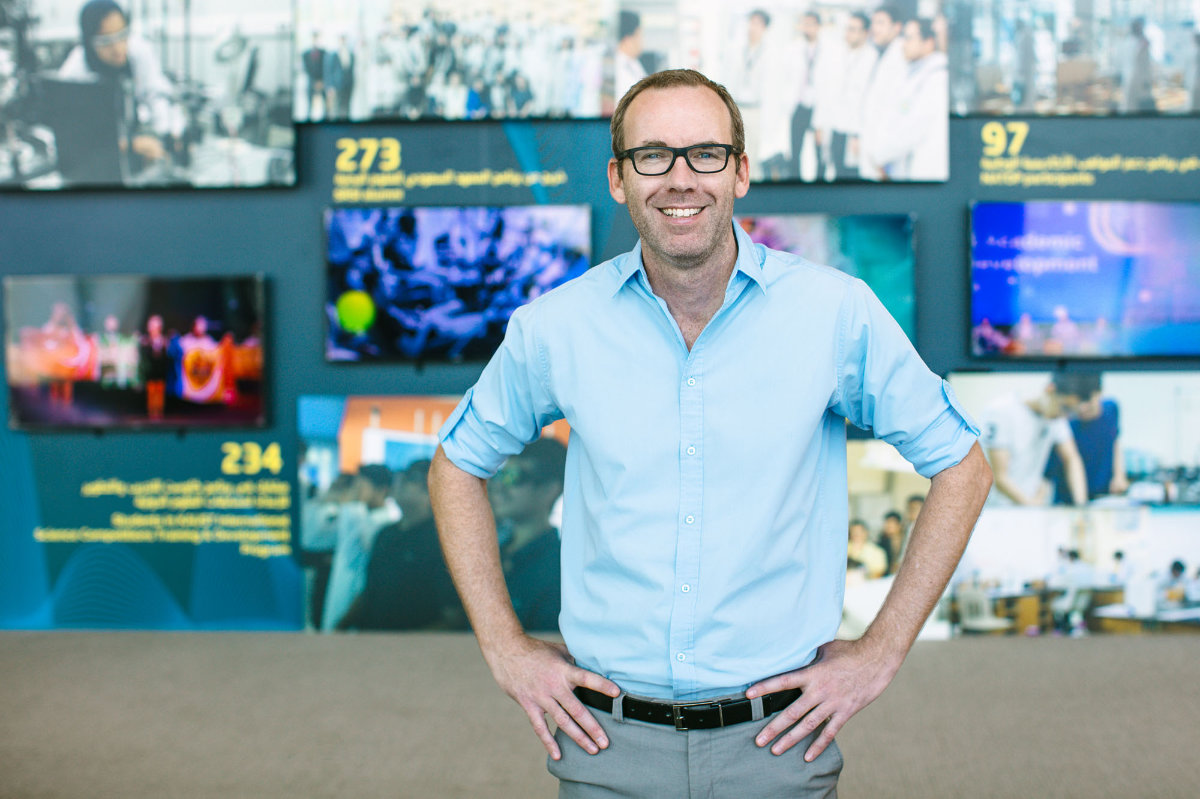
Prof. Matthew McCabe, director of KAUST’s Climate and Livability Initiative. (Photo courtesy of KAUST)
The center’s research focuses on developing AI tools for satellite imaging and Earth observation, enabling better monitoring of ecosystems. This includes using drones and satellite-based remote sensing technologies to track environmental changes in real-time.
Drones and satellite systems provide high-resolution data that is crucial for understanding ecological shifts in regions that were previously difficult to study. This allows for more effective land management, ecosystem restoration, and better predictions regarding weather patterns.
“We will be using remote sensing and other data sources to undertake ecosystem monitoring, helping to advance some of the goals and objectives of the Saudi Green Initiative,” McCabe said.
Opinion
This section contains relevant reference points, placed in (Opinion field)
AI-driven solutions are already aiding the Saudi Green Initiative’s goals of planting 10 billion trees and rehabilitating 40 million hectares of degraded land by 2030, analyzing regional climate data, soil conditions, and water availability to identify optimal planting locations.
The Saudi Data and AI Authority, known as SDAIA, has partnered with several government entities to leverage AI solutions in support of the Saudi Green Initiative. These efforts aim to create innovative, data-driven strategies for combating climate change.
AI is also transforming climate forecasting in Saudi Arabia. Hylke Beck, assistant professor of climate analytics at KAUST, highlighted AI’s potential to predict extreme weather events like heatwaves and flash floods, which are expected to become more frequent and severe due to climate change.
Hylke Beck, assistant professor of climate analytics at KAUST. (Photo courtesy of KAUST)
Beck said AI models can uncover hidden relationships within weather data that traditional forecasting methods cannot, enabling more accurate and actionable forecasts.
He noted that these improved forecasts are critical for the Kingdom as it works to adapt to climate challenges, such as the severe heatwave that affected Makkah last June or the devastating floods in April across the UAE and Oman.
“With projections indicating that climate change will intensify and increase the frequency of heatwaves and flash floods, alongside an expected 32 percent population growth by 2050, the need to harness AI technology has never been more urgent,” Beck told Arab News.
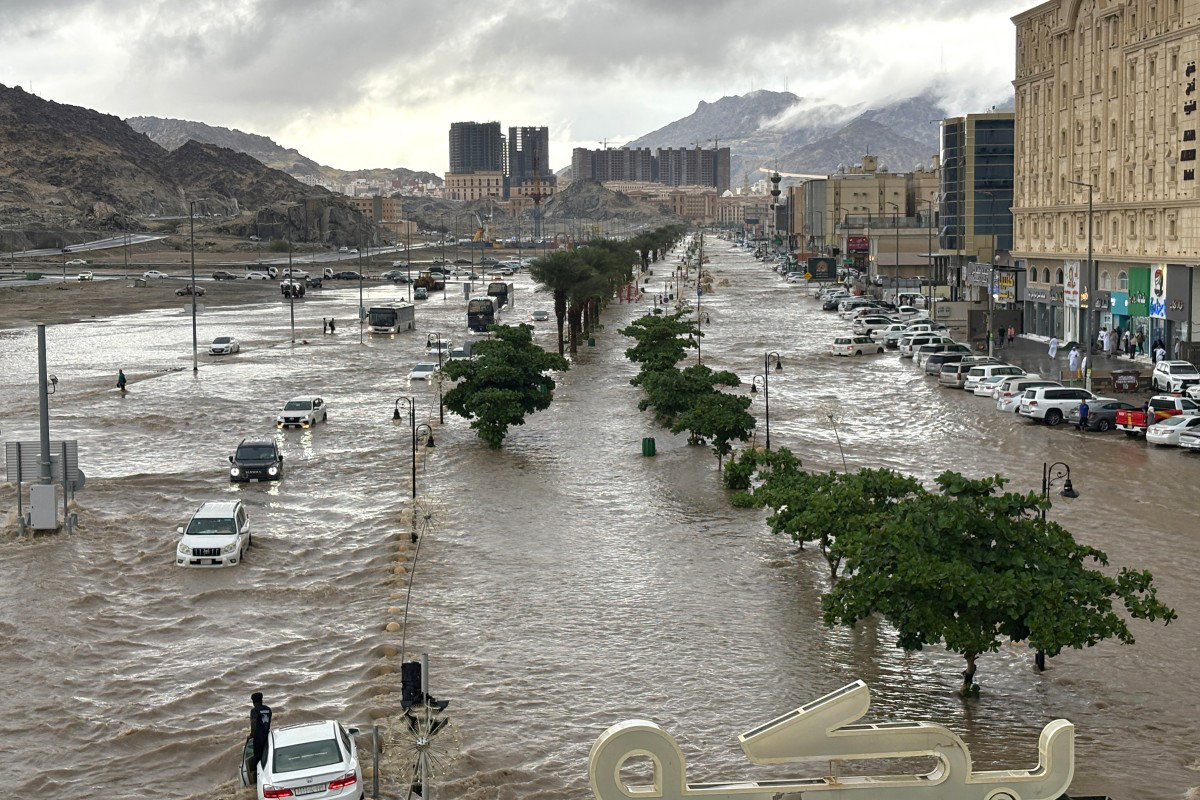
Commuters make their way through a flooded road after heavy rains in Makkah on January 6, 2025. Scientists in Saudi Arabia are tapping AI to improve forecasts as the Kingdom works to adapt to climate challenges. (AFP)
Although there are currently few weather forecasting systems specifically designed for the region, and even fewer that incorporate AI models, Beck says these technologies have transformative potential.
However, Beck says building effective AI models requires access to extensive datasets.
“Government support in making this data accessible is essential for creating a more climate-resilient future,” he said.
DID YOUKNOW?
• KAUST’s Center of Excellence for Generative AI focuses on Earth observation technologies to address climate challenges like water scarcity.
• Drones and satellites provide real-time data, aiding land management, ecosystem restoration, and environmental monitoring for the Saudi Green Initiative.
• AI models can uncover hidden relationships within weather data that traditional forecasting methods cannot, enabling more accurate and actionable forecasts.
Traditional weather models depend on equations created by scientists, but these equations can be limited by gaps in knowledge about certain weather patterns.
“These equations are imperfect because even the best meteorologists don’t fully understand all weather processes,” Berk said.
On the other hand, AI models analyze large amounts of data to find patterns, making predictions faster and more accurate. These are especially useful in areas where traditional systems struggle, like predicting thunderstorms, which are often harder to forecast accurately.
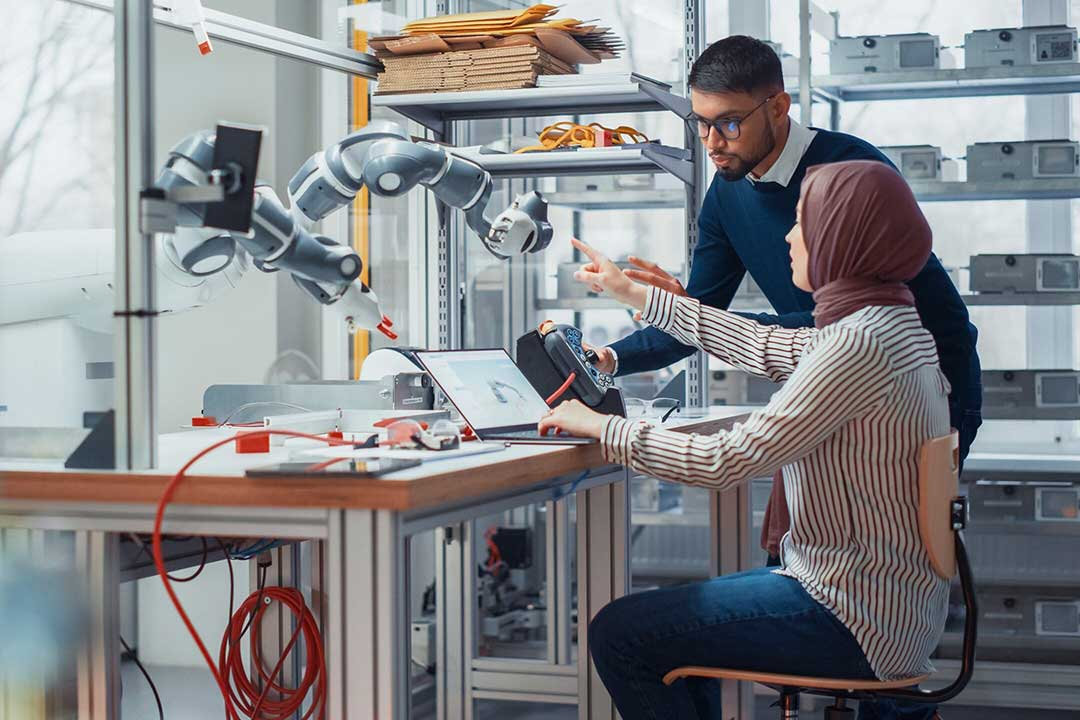
KAUST's new Center of Excellence on Generative AI aims to be the premier research, development, and innovation hub for pioneering generative AI technology in the Kingdom. (KAUST photo)
While traditional systems rely on expensive supercomputers, AI models can run effectively on regular computers, making them more affordable and accessible.
“These AI models can — and I believe will, in the not-too-distant future — fully replace current traditional models. However, they can also be integrated into them,” Beck said.
The Center of Excellence for Generative AI’s initiatives align with Vision 2030’s sustainability and innovation goals, collaborating with leading national entities like NEOM and Aramco, as well as international organizations like Meta and Nvidia to drive progress.
The center also addresses the shortage of generative AI talent in Saudi Arabia through training and upskilling programs for KAUST researchers, partners, and the wider community.


