SEATTLE: A federal judge in Seattle on Thursday temporarily blocked President Donald Trump’s executive order ending the constitutional guarantee of birthright citizenship, calling it “blatantly unconstitutional” during the first hearing in a multi-state effort challenging the order.
US District Judge John Coughenour repeatedly interrupted a Justice Department lawyer during arguments to ask how he could consider the order constitutional. When the attorney, Brett Shumate, said he’d like a chance to explain it in a full briefing, Coughenour told him the hearing was his chance.
The temporary restraining order sought by Arizona, Illinois, Oregon and Washington was the first to get a hearing before a judge and applies nationally.
The case is one of five lawsuits being brought by 22 states and a number of immigrants rights groups across the country. The suits include personal testimonies from attorneys general who are US citizens by birthright, and names pregnant women who are afraid their children won’t become US citizens.
Coughenour, a Ronald Reagan appointee, began the hearing by grilling the administration’s attorneys, saying the order “boggles the mind.”
“This is a blatantly unconstitutional order,” Coughenour told Shumate. Coughenour said he’s been on the bench for more than four decades, and he couldn’t remember seeing another case where the action challenged was so clearly unconstitutional.
Shumate said he respectfully disagreed and asked the judge for an opportunity to have a full briefing on the merits of the case, rather than have a 14-day restraining order issued blocking its implementation.
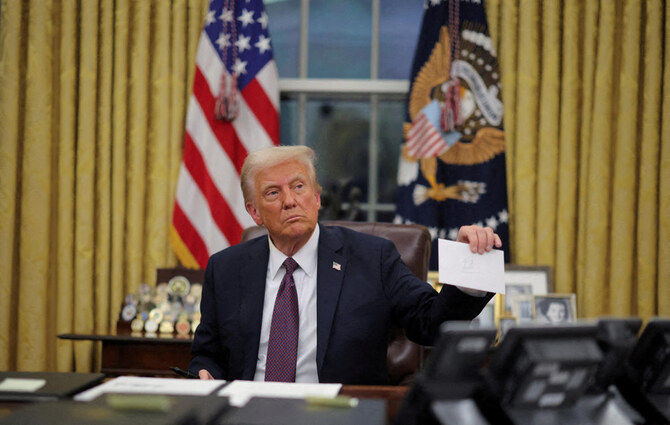
Trump’s executive order, which he signed on Inauguration Day, is slated to take effect on Feb. 19. It could impact hundreds of thousands of people born in the country, according to one of the lawsuits. In 2022, there were about 255,000 births of citizen children to mothers living in the country illegally and about 153,000 births to two such parents, according to the four-state suit filed in Seattle.
The Trump administration argued in papers filed Wednesday that the states don’t have grounds to bring a suit against the order and that no damage has yet been done, so temporary relief isn’t called for. The administration’s attorneys also clarified that the executive order only applies to people born after Feb. 19, when it’s set to take effect.
The US is among about 30 countries where birthright citizenship — the principle of jus soli or “right of the soil” — is applied. Most are in the Americas, and Canada and Mexico are among them.
The lawsuits argue that the 14th Amendment to the US Constitution guarantees citizenship for people born and naturalized in the US, and states have been interpreting the amendment that way for a century.
Ratified in 1868 in the aftermath of the Civil War, the amendment says: “All persons born or naturalized in the United States and subject to the jurisdiction thereof, are citizens of the United States and of the State wherein they reside.”
Trump’s order asserts that the children of noncitizens are not subject to the jurisdiction of the United States, and orders federal agencies to not recognize citizenship for children who don’t have at least one parent who is a citizen .
A key case involving birthright citizenship unfolded in 1898. The Supreme Court held that Wong Kim Ark, who was born in San Francisco to Chinese immigrants, was a US citizen because he was born in the country. After a trip abroad, he faced being denied reentry by the federal government on the grounds that he wasn’t a citizen under the Chinese Exclusion Act.
But some advocates of immigration restrictions have argued that case clearly applied to children born to parents who were both legal immigrants. They say it’s less clear whether it applies to children born to parents living in the country illegally.
Trump’s order prompted attorneys general to share their personal connections to birthright citizenship. Connecticut Attorney General William Tong, for instance, a US citizen by birthright and the nation’s first Chinese American elected attorney general, said the lawsuit was personal for him.
“There is no legitimate legal debate on this question. But the fact that Trump is dead wrong will not prevent him from inflicting serious harm right now on American families like my own,” Tong said this week.
One of the lawsuits aimed at blocking the executive order includes the case of a pregnant woman, identified as “Carmen,” who is not a citizen but has lived in the United States for more than 15 years and has a pending visa application that could lead to permanent residency status.
“Stripping children of the ‘priceless treasure’ of citizenship is a grave injury,” the suit says. “It denies them the full membership in US society to which they are entitled.”


![]()

A federal judge temporarily blocks Trump’s executive order ending birthright citizenship
Short Url
https://arab.news/w678k
A federal judge temporarily blocks Trump’s executive order ending birthright citizenship
- US District Judge John Coughenour repeatedly interrupted a Justice Department lawyer during arguments to ask how he could consider the order constitutional
- The case is one of five lawsuits being brought by 22 states and a number of immigrants rights groups across the country


Latest updates





© 2026 SAUDI RESEARCH & PUBLISHING COMPANY, All Rights Reserved And subject to Terms of Use Agreement.