

Saudi rent now, pay later firm Rize closes $35m in equity and debt funding

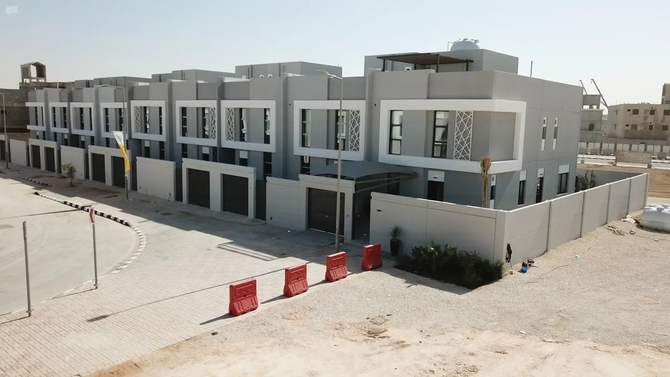
The rise in Saudi Arabia’s real estate financing underscores the sector’s increasing importance in the Kingdom’s economy. File/SPA
Short Url
Updated 20 January 2025
Follow

Saudi rent now, pay later firm Rize closes $35m in equity and debt funding

  • Company also plans to enhance its technological offerings, including automating leasing processes
  • Real estate loans in Saudi banks reached a record SR846.48 billion in the third quarter of 2024

RIYADH: Saudi real estate technology company Rize has closed an SR132 million ($35 million) “Series A” funding round to expand its presence beyond the nation’s capital. 

The round included a mix of equity and debt. funding and was led by Raed Ventures, with participation from SEEDRA Ventures, Aqar Platform, JOA Capital, Nama Ventures, and HALA Ventures. 

The funding also featured a debt financing partnership with Partners For Growth to bolster Rize’s financial capabilities. 

Given the high down payment required for tenants to secure a rental property in the Kingdom, the company has developed a model that enables tenants to pay annual rent in 12 monthly installments, while property owners receive the full amount upfront. 

The rise in Saudi Arabia’s real estate financing underscores the sector’s increasing importance in the Kingdom’s economy, creating a strong foundation for innovative solutions like Rize’s “rent now, pay later” model. 

“This investment represents a major turning point in our journey and reflects the investors’ confidence in our vision to develop the leasing sector,” said Ibrahim Balilah, CEO of Rize. 

Founded in 2021 by Balilah and Mohammed Al-Fraihi, the Riyadh-based company aims to promote sustainability in the Saudi rental market and claims to have facilitated over SR500 million in total rental value through its platform. 

The Series A investment will support Rize’s growth strategy, including expanding its presence beyond Riyadh into the Eastern and Western regions of Saudi Arabia. 

The company also plans to enhance its technological offerings, including automating leasing processes via its app to improve user experience. 

Al-Frahi, co-founder and chief technology officer of Rize, said: “We have worked hard to develop our internal technologies to enable the automation process and make the rental experience smoother. This investment round is a significant step to enhance our technologies and accelerate the company’s growth.” 

Aqar Platform, one of the key investors and a major player in the proptech sector, plans to integrate Rize’s RNPL service into its platform, offering tenants more flexibility in payment options. 

The collaboration is expected to enhance the leasing process and provide innovative solutions for users. 

Omar Al-Majdouie, co-founder at Raed Ventures, said: “We believe in Rize’s ability to bring about a transformative change in the real estate leasing sector, not only by offering innovative services but also by enabling digital transformation in this important field.” 

Waleed Al-Barrak, principal at SEEDRA Ventures, compared Rize’s growth trajectory to that of successful regional fintech leaders, like Tabby and Tamara. 

“Rize is transforming the Saudi rental market and redefining the standards of how people rent. Its extraordinary growth mirrors the success stories of industry leaders,” Al-Barrak said. 

Real estate loans in Saudi banks reached a record SR846.48 billion in the third quarter of 2024, reflecting a 13.29 percent year-on-year increase, according to data from the Saudi Central Bank. 

The growth was driven by retail and corporate lending, with corporate loans jumping 22 percent to SR189.6 billion, while lending to individuals accounted for 78 percent of the total at SAR 656.88 billion, growing at 11.02 percent annually. 

Real estate loans now make up nearly 30 percent of the total loan portfolio of Saudi banks, which stood at SR2.85 trillion by the end of the third quarter. 


Gulf-EU value chain integration signals shift toward long-term economic partnership: GCC secretary general

Updated 5 sec ago
Follow

Gulf-EU value chain integration signals shift toward long-term economic partnership: GCC secretary general

RIYADH: Value chains between the Gulf and Europe are poised to become deeper and more resilient as economic ties shift beyond traditional trade toward long-term industrial and investment integration, according to the secretary general of the Gulf Cooperation Council.

Speaking on the sidelines of the World Governments Summit 2026 in Dubai, Jasem Al-Budaiwi said Gulf-European economic relations are shifting from simple commodity trade toward the joint development of sustainable value chains, reflecting a more strategic and lasting partnership.

His remarks were made during a dialogue session titled “The next investment and trade race,” held with Luigi Di Maio, the EU’s special representative for external affairs.

Al-Budaiwi said relations between the GCC and the EU are among the bloc’s most established partnerships, built on decades of institutional collaboration that began with the signing of the 1988 cooperation agreement.

He noted that the deal laid a solid foundation for political and economic dialogue and opened broad avenues for collaboration in trade, investment, and energy, as well as development and education.

The secretary general added that the partnership has undergone a qualitative shift in recent years, particularly following the adoption of the joint action program for the 2022–2027 period and the convening of the Gulf–European summit in Brussels.

Subsequent ministerial meetings, he said, have focused on implementing agreed outcomes, enhancing trade and investment cooperation, improving market access, and supporting supply chains and sustainable development.

According to Al-Budaiwi, merchandise trade between the two sides has reached around $197 billion, positioning the EU as one of the GCC’s most important trading partners.

He also pointed to the continued growth of European foreign direct investment into Gulf countries, which he said reflects the depth of economic interdependence and rising confidence in the Gulf business environment.

Looking ahead, Al-Budaiwi emphasized that the economic transformation across GCC states, driven by ambitious national visions, is creating broad opportunities for expanded cooperation with Europe. 

He highlighted clean energy, green hydrogen, and digital transformation, as well as artificial intelligence, smart infrastructure, and cybersecurity, as priority areas for future partnership.

He added that the success of Gulf-European cooperation should not be measured solely by trade volumes or investment flows, but by its ability to evolve into an integrated model based on trust, risk-sharing, and the joint creation of economic value, contributing to stability and growth in the global economy.

GCC–EU plans to build shared value chains look well-timed as trade policy volatility rises.

In recent weeks, Washington’s renewed push over Greenland has been tied to tariff threats against European countries, prompting the EU to keep a €93 billion ($109.7 billion) retaliation package on standby. 

At the same time, tighter US sanctions on Iran are increasing compliance risks for energy and shipping-related finance. Meanwhile, the World Trade Organization and UNCTAD warn that higher tariffs and ongoing uncertainty could weaken trade and investment across both regions in 2026.